
A Texan’s Guide to Tick Prevention
Camping, gardening, and kicking back on the patio can feel like the perfect escape, but spending time outdoors can also come with some uninvited guests. While most insects are more pesky than anything, ticks can pose a real threat. The eight-legged blood feeders love to latch onto mammals, birds, and reptiles, and while they’re technically present year-round, they cause the most trouble in Texas from April to September.
The good news? A few smart steps, such as tick-proofing your yard and checking yourself and your pets after time outside, can go a long way in preventing tick bites. Here’s what to know.

Prevention Strategies
One of the most effective ways to reduce tick exposure is consistent yard maintenance. Regularly mowing your lawn is essential, as ticks thrive in tall grass, weeds, and overgrown vegetation. Trimming shrubs, bushes, and low-hanging branches is equally important. Ticks prefer shady, damp environments, often found beneath dense trees and in overgrown landscaping. When shrubs are trimmed back, more sunlight reaches the ground, helping dry out these areas and disrupt potential tick habitats.
Leaf piles and decaying organic matter also provide ideal hiding places for ticks. Clearing away fallen leaves, brush piles, and decomposing compost reduces the dark, humid environments where ticks like to settle. The same principle applies to firewood storage, so keep wood stacked neatly, covered, and elevated off the ground to eliminate the crevices ticks commonly use as shelter.
Creating physical barriers can further protect your yard. Ticks are unlikely to cross dry, open spaces, so installing a 3-foot-wide strip of gravel, wood chips, or mulch between your lawn and wooded areas can help prevent them from migrating into frequently used spaces. In addition, placing patios, play areas, and outdoor furniture in sunny locations away from yard edges and dense trees makes these communal areas less appealing to ticks.
Natural repellents can also help prevent ticks. Cedar mulch, beneficial nematodes that feed on tick larvae, and certain plants (e.g., lavender, rosemary, mint, and garlic), can help deter ticks when combined with consistent yard maintenance. For homes located near dense woods or areas with heavy tick populations, a professional yard treatment may provide additional peace of mind.
How to Check for Ticks
Checking for ticks as soon as you come indoors is one of the best ways to prevent bites and tick-borne illness. Because ticks are often extremely small, sometimes no larger than a poppy seed, it’s important to take your time and be thorough.
Use a mirror to inspect your entire body, paying close attention to areas where ticks commonly hide. These include behind the knees, around the waist, under the arms, between the legs, near the ears, along the hairline and scalp, and at the back of the neck. Washing clothes with hot water can kill any ticks hiding in folds or pockets, and showering with hot water and soap will help wash off any ticks that haven’t attached yet.
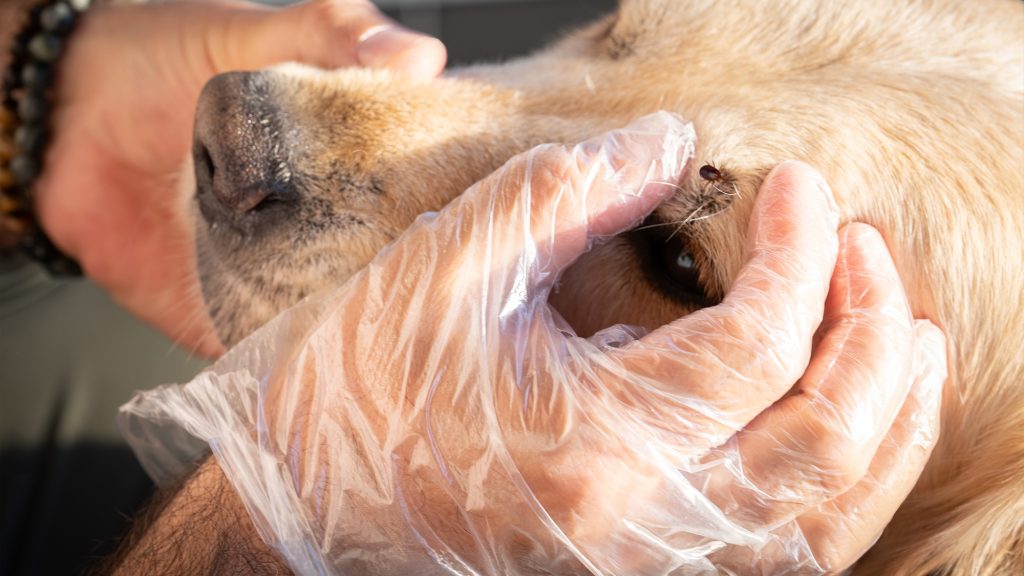
Don’t forget to check your pets if you have them. Using gloves, gently pat them down and pull fur to the side to inspect the skin, making sure to check under collars and around the eyes, ears, and paws. A fine-tooth comb can also help pull out any ticks your eyes might have missed.
What to Do If You Find a Tick
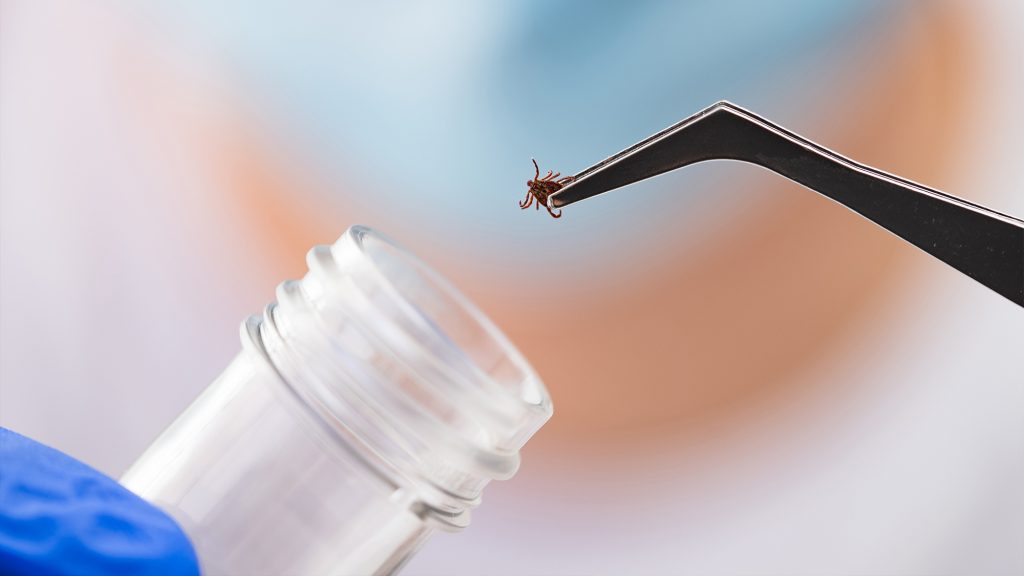
If you discover a tick crawling on your skin, remove it promptly with tweezers and dispose of it by flushing it down the toilet. If the tick is attached, use tweezers to grasp it as close to the skin as possible and pull straight up with steady pressure. Avoid twisting, squeezing, or crushing the tick’s body, as this can increase the risk of infection.
After removal, wash the bite area with soap and water and clean the tweezers with rubbing alcohol. Over the next two to four weeks, monitor the area closely and contact a doctor if you notice symptoms such as a spreading rash, fever, persistent headache, fatigue, or muscle aches.
As an extra precaution, you can save the tick in a small container or sealed bag labeled with the date it was removed. While not necessary, this can be helpful for medical professionals if symptoms develop and treatment guidance is needed.
Pests outdoors are one thing, but prevent them from making their way indoors with our complete guide to pest control.