
Please sign in as a member or guest below to access it.
Please sign in as a member or guest below to access it.

A few places to pay your respects.
The
flags of six nations have flown over Texas. So it’s understandable that during
the state’s relatively brief history, it’s seen its fair share of conflict — from
the Texas Revolution to the Mexican-American War and the Civil War to wars with
Native American tribes. Many more Texans have made the ultimate sacrifice
serving overseas.
Throughout the state,
Texans have erected memorials to commemorate these efforts and ensure that we
never forget what those who came before us gave. Here are some of the more
prominent war memorials worth visiting around Texas.
The
grounds of the state capitol in Austin are home to 22 monuments commemorating
the Texans who fought in many conflicts, both at home and around the world.
Some of the most prominent include the African American History monument, the
Heroes of the Alamo monument, the Texas Cowboy Monument, and monuments to
veterans of the Spanish-American War, World War I, World War II, the Korean
War, and the Vietnam War.
The
Price of Liberty statue, also known as the Texas War Memorial, is one of the
newest and perhaps the most stunning of the capitol monuments. Erected in 2018,
the bronze statue depicts a young soldier departing from his family on an
overseas deployment and commemorates the sacrifice families make in sending
their loved ones into conflict.
It
is one of the most iconic moments of the Texas Revolution. During the Battle of
Gonzales — which began the conflict — a small garrison of Texas soldiers stood
their ground against the better-trained Mexican army, who were under orders to
seize Texas’ small, bronze cannon. The garrison successfully defended their
ground, and the cannon became a symbol of the resistance, emblazoned on a flag
with the phrase “Come and Take It” to rally morale. Today, a small concrete
marker stands on the field in Gonzales where, on Oct. 2, 1835, the troops held
off the Mexican army.
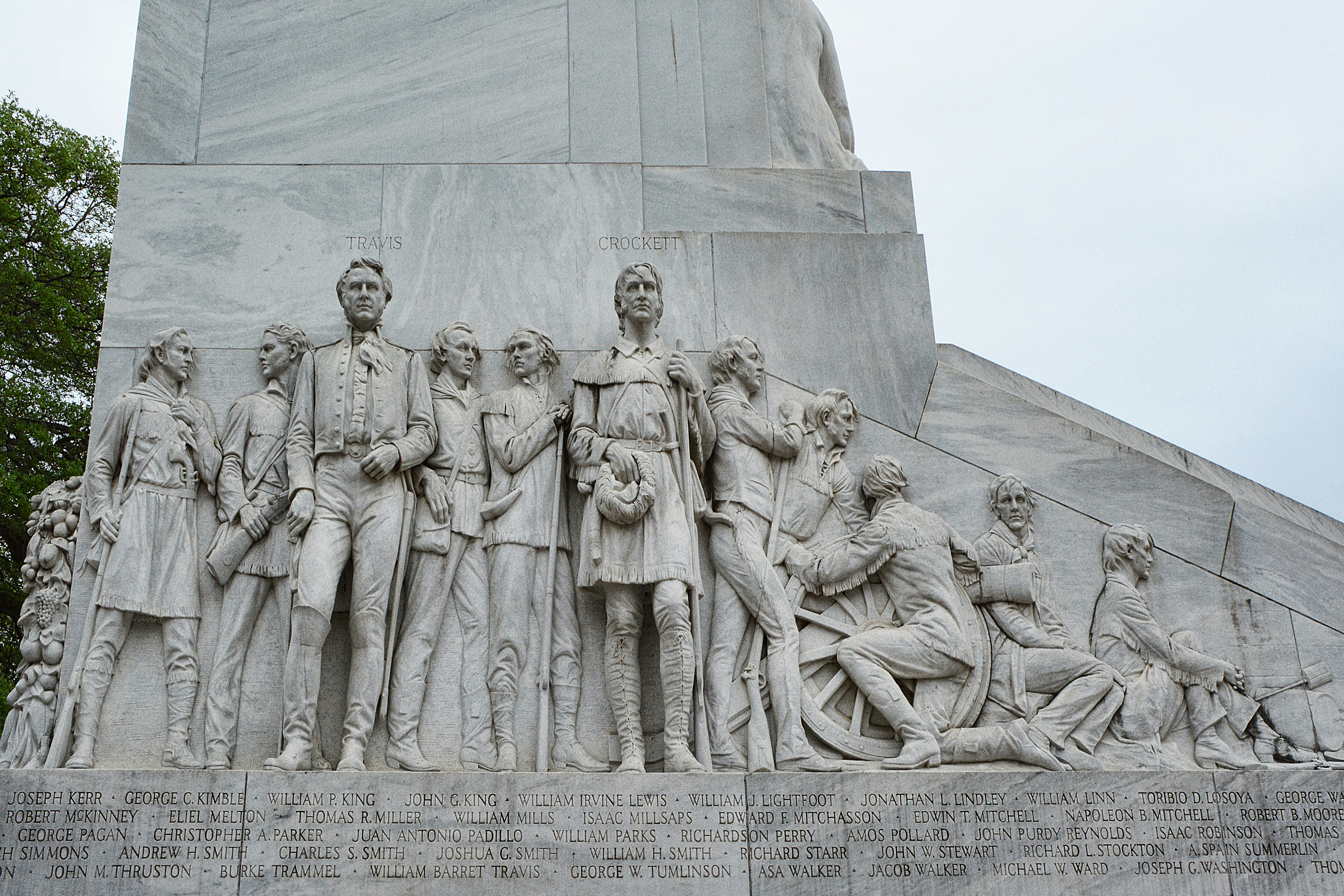
Although
the historic Alamo building could be considered the oldest and most revered
monument in Texas, in 1940 the city of San Antonio erected the large Alamo
Cenotaph to commemorate the pivotal moment in the Texas Revolution. The 60-foot
grey-marble and pink-granite structure lists the names and depicts relief
images of the 187 known defenders of the Alamo. On the face of the monument, an
inscription pays tribute to their bravery:
“They
chose never to surrender nor retreat; these brave hearts, with flag still
proudly waving, perished in the flames of immortality that their high sacrifice
might lead to the founding of this Texas.”
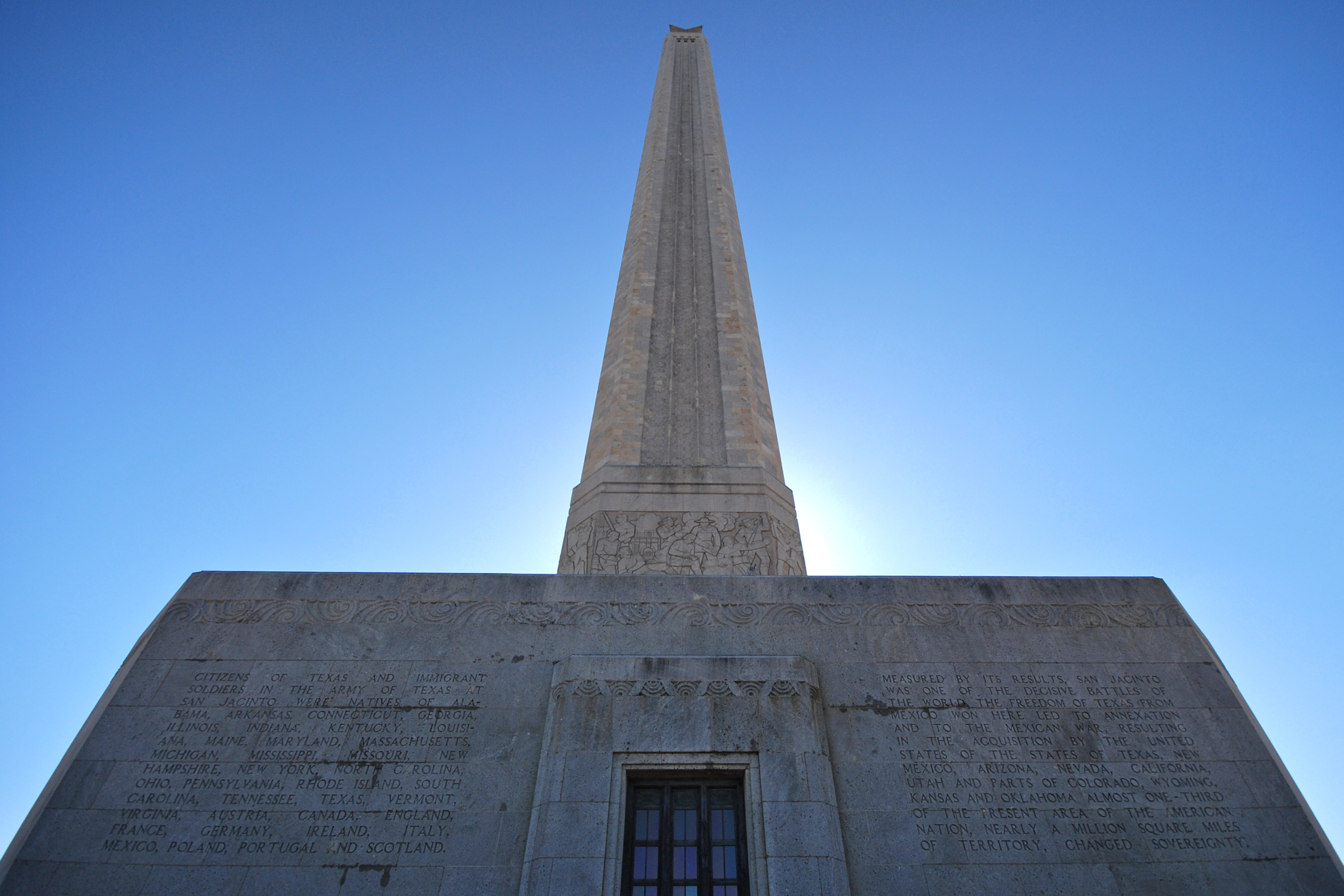
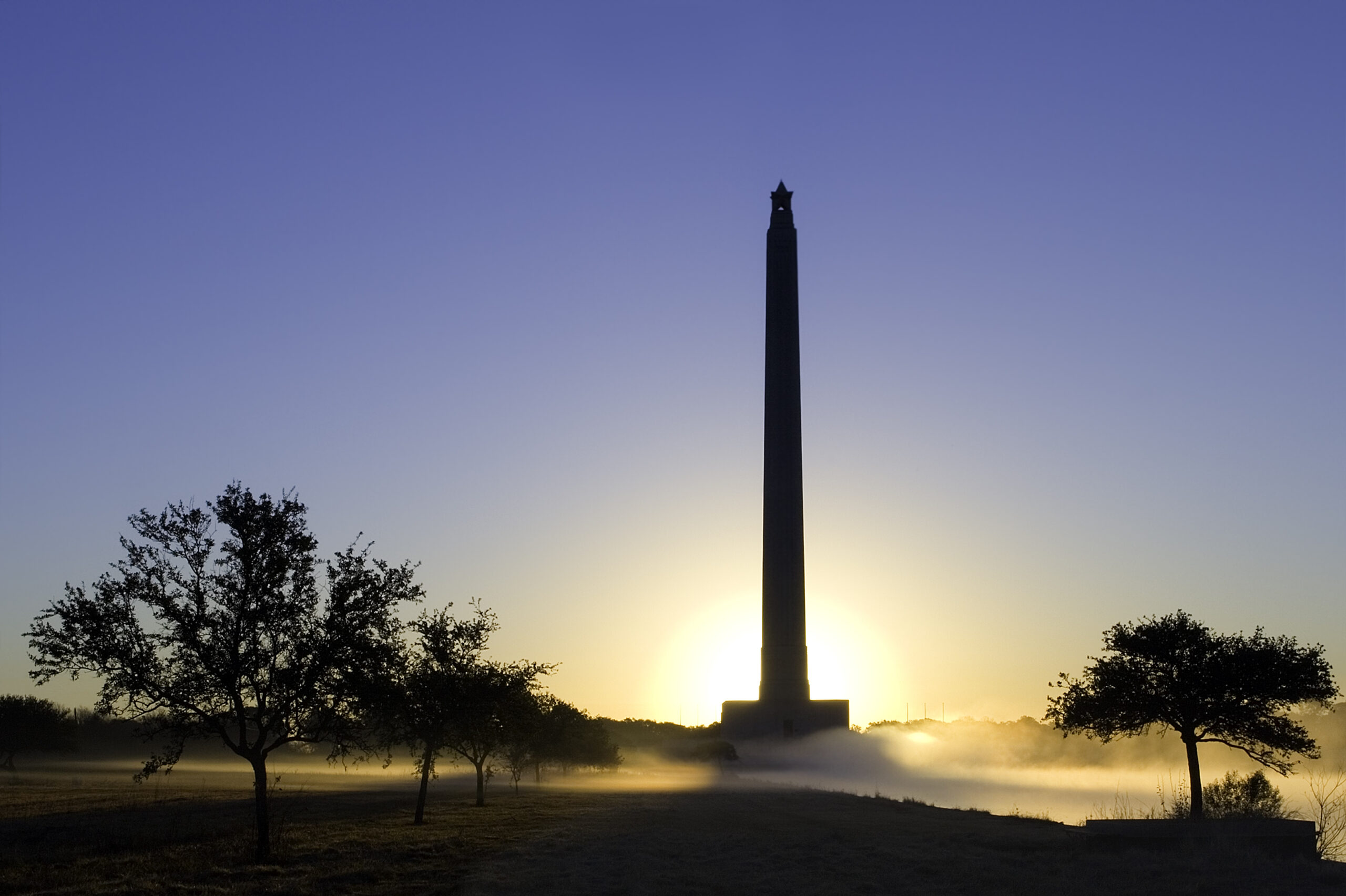
It’s appropriate that in a state as big as Texas, the monument celebrating the Lone Star State’s independence is truly massive. Dedicated in 1939, the 567-foot obelisk bears a 220-ton star, making it the world’s tallest masonry column. Visitors to the San Jacinto Museum of History can take an elevator to the monument’s observation deck, which looks out on the Houston shipping canal that now runs by the San Jacinto Battlefield. An inscription on the monument recounts the history of the Texas Revolution, culminating in a battle in which general Sam Houston led the Texans to victory against the Mexican army to cries of “Remember the Alamo!”
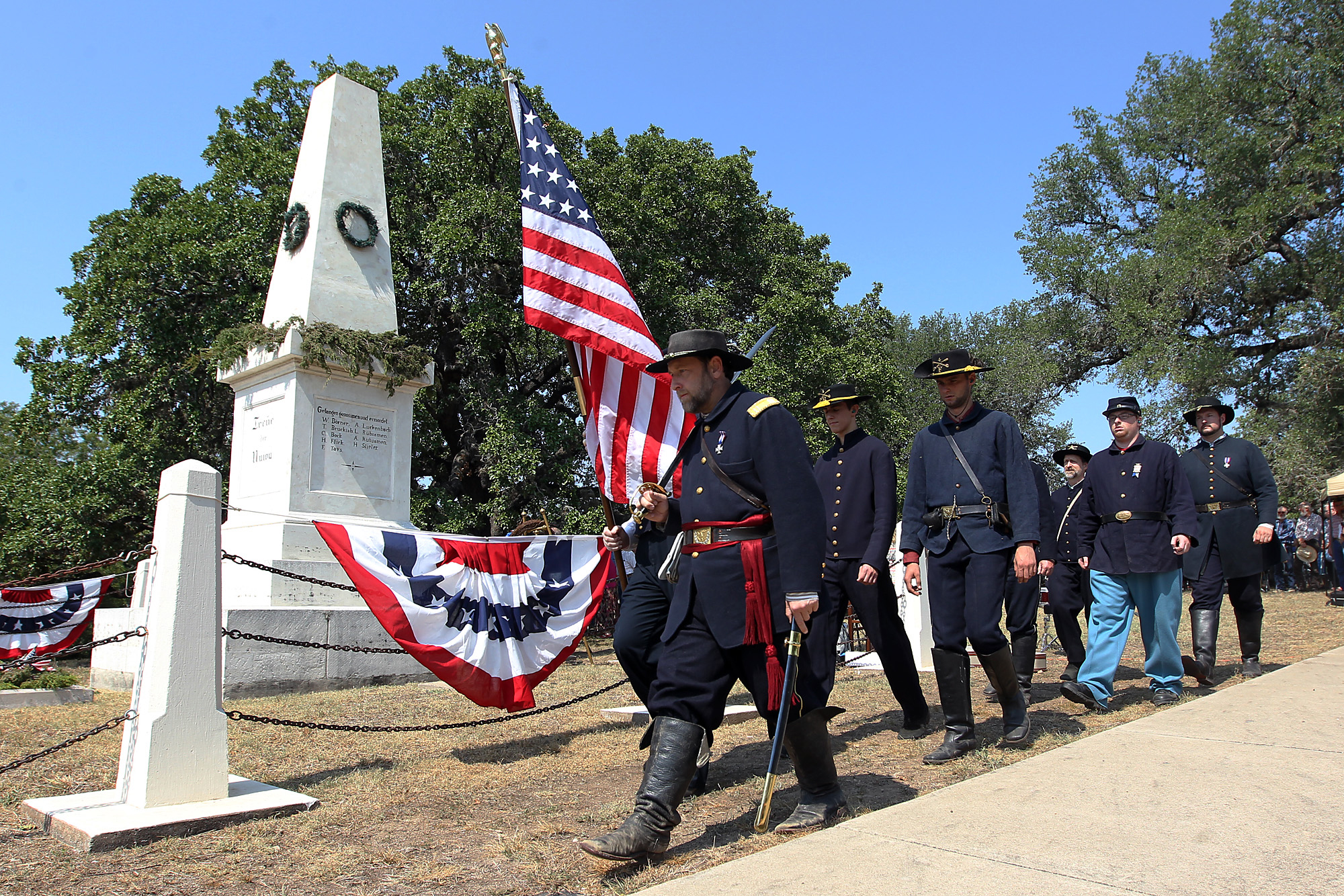
In 1862, Kinney County, like much of the Texas Hill Country, was placed under martial law by the Confederate Army. That’s because many of the approximately 20,000 German settlers who had recently arrived in the Hill Country opposed the Confederacy’s support of the institution of slavery. When 61 German settlers attempted to flee Texas for Mexico, they were confronted by Confederate soldiers and attacked. By some accounts, 30 German Texans were killed and 20 were wounded.
In
1866, the Treue der Union Monument was raised in Comfort to commemorate the
victims of the massacre. It was one of the very first monuments raised after
the Civil War, and it stands near the site of the mass grave where many of the
victims are buried. The names of the victims are etched into the modest
limestone plinth.
Texans
fought bravely in every armed conflict the U.S. has fought in since the Mexican-American
War. In Sam Houston Park, a modest granite block remembers the local
Houstonians who fought for their country during World War I. A bronze plaque
adorned with an eagle lists their names. Curiously, the date of its dedication
and the artist who designed the monument are unknown.
An
understated and reverent monument, the Big Spring Vietnam Memorial honors the
men and women who gave their lives or were taken as prisoners of war during the
conflict in Vietnam. A 9-foot black granite memorial features a map of the Southeast-Asian
country with the POW-MIA logo etched into its face. Flanked by flags representing
each branch of the armed forces, the memorial sits in a 2-acre park that also houses
some of the military vehicles used in the conflict.
For more Texas history, follow our guide to the historic Texas Forts Trail.
The True Story of the Wildcatters Who Transformed Texas
It took guts to drill for oil in the early days, but striking black gold was worth risking everything.
Weird History: The Goat Mayors of Lajitas
In this installment of Texas’ Weird History, we explore the story behind the goat that became the mayor of the West Texas border town of Lajitas.

You might not get the obsession with adding the soda to everything from chili to barbecue sauce. But then you’re probably not a Texan.
The 53ers of the Texas Gold Rush
Many flocked to the state to try their luck at finding riches, unfortunately, few succeeded.
How Texas Helped Save the American Wilderness
How have Texans helped propel the environmental movement? This Earth Day, we look at a new history that unveils some unlikely eco-heroes from the Lone Star State.
The Most Notorious Texas Outlaws
Texas lore is filled with outlaws and bandits who capitalized on the lawless frontier to lead lives of crime and villainy. But who are the most notorious outlaws in Texas history? Here are our picks.