Please sign in as a member or guest below to access it.
Please sign in as a member or guest below to access it.

Before you head out to enjoy Texas’ many beautiful rivers and lakes this summer, it is useful to have some familiarity with the state’s water laws and regulations.
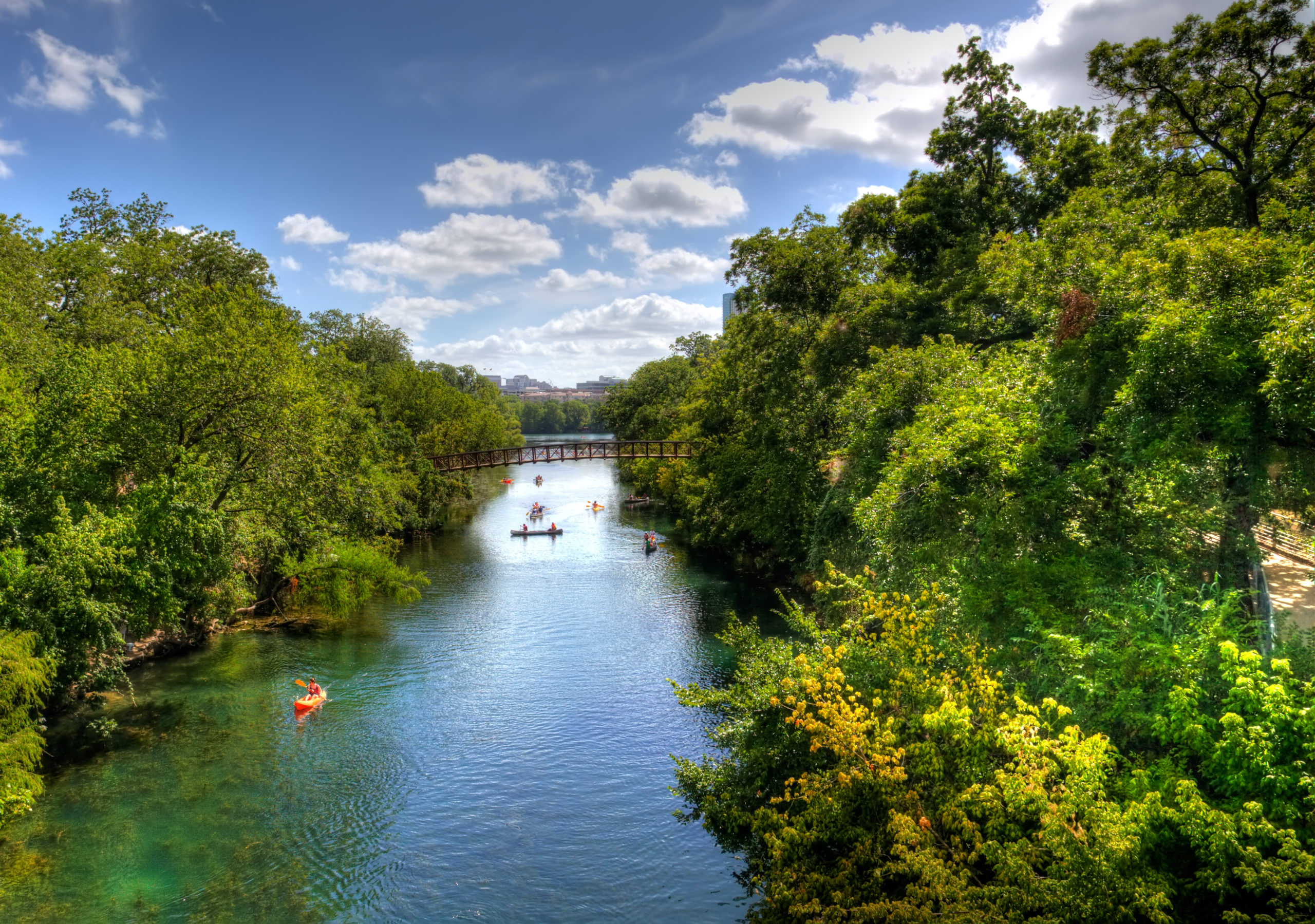
According to Texas law, all rivers, lakes, oceans, and waterways are considered public and owned by the state. That means that Texans can enjoy swimming, fishing, and boating in most of the state’s beautiful waterways. There are, however, some caveats. The legal fine print around Texas’ water laws can get as murky as a catfish hole. So, before you dip your toes in the water or launch your Jet Ski or fishing boat, make sure you know the rules of the water.
According to state law, a body of water is public if it is “navigable in fact” or “navigable by statue.” Determining what that means in practice, however, can sometimes be complicated. According to the Texas Parks & Wildlife Department, there is no precise test for determining whether a body of water is “navigable.” Often, disputes must be settled by the courts.
The Texas Supreme Court defines the bed of a stream to be the land between the “gradient boundary” of each bank, which means, in general, the land that is covered by rising waters of the creek or river. That means that you are legally allowed in Texas to camp, walk, and fish from the banks of streams even if those streams run through private land.
This public designation extends to lakes. Since most of Texas’ lakes were formed by damming streams, the water is still considered to be legally part of the stream — and a lake only makes the river or creek that much more navigable.
Property owners are not allowed to fence off lakes created by damning a navigable stream, and the public should have access to boat and fish on them. There are some private lakes and streams, and those mostly include bodies of water that were created within private developments or with streams that are deemed to be “non-navigable.”
But for the average outdoor enthusiast, it is good enough to know that the law protects access to most Texas rivers and streams as well as their banks. Even if a river runs through private land, the river itself is available to the general public for fishing, swimming, and boating.
The tricky part relates to accessing waterways, and Texas law isn’t clear on many of the details. Technically, all lakes and streams are owned by the state and are open to public use — it is a right that was laid out in the Texas Constitution.
The Constitution was concerned with allowing Texans free use of the state’s streams and rivers for navigation — they were an important transportation network in Texas’ early days. That means that, in addition to access to the water, boaters do enjoy some limited rights to access land on the banks of the stream, even if it is on private land — for example, if a canoer traveling down a river encounters a logjam or other obstruction and must carry their canoe on land around the blockage to ensure their safety and others’.
This can sometimes lead to some tricky legal conflicts between water usage rights and trespassing laws. Because Texans are granted rights to access all portions of a public lake, marinas are not lawfully allowed to prohibit boaters from accessing their private docks. That means a private marina may not attempt to limit the public’s access to or use of their facilities.
Texas water rights also extend three marine leagues, or nine nautical miles, out to sea along its coast, so these same rights and privileges apply to ocean waters as well.
Texas water laws generously protect access to water, but if you plan on getting out in the water on a boat, you must be aware of the state’s boating rules and regulations. There is no boating license requirement in Texas, but there are some rules around safety and operation. These include:
Unlike automobiles, Texas does not require that boat owners insure their boats. That said, the state has the second-largest rate of boating accidents (after Florida) in the U.S. You can achieve peace of mind while enjoying Texas’ beautiful waterways this summer by following a few simple guidelines:
Contact your Texas Farm Bureau Insurance Agent to find an insurance policy that will ensure that, in the event of an unforeseen event on the water, you will be covered.
Coverage and discounts are subject to qualifications and policy terms and may vary by situation.
Follow Texas’ Storm Chasers into the Eye of a Tornado
Often, storm chasers are the reason we have a warning before the storm hits.

6 Emergency First-Response and Safety Courses
Be prepared for anything with these courses.
How to actually have a happy holiday.
Gear Up for a Safe Grilling Season
Avoid property damage and injuries during football season with this grill safety advice.

’Tis the Season for Focusing on Health: A Winter Wellness Guide
Texas’ wild winter weather swings can wreak damage on our immune systems. Following a few simple tips can help protect your health and wellness this season.
Which Navigation App Should You Use?
Comparing Google Maps, Waze, and Apple Maps.