
Please sign in as a member or guest below to access it.
Please sign in as a member or guest below to access it.

An island escape — in the Lone Star State.
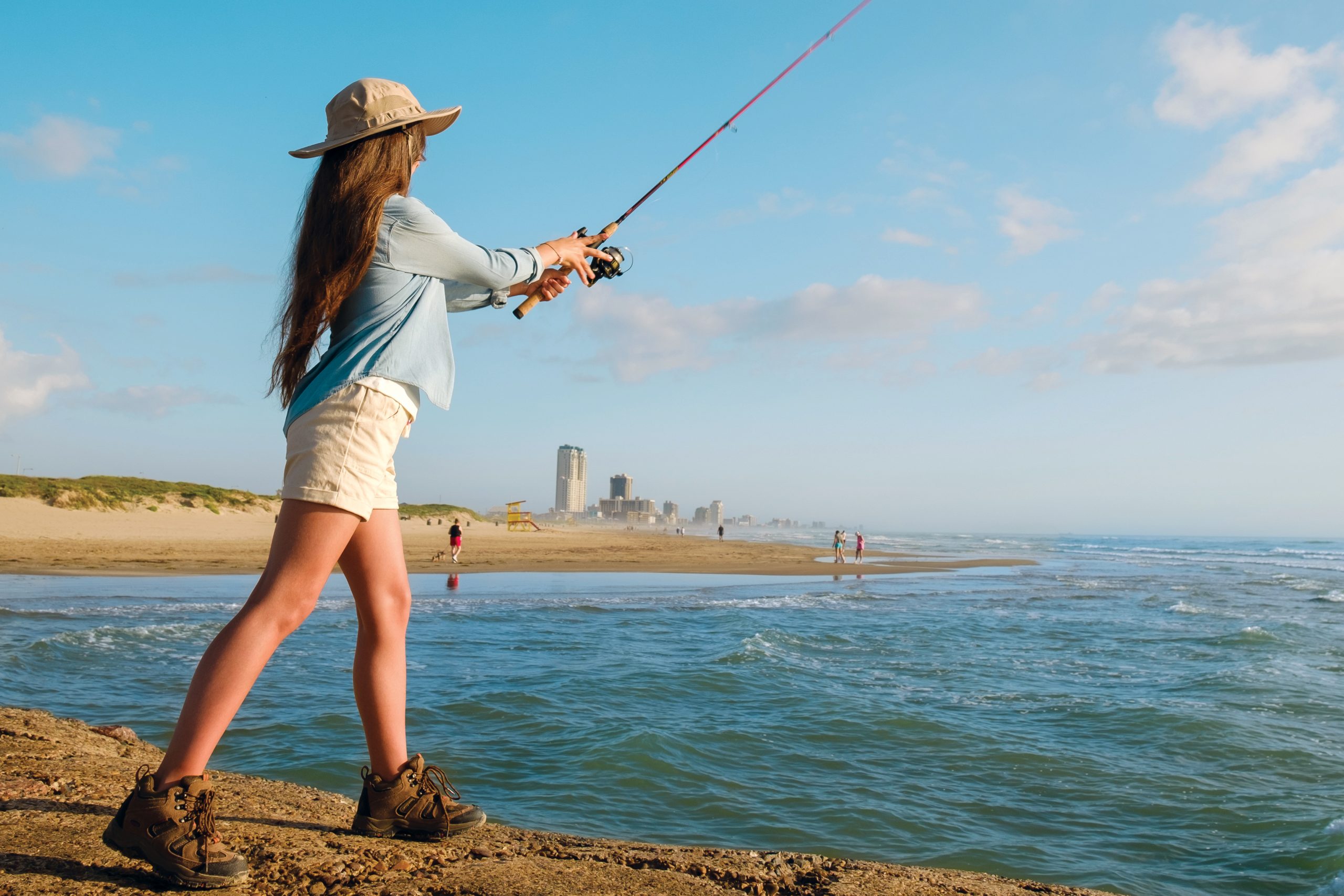
When Texas travel destinations come to mind, top billing is typically reserved for the lush, rolling hills of Central Texas or the dramatic desert landscapes of West Texas. That might be because many sightseers don’t realize there are about 30 barrier islands off Texas’ expansive coastline, which stretches some 350 miles.
Some of these barrier islands, each with their own history, charm, and ecological landscape, are a gateway to an unforgettable getaway or adventure-packed day trip. From the pristine beaches of South Padre Island to the secluded, rugged beauty of Matagorda Island, these coastal gems have weathered the test of time and eagerly welcome visitors each year.
Explore seven of Texas’ most scenic islands, their history, and what keeps travelers seeking out their shores.
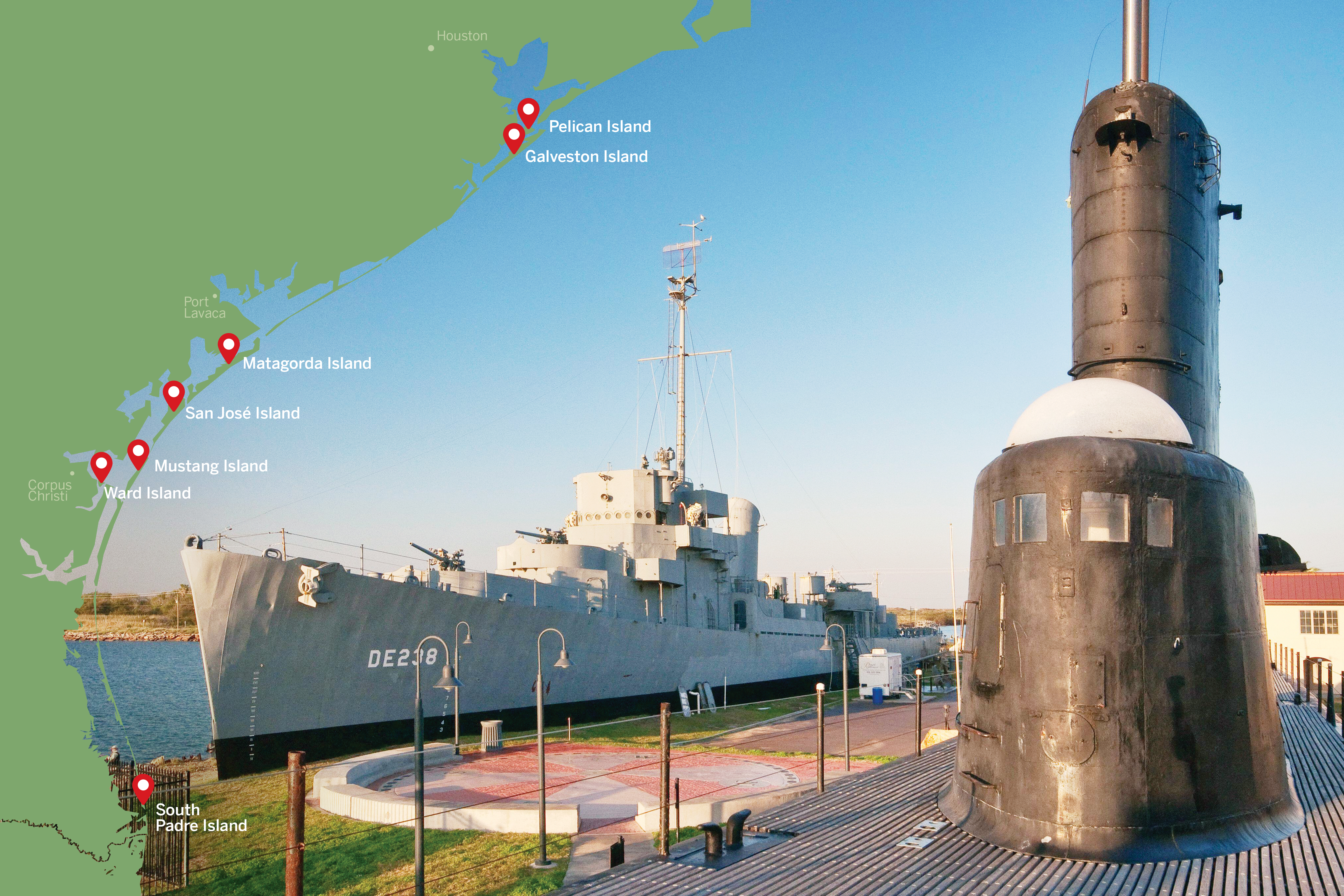
Pelican Island started as a narrow salt marsh more than 200 years ago. During the Civil War, it housed a small Confederate fort; the island later held an immigration station, shipyard, and fish and oyster business. Since then, Pelican Island has morphed into a small modern island that’s home to Texas A&M University at Galveston and Seawolf Park, where visitors will find the Galveston Naval Museum. Peruse some of the area’s most prolific fishing piers or explore a WWII submarine, the USS Cavalla. Pelican Island is a great itinerary addition when visiting Galveston.
Don’t miss: Tour the USS Stewart (pictured), one of only three destroyer escorts, at the Galveston Naval Museum.
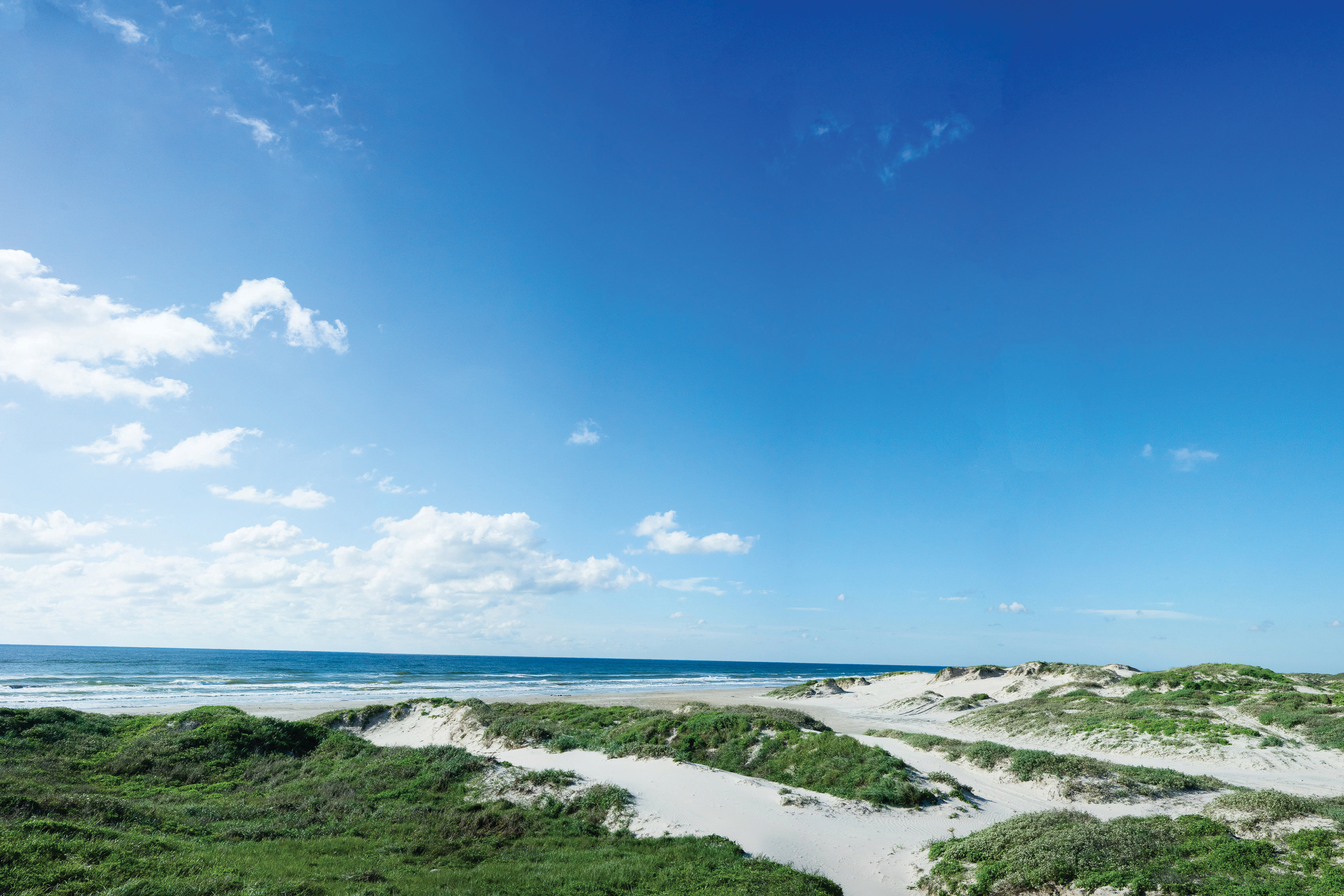
With a past that includes pirates and a present that harbors alleged ghosts, Galveston is perhaps Texas’ most fabled island. After Spanish exploration in the 16th century (and, possibly, a 1528 shipwreck), legendary French pirate Jean Laffite built a small colony in 1817 and was forced out by the U.S. Navy three years later, supposedly leaving behind buried treasure.
Galveston continued to grow into a critical port city, earning the island the name “Wall Street of the Southwest.” But, in 1900, the Great Storm (a category 4 hurricane) pounded the bustling city, killing between 8,000 and 12,000 people. Although the city rebuilt, it never quite regained that same momentum. Given the city’s history of hurricanes, a major Civil War naval battle, and yellow fever, it’s no wonder Galveston is a hotbed for ghost tours. Check out the Grand Galvez, the Moody Mansion, and Bishop’s Palace for a chill and a thrill.
These days, Galveston is known as an ideal weekend getaway for many Texans, with welcoming beaches, charming bed-and-breakfasts, and attractions such as Moody Gardens and the iconic Pleasure Pier. Galveston is also appreciated for its arts scene, ghost tours, and reputation for hosting one of the largest Mardi Gras celebrations outside of New Orleans.
Don’t miss: If you tire of the beach, head to The Strand district, a National Historic Landmark brimming with beautiful Victorian architecture where visitors can experience a glimpse of the island’s heyday of the late 1800s and early 1900s.
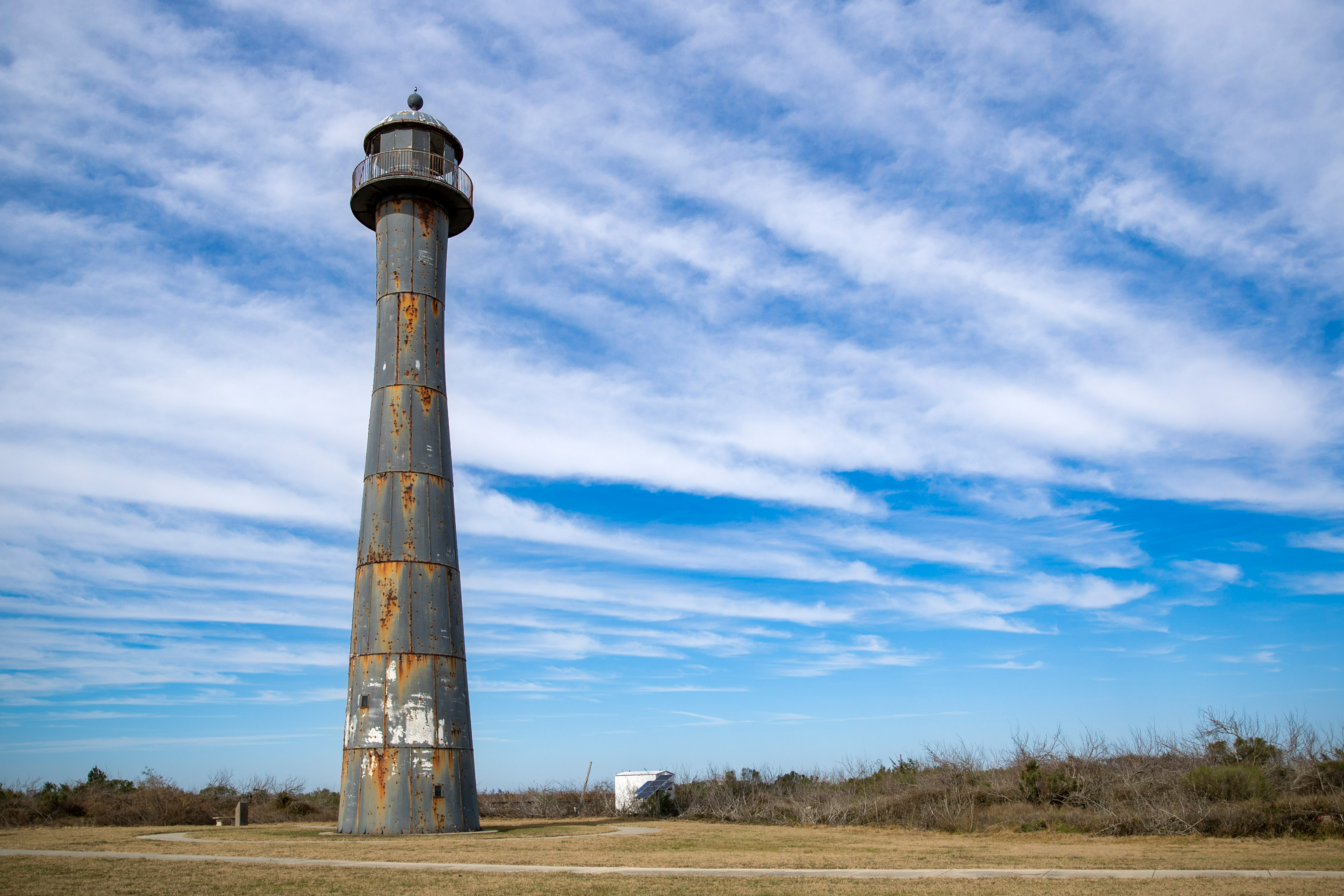
Exclusively accessible by boat, this 38-mile-long island is known for its natural beauty and seclusion. The only inhabitants you’ll find are wildlife, including a herd of white-tailed deer, alligators, feral hogs, and an assortment of migratory birds, among others. But the island wasn’t always so secluded. It was home to two towns in the 1840s (though they did not exist simultaneously), a fort during the Civil War, and a bombing and gunnery range during World War II.
These days, the untouched coastal wildlife refuge is the ideal escape for outdoor explorers looking for beachfront hiking, fishing, and beachcombing for seashells, sea glass, and driftwood. There’s no electricity or drinking water on the island, but explorers can camp on the island. Just make sure to bring what you need with you.
Don’t miss: There’s a cast-iron lighthouse at the island’s north end, standing since the 1850s when it would help guide ships through Pass Cavallo on their way to Indianola. You can’t go inside, but it’s still worth a look if you’ve made it to the island.
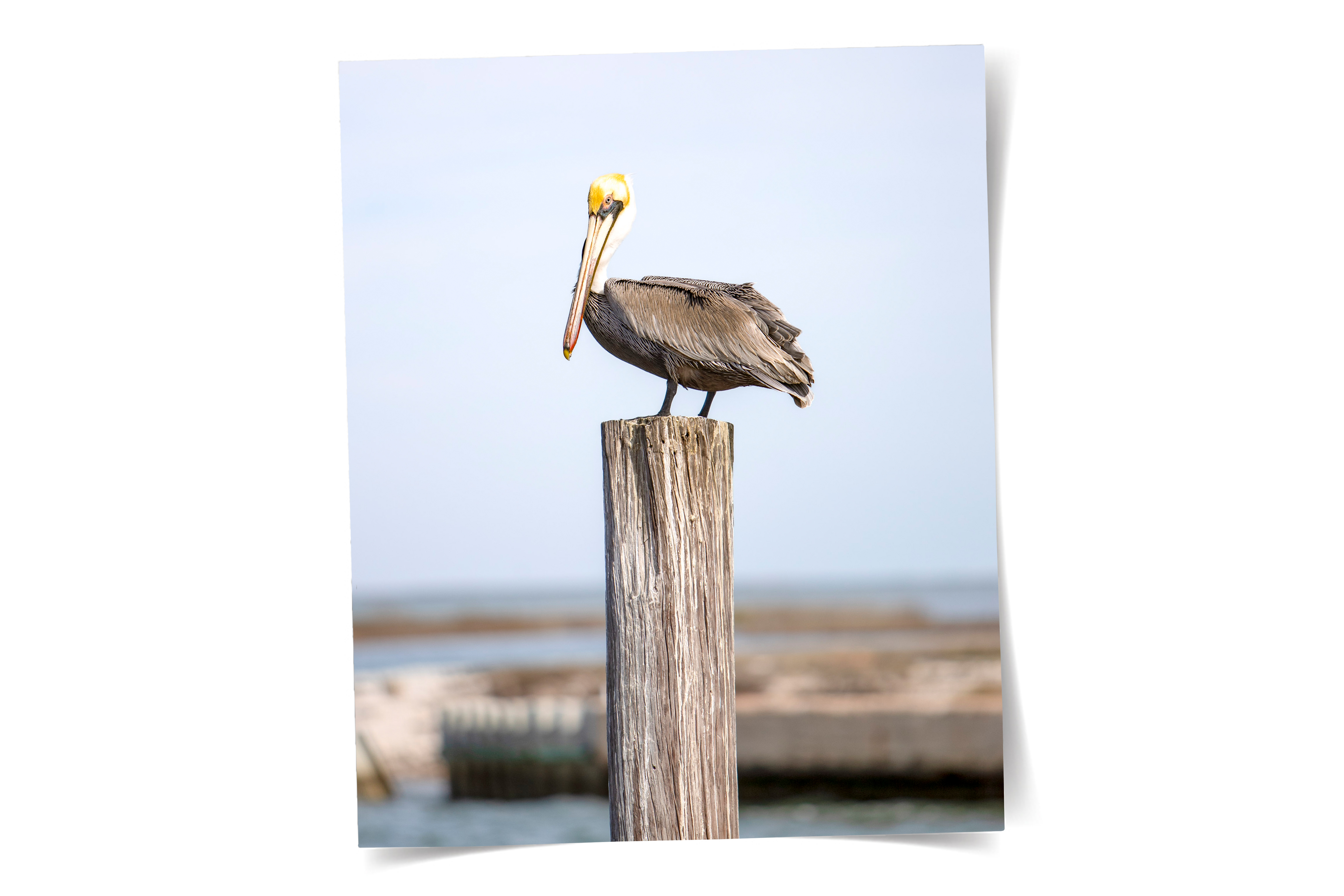
Experience a desert island without traveling too far from civilization. Texas oilman Sid Richardson bought the 21-mile private island, affectionately called “St. Jo,” in the 1930s. Here, he entertained presidents Franklin D. Roosevelt, Dwight D. Eisenhower, and Lyndon B. Johnson.
The land has a past as a sheep farm and cattle ranch, and it also held the first American flag to fly over Texas (planted in 1845). Although St. Jo’s sand dunes are off-limits to public visitors (Richardson’s descendants still own the island today), the beaches are fair game. The island is a short boat ride from vibrant Port Aransas, making it the perfect destination for a day trip.
Don’t miss: Visitors love the island for its fishing, wading, and solitude.
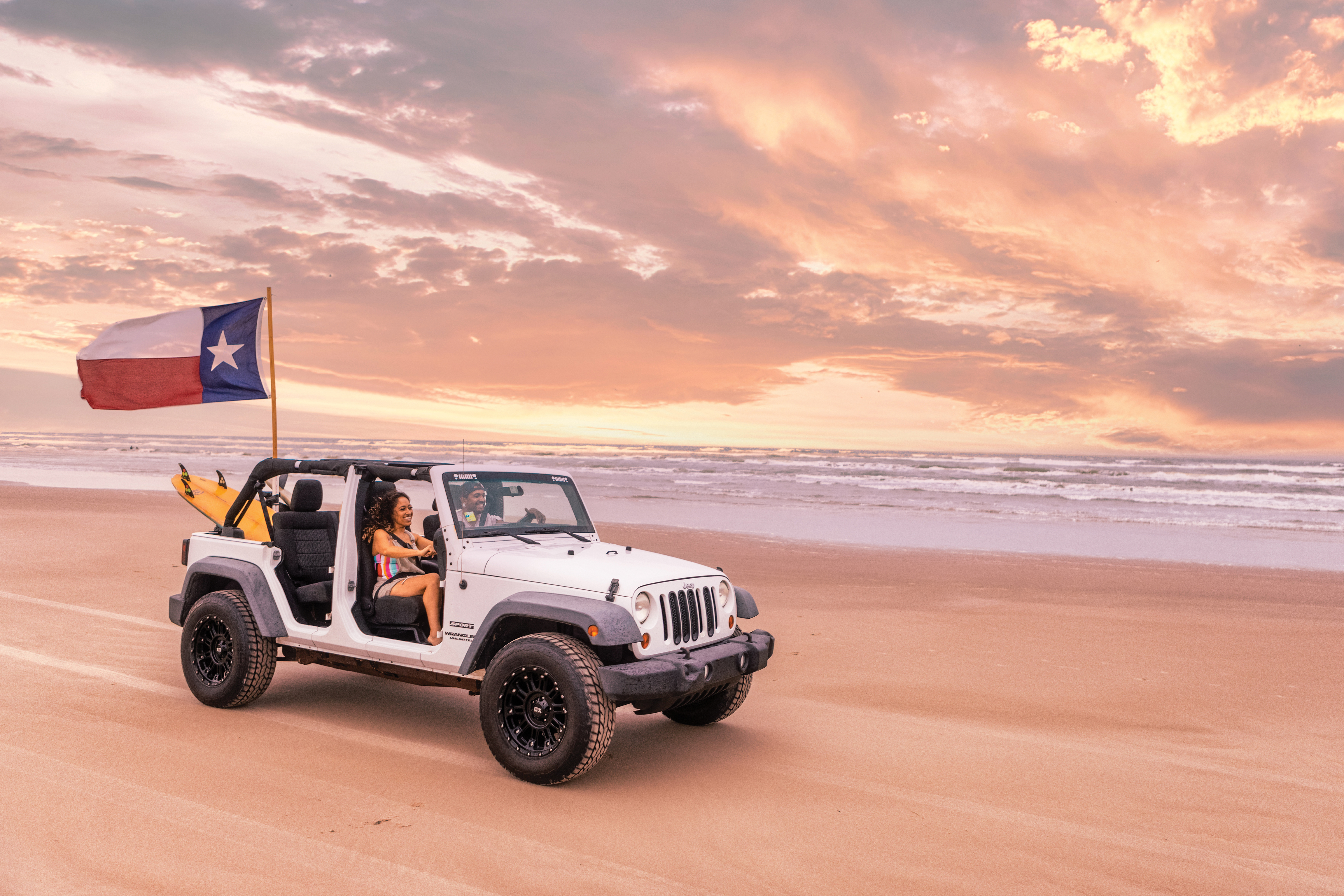
This 18-mile-long barrier island between Corpus Christi and the Gulf is named for the wild horses that once roamed its shores until the late 1800s. No one knows for sure, but it’s thought that Spanish explorers brought the horses to the island; others believe they swam to land from a shipwreck.
The Karankawa Indians were the island’s earliest-known inhabitants, followed by settlers in the mid-1840s. The island was also briefly home to a small military fort built during the Mexican-American War and used through the Civil War. In 1875, a hurricane destroyed the island’s only town, which was rebuilt and evolved into modern-day Port Aransas.
Each year, thousands flock to Mustang Island State Park’s nearly 4,000 acres, eager to experience serene coastal sand dunes, more than 400 species of birds, and some of the best fishing in the state. Stay awhile on the island by renting a beachfront condo or house.
Don’t miss: The endangered Kemp’s ridley sea turtles come ashore to lay their eggs between April and late July.
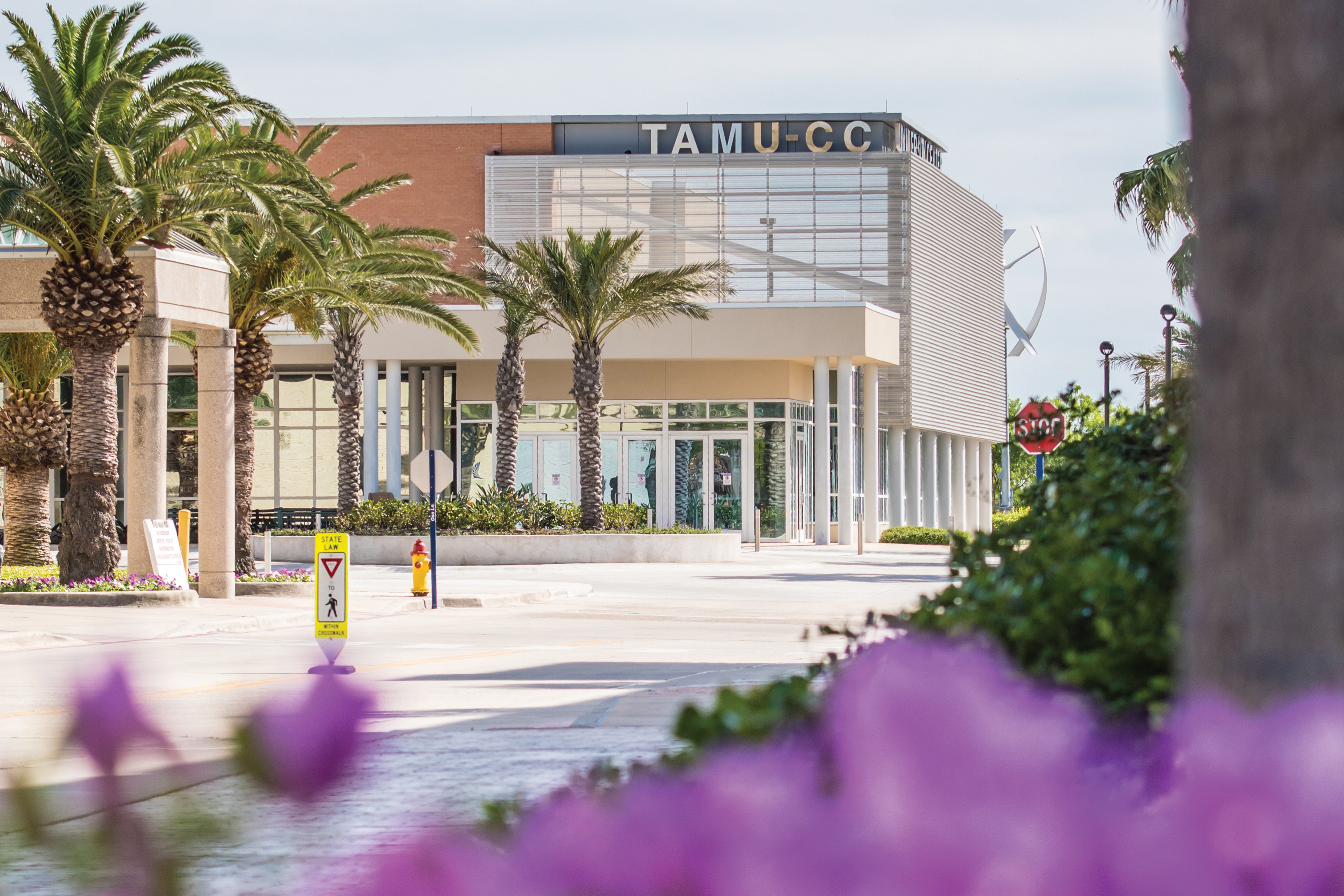
Had history played out a bit differently, this 258-acre peninsula might have been what Galveston is today. Land developer John C. Ward bought the triangular-shaped land wedged between Oso Bay and Corpus Christi Bay in 1892 for less than $1,500, with plans to create an exclusive resort community. An economic depression pushed Ward to Beaumont. In 1914, investors had plans to build a head-turning amusement park, but a 1916 hurricane flooded those dreams.
Finally, in 1942, Ward Island found its claim to fame as “Radar Island,” after a naval air station was built. Although the island’s happenings were a big secret to locals at the time, the base and radar station steadily trained Navy, Marine, Coast Guard, and Royal Canadian Air Force members, graduating more than 10,000 aviation technicians over the next few years before it closed in 1947. These days, the island is home to Texas A&M University- Corpus Christi and makes for an exciting day trip from Corpus Christi.
Don’t miss: There are 7.3 miles of hiking and biking trails that wrap around the island, excellent for bird lovers looking for painted bunting and yellow-billed cuckoo in the summer.
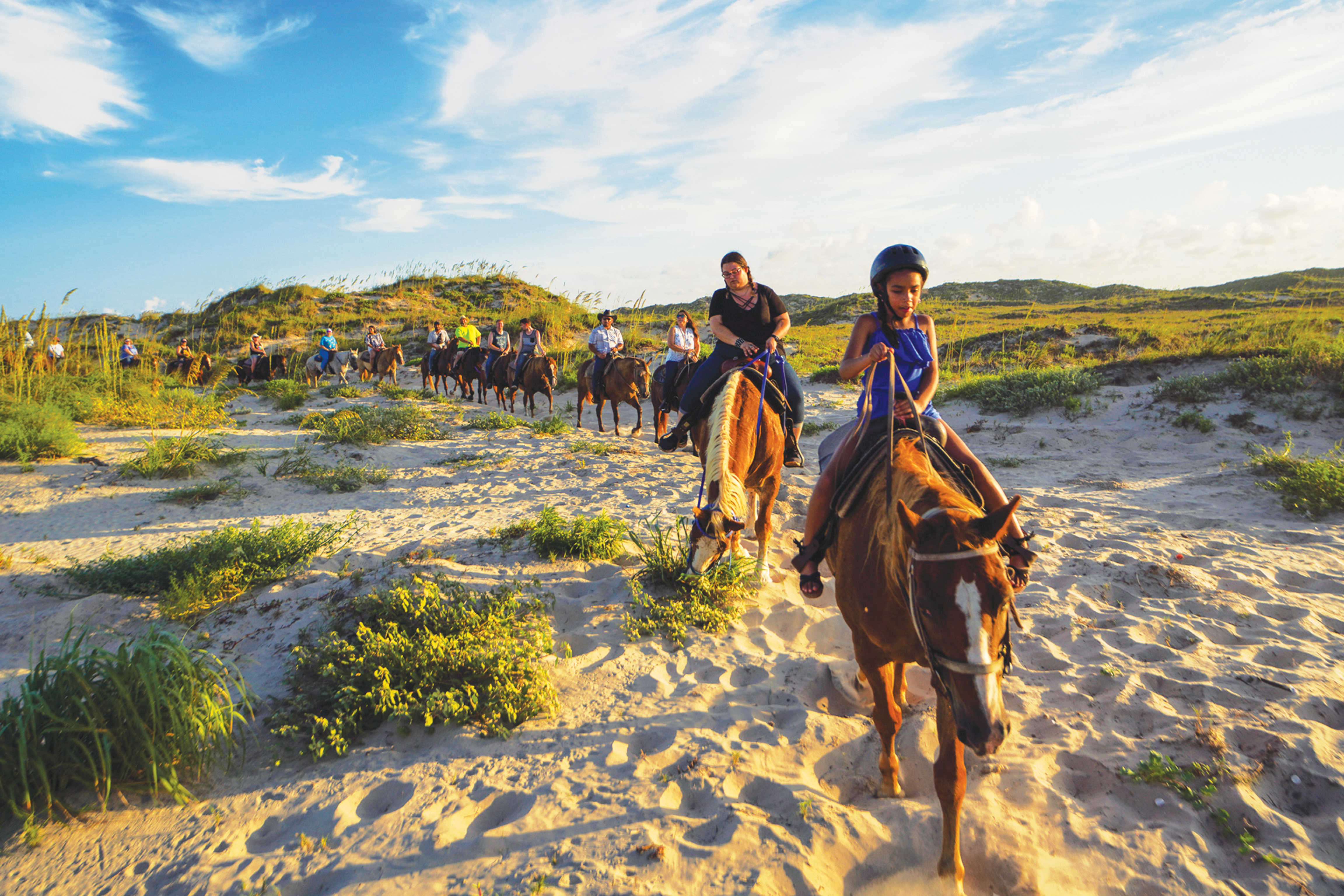
South Padre Island, also known as SPI, offers some of the most beautiful coastal, tropical scenery in Texas, with cool, clear water lapping against 34 miles of white sand beaches. Karankawa Indians were the first-known habitants of the island, before Spanish, and then Mexican, rule. The island evolved into a popular tourist destination throughout the 20th century. Modern-day SPI welcomes thousands of visitors every year, especially during spring break. There’s no shortage of things to do, from surfing and riding horses along the beach to spotting dolphins and sea turtles. Rent a beachfront condo for an extended stay.
Don’t miss: Get an intimate look at the island’s flora, fauna, and wildlife at the South Padre Island Birding, Nature Center & Alligator Sanctuary.
These seven barrier islands invite you to relax for a bit and bask in the beauty and resilience of Texas’ storied coastline. Adventure awaits — you just might need a boat or ferry to get there.
Make the most of long summer days and set up camp at the beach.

Longview is an old railroad town; home to some of the best barbecue on the planet; and the” Balloon Capital of Texas.”
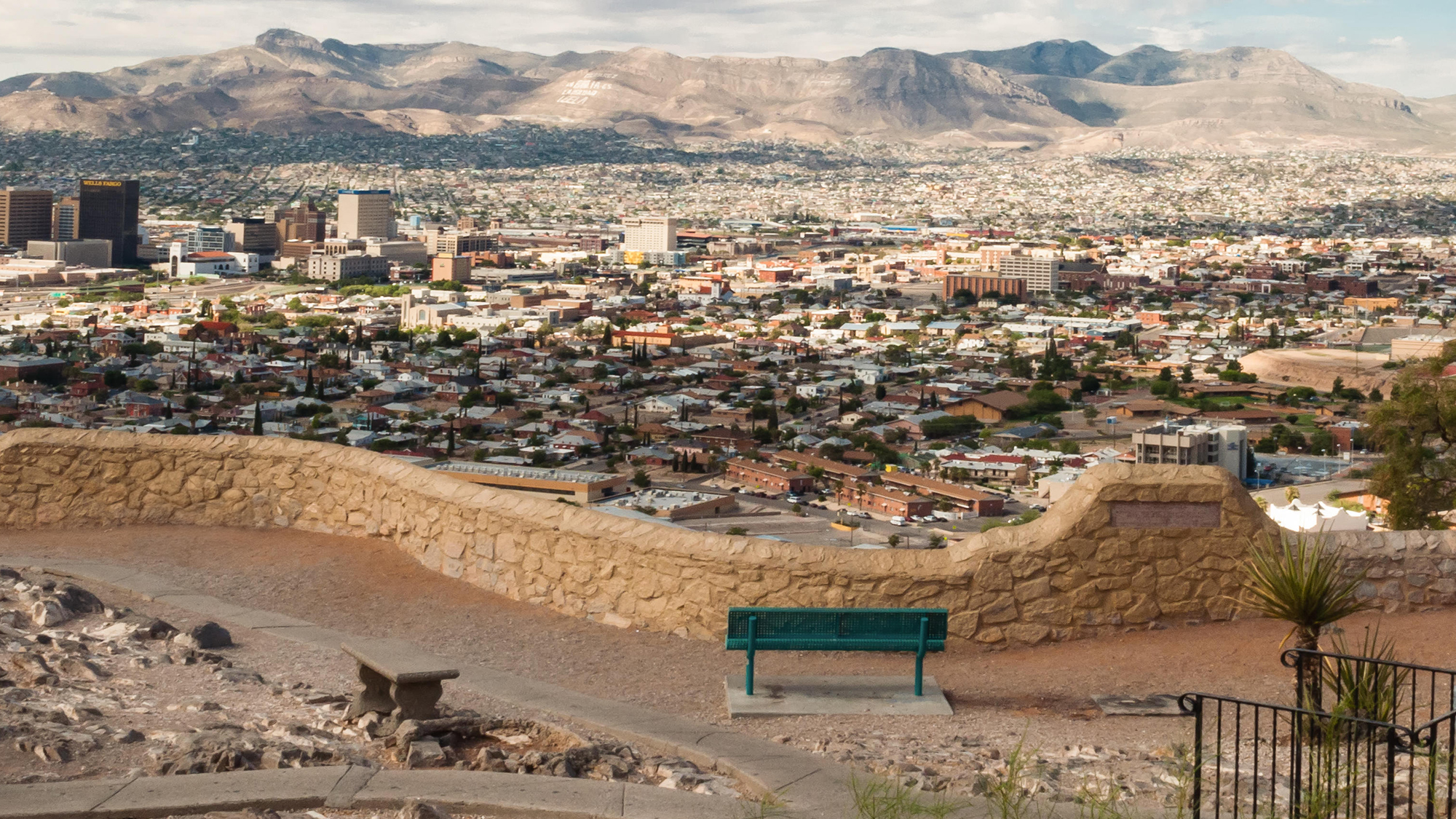
Don’t pass on El Paso.
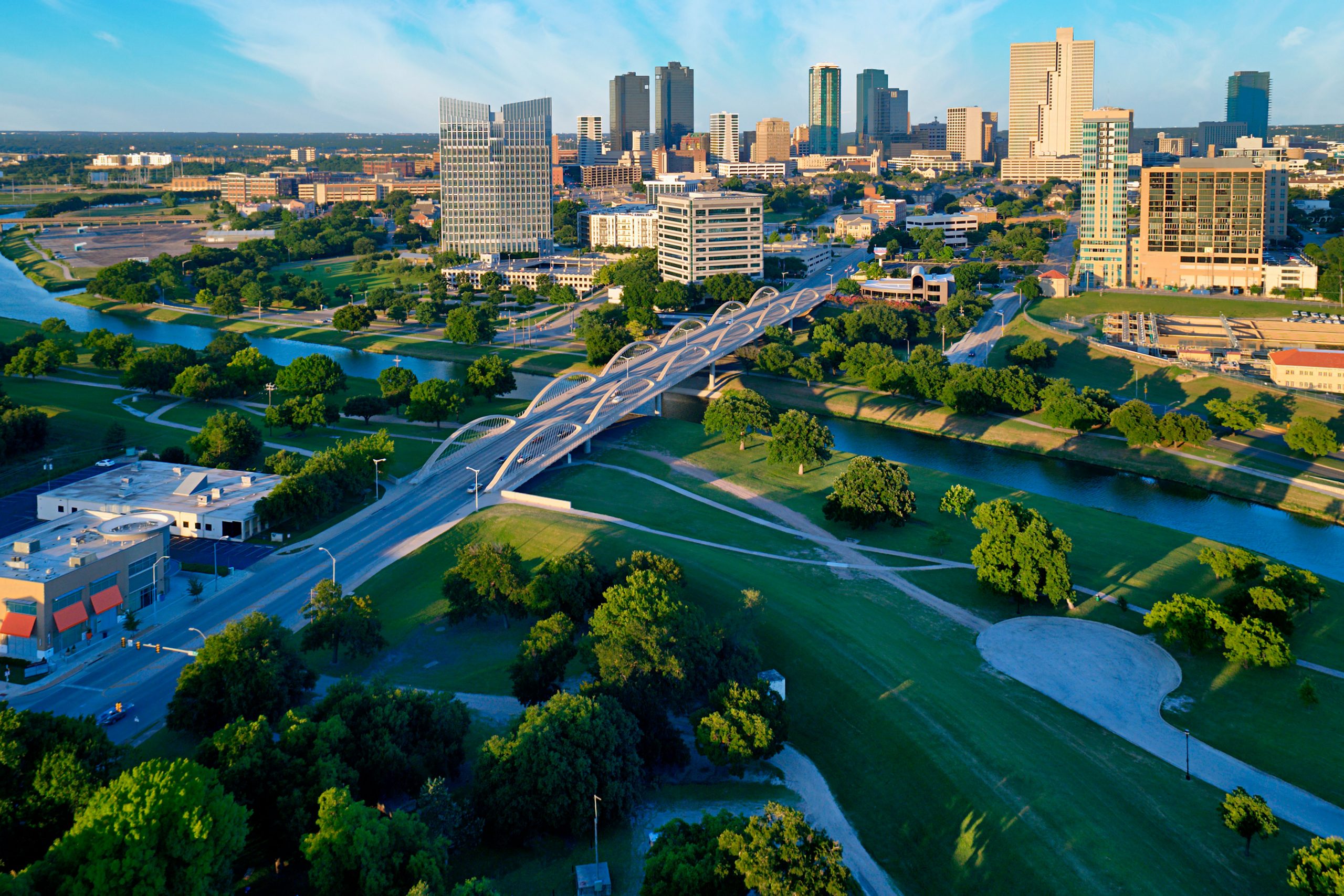
Aka Cowtown, aka Panther City.
Where to Celebrate Cinco de Mayo in Texas
Join the fiesta.

7 Texas Thrift Stores to Explore
Get the satisfaction of finding buried treasures all across Texas.
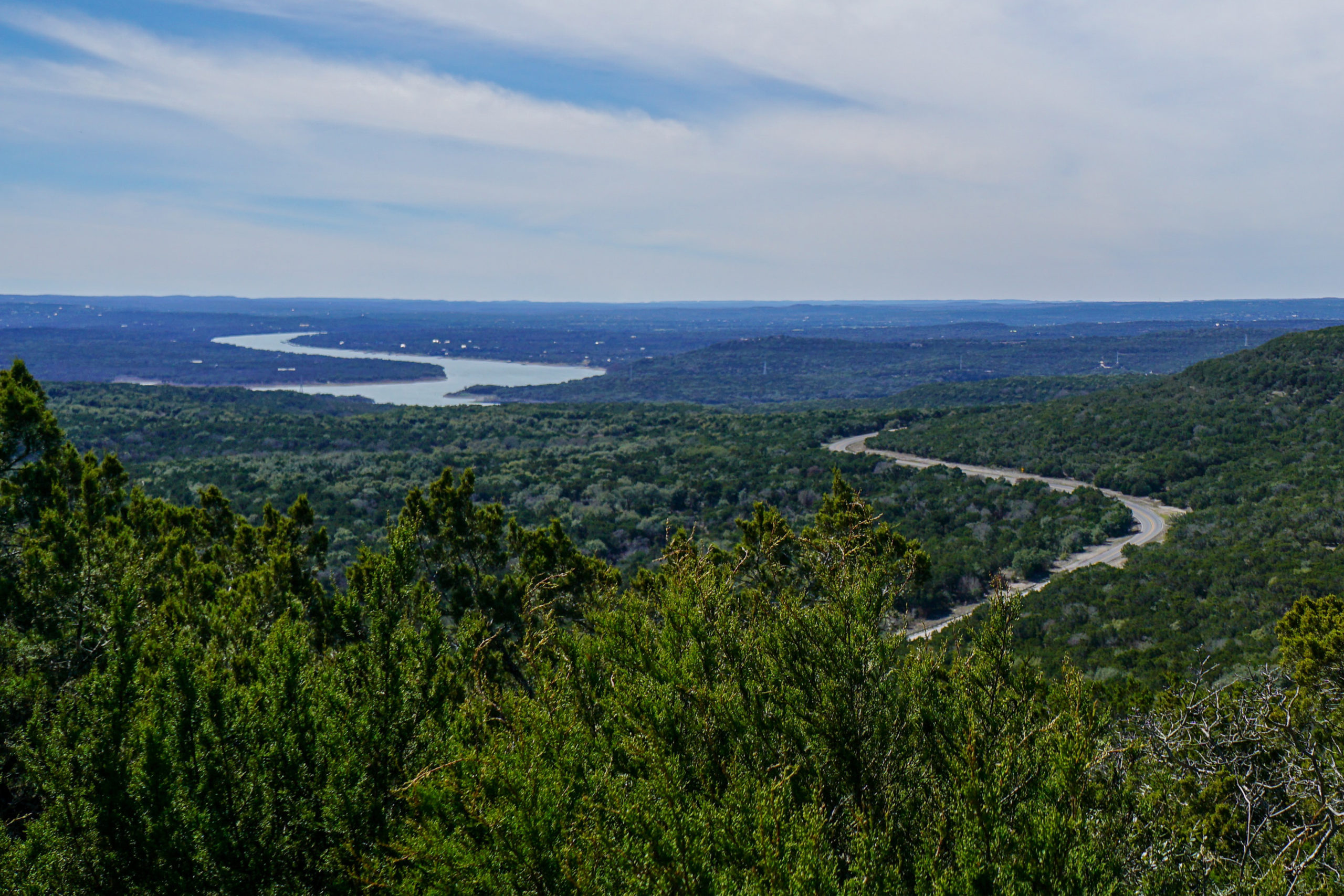
Its founder planned to create an industrial metropolis. Luckily for us, Marble Falls remains a nature lover’s haven.