Please sign in as a member or guest below to access it.
Please sign in as a member or guest below to access it.

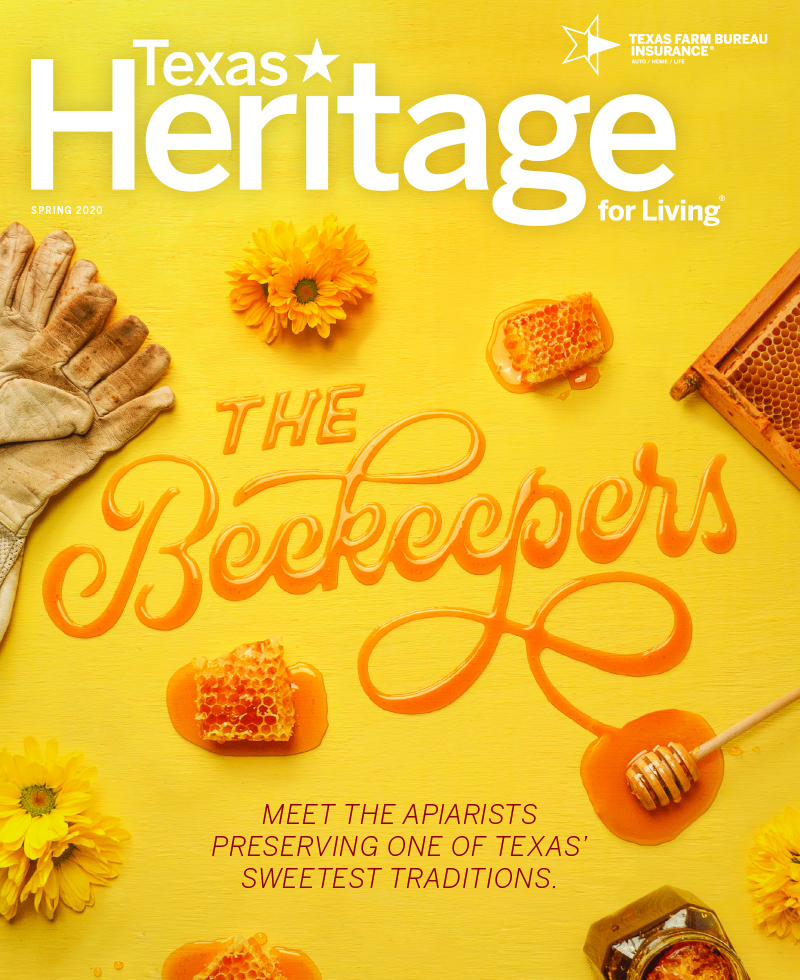
Meet the apiarists preserving one of Texas’ sweetest traditions.
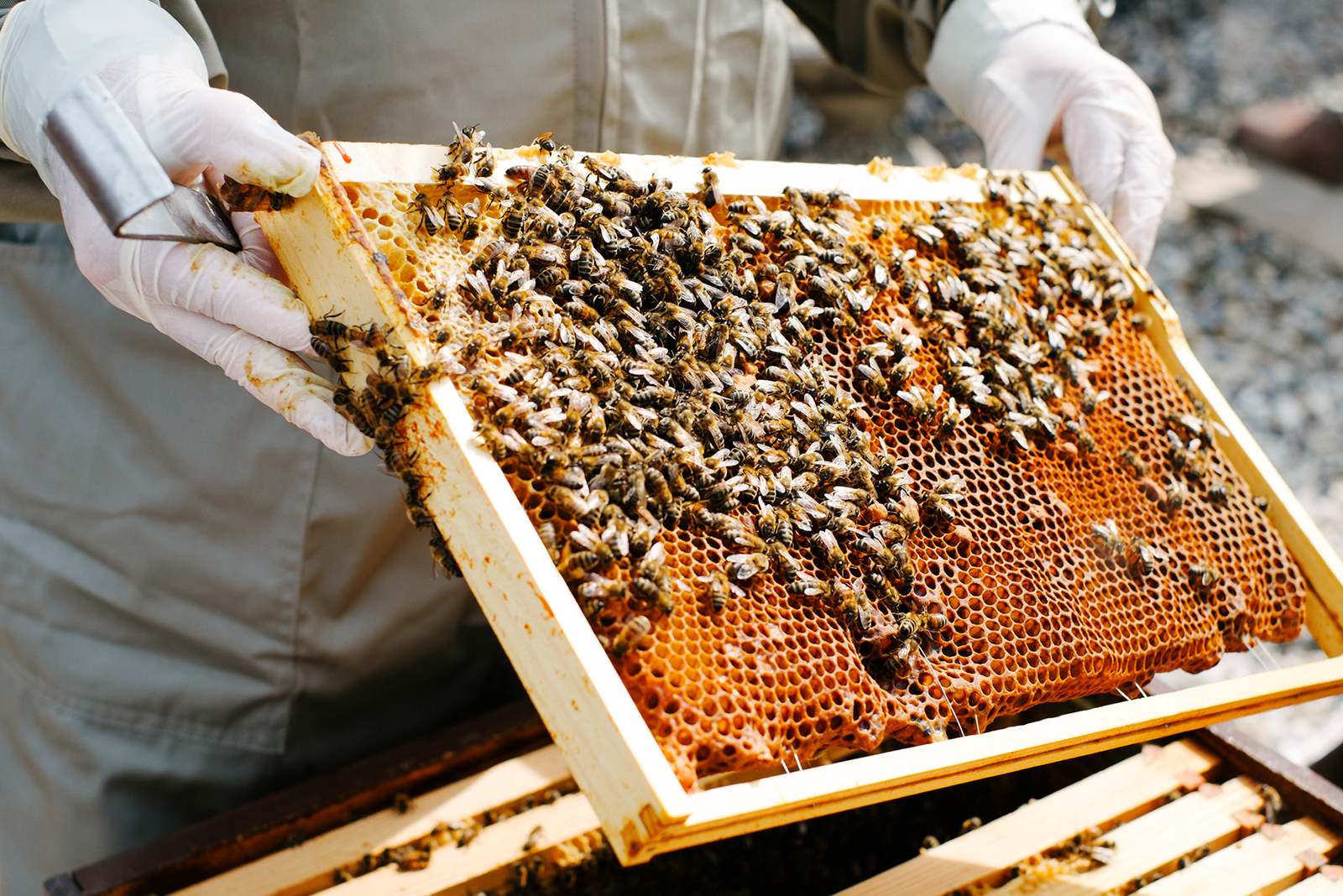
In 2019, at a special meeting of the Royal Geographical Society of London, some of the planet’s top wildlife experts and scientists made a somewhat surprising declaration: The most important animal on the planet, they said, is the humble bee.
Bees, they argued, are vitally important to sustaining the ecosystem. Seventy percent of the world’s agriculture is reliant on bees; they are important pollinators; and they have been determined to be the only living creatures that do not carry pathogens.
Bees are crucial to Texas’ ecosystem — and they have helped make Texas one of the nation’s top five honey-producing states. It’s estimated that Texas produced 7.9 million pounds of honey in 2017.
Honey producers in Texas range from large companies to mom-and-pop businesses to hobbyists who have turned their passion for honey into sweet finds. Wherever you are in the state, you are likely to find a local honey that captures a flavor profile you can be sure is unique to the Lone Star State.
Here’s a look at some of our most important produce.
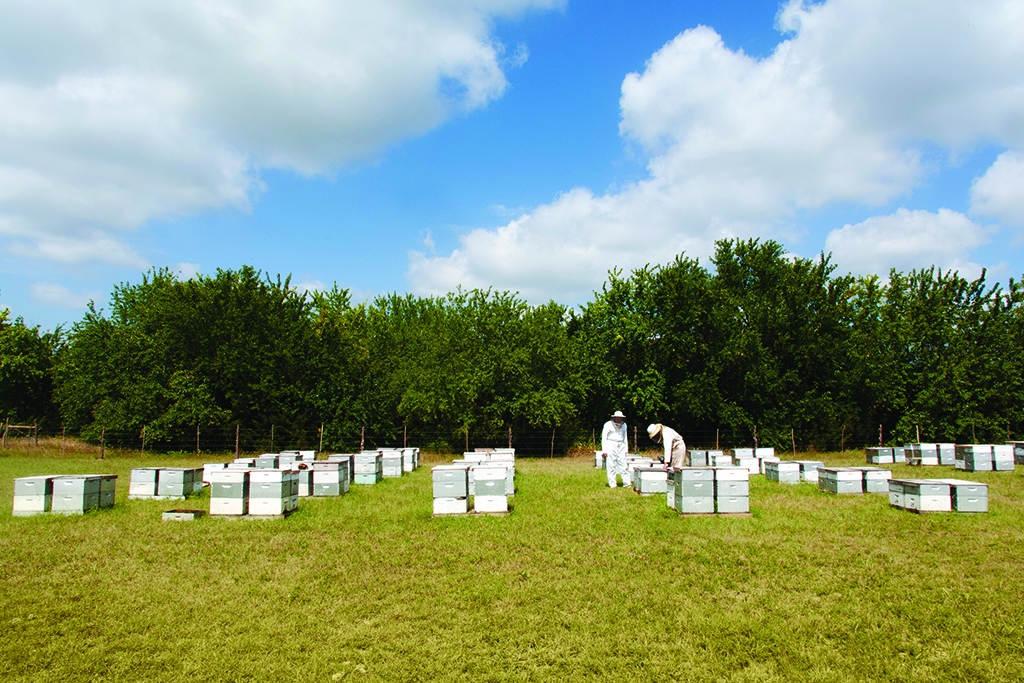
Bees are not native to Texas, though by the time some of the first European settlers arrived, bee colonies were thriving. The Spanish, it is believed, originally brought bees to Texas during their explorations, understanding the importance of bees not only for producing honey but also for aiding in pollination and agriculture.
An early German colonist named Wilhelm Brukish moved to Texas in 1842 and began experimenting with bee production. He wrote the first book about beekeeping in Texas and introduced the hive box.
Many pioneers cultivated bees for honey and to produce beeswax candles, but by the end of the 19th century, a bee industry was emerging in Texas. Bees in Texas produced honey by pollinating the state’s many nectar-bearing wildflowers and plants. In 1901, the Texas Legislature established an apiary at Texas A&M University to support research into bees and promote education around beekeeping. In 1903, the Texas Beekeepers Association met for the first time at A&M. Together, they helped establish inspection systems and production guidelines that helped grow the honey industry in the state.
Today, organizations such as the Texas Beekeepers Association, the Honey Bee Lab at A&M, the Texas Apiary Inspection Service, and Real Texas Honey help to promote beekeeping, further research around honey production, and evaluate Texas-made honey to ensure its authenticity and purity.
You can find honey producers now in every part of the state, though many producers are clustered around the major metro areas.
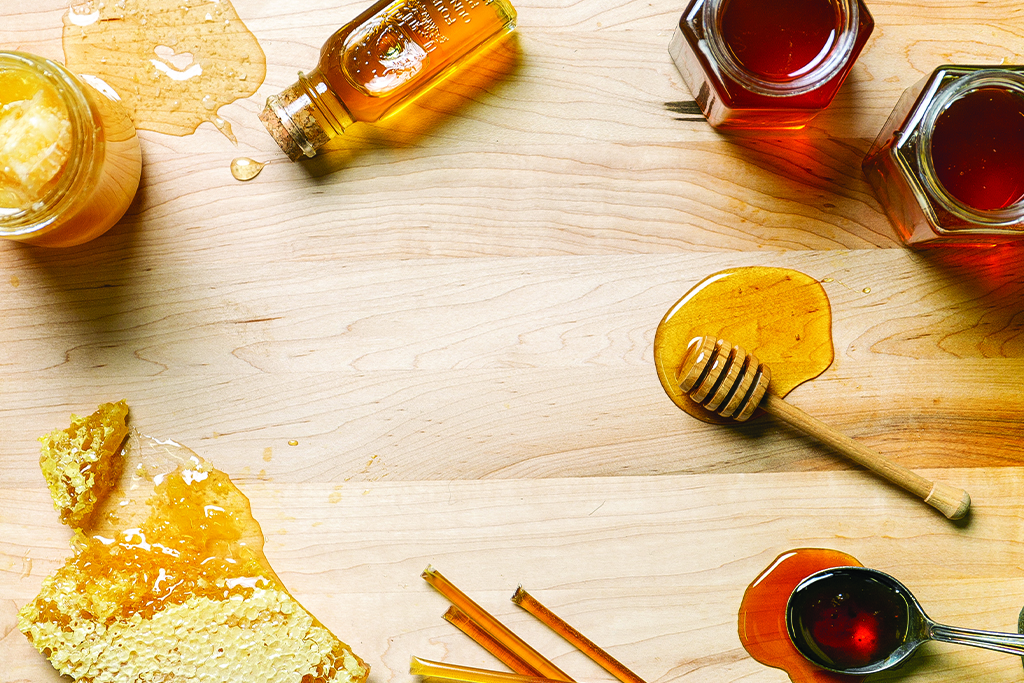
There are many reasons to eat local honey — like supporting local beekeepers and enjoying something uniquely delicious. It’s also healthy:
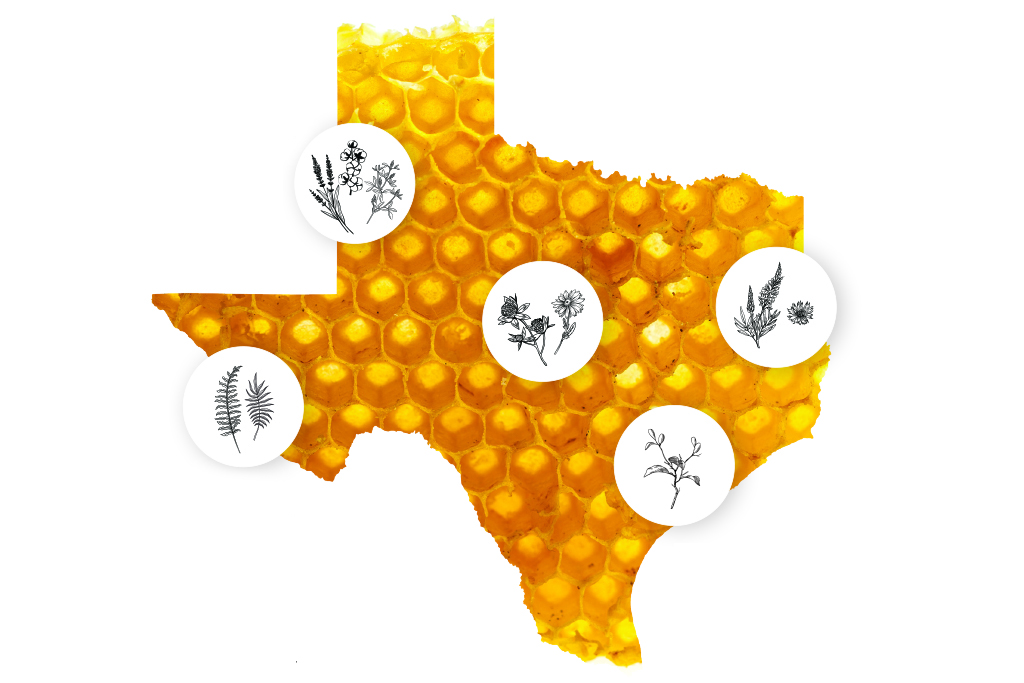
The flavor of honey has everything to do with where it’s made. That’s because honeybees use the pollen and nectar they find in the world around them. Sometimes beekeepers locate their hives near particular plants in order to harvest honey with a particular flavor profile. But generally, the available wildflowers and plants that naturally grow in an area will impact the flavor of the honey.
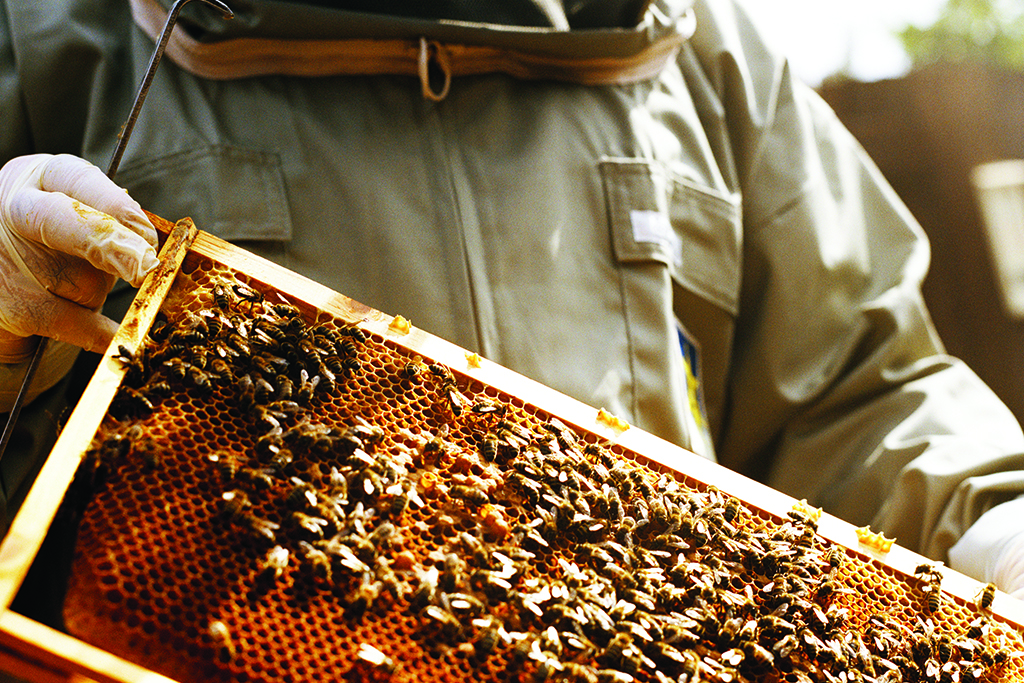
Bees have been facing a lot of challenges in recent years, including colony collapse disorder, which is responsible for the loss of a huge number of beehives. During the 2018–19 winter, an estimated 37.7% of managed honeybee colonies in the U.S. were lost.
Researchers believe varroa mites may be responsible for many of the colony losses. But there are many more threats to bees, including land-use changes that have eliminated pollinators; dominant species such as Africanized honeybees; and, some believe, signals from 5G towers that may confuse and disorient bees. These have caused many complicated and multifaceted challenges for honey producers large and small.
Honey producers in Texas range from agricultural companies to farmers to hobbyists, and their products can be found everywhere from grocery stores to farm stands. While there’s a great range of approaches and styles for making honey, each beekeeper shares a passion for the magical little creatures who do the tough work.

Karen Mitchell, Miss B Hiving, Lufkin
“Back in the ’80s, my dad did not have anything pollinating his garden except a few wasps. He suggested I get into beekeeping and set hives on his place. I bought two beehives and did not know anything about bees. I did not have a smoker, suit, mentor, or any help. Yet they survived the winter and pollinated his garden the following spring. I live in East Texas, where there is an abundance of wildflowers, goldenrod, tallow, and other sources of nectar and pollen. If you travel in any direction, the flora changes and the honey has its own distinctive flavor. Texas is geographically large and vegetally diverse. This creates a variety of flavors, colors, and marketing potential. Every year, we taste the honey with high expectations, because no two years ever taste the same or have the same coloration. Of course, each year is better than the previous one. I think what makes Texas honey special is the same reason why Texas is a good state for making honey: diversity.”

Cynthia Schiotis, Whitethorn Apiary, Sonora
“In 1989, I worked with some beekeepers in Houston who helped me with my first experience in beekeeping. I remember their hives were seven supers high when they were full of honey. In those days, beekeeping was simple and beautiful. I returned to San Antonio in 1999 and started up with four hives there. Finally, we moved out to Sonora to retire. We only have about 3 acres, but we liked the area for the amount and types of native bee plants available for nectar — acacia, mesquite, Wright’s bee brush, huajillo, cactus, clovers, succulents, privet, etc. — and others like shrub oak. Depending on the amount of rain we receive and the time we receive it, I can get about 60 pounds of honey from a two-brood-box and a two-super-box hive.”

Paige and George Nester, Creek House Honey Farm, Canyon
“We began keeping bees 10 years ago. Our kids had a pumpkin patch, and we had read that bees would help with the pollination. We love our bees! Watching another creature go about their business and seeing their social activities is truly amazing. Providing local honey to the Texas Panhandle feels terrific. It is a very hard place to keep bees, and being able to furnish this rare commodity makes us unique. Texas in general is a great state because of the warm weather and flora. Unfortunately, where we live in the Panhandle is unlike the rest of the state. It is a very volatile environment with unpredictable wind, little moisture, and cold weather. We are just like farmers in that the weather and natural elements affect our honey crops. We are also facing colony collapse disorder. People don’t understand that without bees, we would lose one-third of the world’s crops. Bees are one of the most important insects, if not the most important insect, in the world.”
Anthony Manfre, Oakwood Apiary, Brenham
“I was a hobby beekeeper, not a commercial producer, until my apiary was liquidated last fall and acquired by another beekeeper. I began with three hives in the early 1980s out of interest in the fascinating life and community of honeybee colonies. I’m most excited about the incredible capacity and organization of a functioning honeybee colony as a functioning body to remain principally wild but yet have the capacity to be managed by a beekeeper for the production of honey and pollination services. In this capacity, they become like livestock to the beekeeper, requiring a debt of understanding of the colony’s life cycle, diseases that threaten the colony’s existence, and maintenance management for the best outcome for the colony and the beekeeper. Probably the biggest misperception of honeybees and other pollinators native to this country is the inestimable value of their contribution to the production of food sources through their pollination efforts. There are many food products that would disappear from the grocery shelves without the service of pollinators. In addition, there is a misunderstanding of the necessity of maintaining wild spaces in our landscape of society for the benefit of pollinators.”
Learn how to grow, find, and cook native Texas cactus.
Illustrations by Pavlov Visuals – Ryan Sprague
The Ultimate Guide to Texas Farmers Market
From large urban districts to quaint local farm stands, Texas has it all when it comes to farmers markets. Here’s our ultimate guide to enjoying the freshest produce — and some of the finest experiences — in the state.
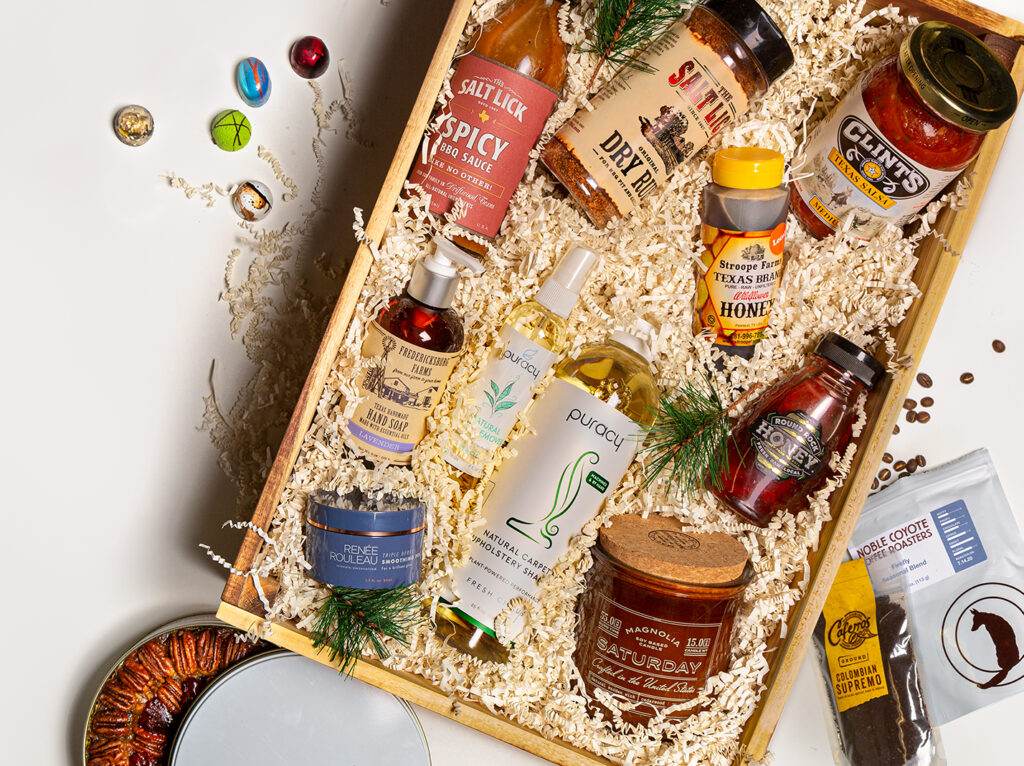
The Perfect Texas Home Holiday Gift Guide
These home-inspired gifts keep on giving.
The Ultimate Road Trip Guide to Texas Highways
The best roadside stops, attractions, and eats along each of Texas’ highways.
Texas Travel Guide: South Texas City Spotlights
The ultimate roundup of towns in South Texas.
Texas Coffee Roasters Are Brewing Up a Storm
Join us for a cup of coffee and find out why Texas’s roasting scene is buzzing with some of the best brews in the world.

Drive-In Movie Theaters in Texas
Craving a little nostalgia?