
Please sign in as a member or guest below to access it.
Please sign in as a member or guest below to access it.

Keep your summer safe and sunny with these helpful beach safety reminders.
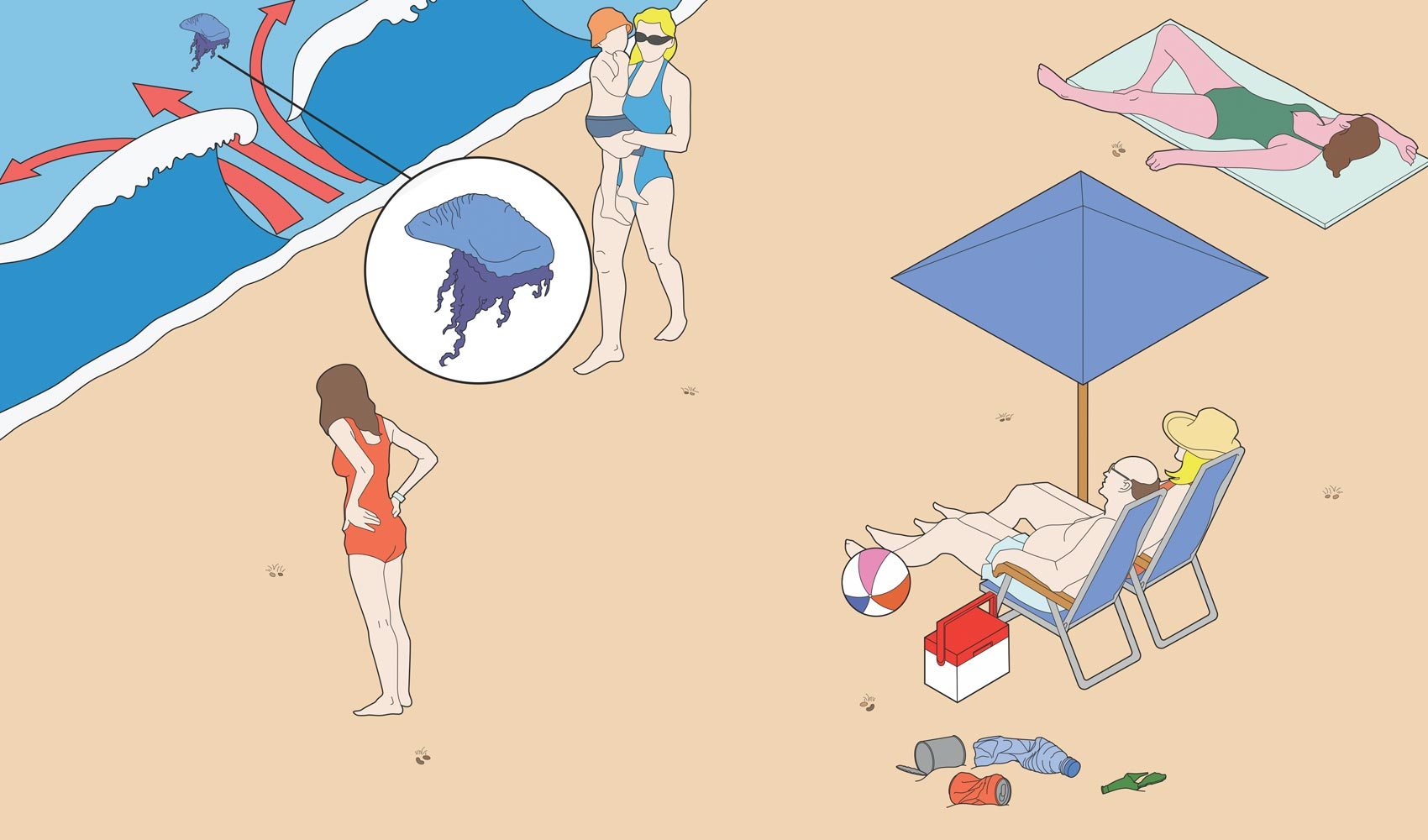
Swimming in the sun-kissed waters that wash onto the shores of Texas is a summer rite of passage for anyone looking to get immersed into life in the Lone Star State. But with more than 360 miles of shoreline ranging from secluded backwaters and sandy shores to ominous marshes, a day at the beach in Texas doesn’t come without a few risks. From rip currents and man-of-war fish to sunburns and beach debris, there are a few hazards lurking beneath the surf that can put a damper on a seaside summer vacation. Keep your summer safe and sunny with these helpful reminders.
Don’t rely on inner tubes or other inflatable toys to keep you afloat. When you’re ready to hit the sand, swim at a beach protected by a United States Lifesaving Association (USLA) affiliated lifeguard to decrease your chances of drowning to 1 in 18 million. Still, always swim with a buddy who can signal back to shore for assistance in the event that you can’t.
Enter the water feet first. Diving puts you headfirst into unknown water that may be shallower than you realize. Check for depth, reach forward for obstructions, and tread carefully.
When you first arrive at the beach, check with lifeguards for the safest place to swim and specific hazards to avoid. Familiarize yourself with local regulations and the meaning of the flags, which may change throughout the day.
These powerful, narrow channels of fast-moving water are capable of moving at speeds of up to 8 feet per second. Not only can they move faster than an Olympic swimmer, but these coastal currents reportedly claim the lives of 100 people per year, according to the National Oceanic and Atmospheric Administration. In fact, 80 percent of rescues performed by ocean lifeguards involve rip currents. The NOAA recommends anyone caught in that situation to avoid fighting the current and instead swim parallel to the shore and back to land at an angle.
Our Texas piers and jetties create an ideal environment for rip currents. Plus barnacles and sea life cling to these structures, increasing the odds of cuts, bites, and stings.
Not to be confused with a common jellyfish, these venomous marine creatures are found throughout the Gulf of Mexico. Also referred to as a bluebottle or floating terror, the Portuguese man-of-war is iridescently blue and can reach up to 180 feet in length. Stings from these fish can be very painful, so it’s best to clear the water if one is spotted.
Always shuffle your feet when walking in water to frighten these and other creatures away, but if you get stung, move away from the fish immediately (they can deliver multiple stings), remove the slimy deposits with salt water and sand, and rub the sting with a paste created by mixing unseasoned meat tenderizer and rubbing alcohol.
Nothing can ruin a beach vacation worse than a bad sunburn. Sunburns can even occur during overcast days, so make sure to wear a broad-spectrum sunscreen of no less than 30 SPF. It’s also important to find a brand that blocks both UVA and UVB rays. And apply liberally, at least 1 full ounce. According to the American Academy of Dermatology, most beachgoers only apply 25 to 50 percent of the recommended amount, so be generous and reapply every two hours.
When you’re surrounded by so much water and activity, it can be easy to forget to drink water while at the beach. Dehydration can sneak up on you and make it difficult for blood and tissues to function properly. Bring a cooler filled with water — not sugary drinks — to ward o dehydration, and make sure to drink up throughout the day, even before any signs of thirst.
This junky washup can consist of anything from cigarette butts and aluminum cans to medical needles and broken glass. These items aren’t only an unattractive intrusion on an otherwise pristine plot of beach, but they’re also a hazard for anyone walking the shore. Wearing water shoes or thick sandals while at the beach can help, but it’s also a good idea to bring a trash bag and clear out your area before you settle into your section of the sand.
Stay One Step Ahead of Texas Winter Weather
Get ready for, well, pretty much anything.
Prep Your Home for Texas’ Next Ice Storm
Don’t get left out in the cold.

A checklist to ensure smooth sailing next year.

Learn the Warning Signs of Hypothermia
Texas is better known for its extreme heat, but the cold can still be dangerous here, especially if you aren’t used to it.

Protection From Lightning Strikes
Some acts of nature are not covered under your normal policies.
Are your prepared for the unpredictable? Read how faith, family, and Texas Farm Bureau Insurance helped this North Texas family weather an unseasonal Christmastime tornado.