Please sign in as a member or guest below to access it.
Please sign in as a member or guest below to access it.

Texas ghost towns find a second life as day-trip destinations.
Most of Texas’ ghost towns hardly resemble the classic image of a dirt Main Street lined with boarded-up storefronts and tumbleweed, but they have their own undeniable appeal. “Unanswered questions about the places where people no longer live repeatedly draw me to the abandoned towns, empty houses, and scattered debris that document lives of the past,” Tarleton State University history professor T. Lindsay Baker wrote in his book, More Ghost Towns of Texas.
Drive 20 minutes north of Abilene on West Lake Road and you’ll find the ruins of Fort Phantom Hill. This former army outpost was active from 1851 to 1854 and was only used occasionally afterward, but the fort’s picturesque stone ruins of an old guardhouse, powder house, and warehouse make it a Texas ghost town worth a second look.
Shutterbugs will have a great time photographing the many chimneys that rise above the cactus and scrub brush, or the old well, the historical cannon and wagon, and the prickly pears. Fort Phantom Hill is open daily from sunup to sundown and has a visitor’s kiosk, self-guided-tour brochures, and restrooms. Keep an eye out for rattlesnakes and other wildlife at the site.
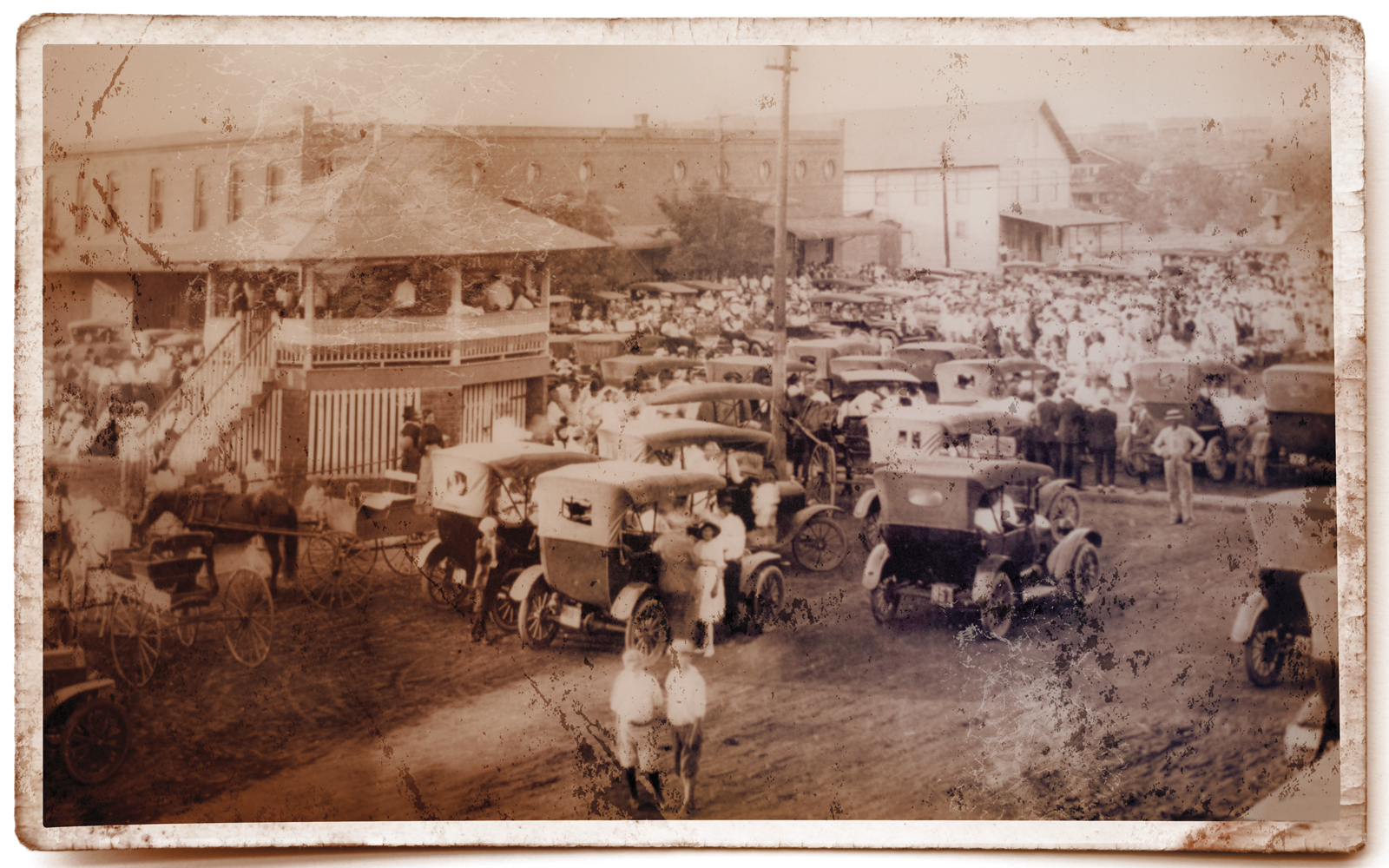
A multicultural hub with a 650-seat opera house, a thriving farm-to-table food culture, and a robust economy sounds like something you’d find in a big Texas city today, but we’re actually referring to the rural coal town of Thurber. Located halfway between Abilene and Fort Worth, Thurber was once a company-owned mining town. Its successful brickworks supplied major construction projects such as the seawall in Galveston.
From its founding in 1888, Thurber attracted workers from around the U.S., Europe, and China who set up ethnic enclaves in the hills around the town center. Local farms thrived by serving the city, whose population peaked at 10,000, before the 1920s oil boom killed the market for Texas coal.
Today, only five people call Thurber home, but Tarleton State University’s W.K. Gordon Center keeps the history of Thurber alive in a museum. The original facade of the opera house fronts a small indoor theater where visitors can watch a video history of the town.
Exhibits based on Thurber’s mercantile and drugstore show what life was like (and there’s a scavenger hunt for kids). Next door, St. Barbara’s Catholic Church is open to visitors on request, and the historic power plant smokestack sits across the street. Thurber’s two restaurants, New York Hill and the Smokestack, both earn good reviews from guests for the food and atmosphere.
Fall is a good time to explore Thurber’s cemetery because the rattlesnakes are usually hibernating, says W.K. Gordon Center curator Mary Adams. “It’s a unique cemetery, because there were so many immigrants from different places here. You can see so many cultural influences in the headstones and the way the graves were fenced.”
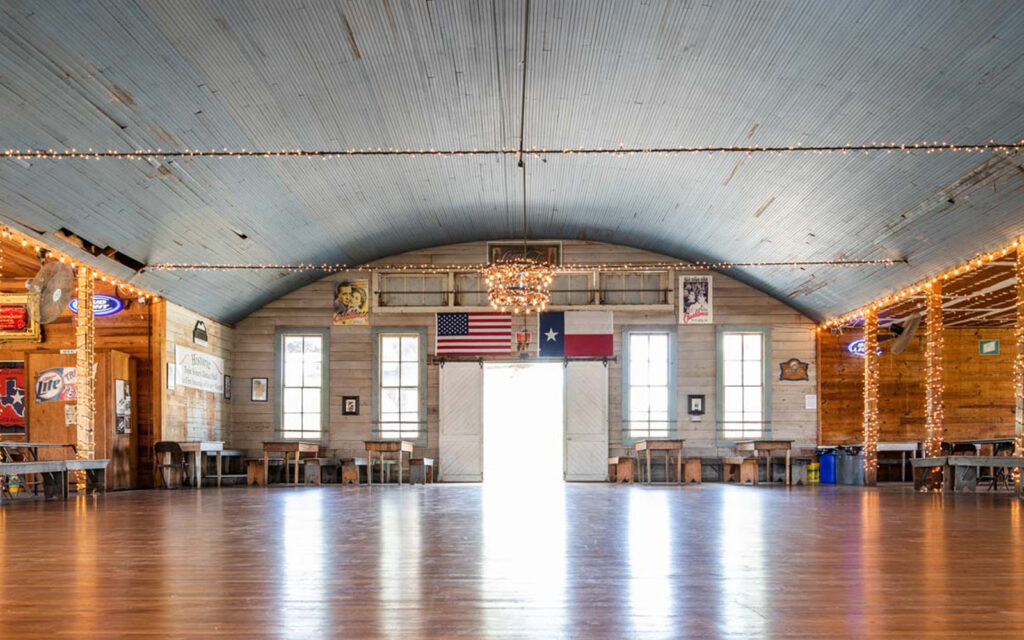
Founded in 1849 as a small trading post between San Antonio and Fredericksburg, the German settlement of Luckenbach once drew many immigrant and Comanche customers. Over time, the store was joined by a cotton gin, a blacksmith shop, and a post office.
However, after the town’s population declined in the mid-20th century, storyteller Hondo Crouch bought most of the property. He turned Luckenbach into a day-trip destination and music venue “for local people to enjoy new talent,” according to Baker in Ghost Towns of Texas.
When a 1977 Waylon Jennings-Willie Nelson song about Luckenbach became a hit, “The little German settlement for a few weeks became a household word throughout America,” writes Baker. Today, Luckenbach is still a popular stop for music fans and Texas-history buffs, with a full calendar of dances and concerts featuring country, rock, folk, and Tejano bands from around the state. A food truck and restaurant keep visitors fed with burgers, brats, and pulled pork sandwiches.
A hundred years ago, the East Texas town of Aldridge was abuzz with the roar of its busy sawmill and 1,000 hardworking residents. Historians say that in 1918, workers at the Aldridge mill were turning Texas timber into 125,000 board feet of lumber every day and shipping it around the country by rail. But as the timber supply dwindled, and after a series of fires damaged the mill, it closed in 1923.
Today, the mill ruins — foundations, part of a railway tram, and the mill pond — are surrounded by woods in the Angelina National Forest and marked by decades of graffiti. To see them, guests can hike the 3-mile trail from Boykin Springs to the Aldridge Sawmill Historic Site. The forest is open to visitors Wednesday through Friday.
Visit our guide to the state’s historic buildings for more Texas travel ideas.
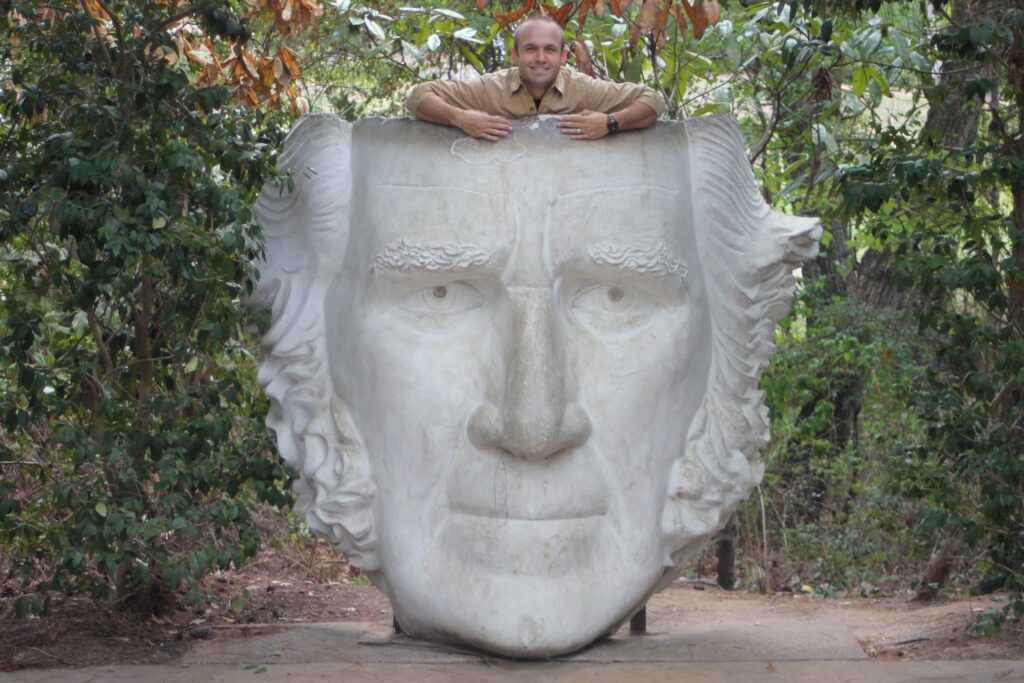
People know Huntsville for two reasons: prisons and Sam Houston. Both are totally valid.

Top 5 Texas Bluebonnet Destinations
Don’t miss these breathtaking wildflower landscapes.
Take two steps into the past, two steps forward on the dance floor. The best nightlife in Texas is also the oldest.
Featuring red tacos, wrestling legends, and one very tiny skyscraper.
A cotton community’s unlikely rise to corporate boomtown.

Where to Celebrate Cinco de Mayo in Texas
Join the fiesta.