Please sign in as a member or guest below to access it.
Please sign in as a member or guest below to access it.

Why did 10,000 Texas turkeys cross the road? To catch their train in Cuero.
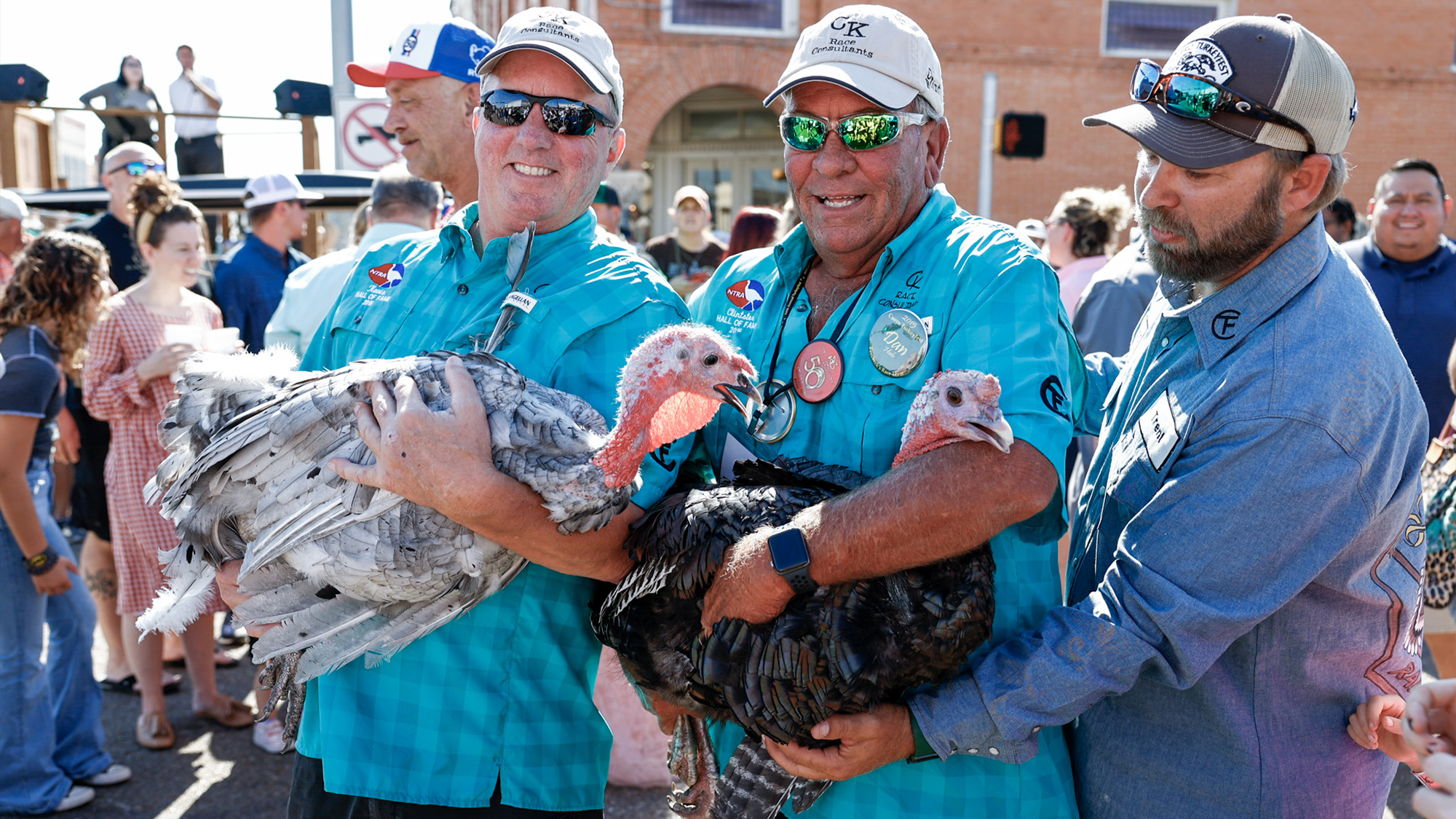
Long before headlights filled Texas highways, another kind of traffic jam stopped Cuero in its tracks — thousands of gobbling turkeys were herded through town on foot.
These turkey drives may not have earned the fame of our legendary cattle drives, but the feathered processions left their mark on Texas history and laid the foundation for Cuero’s annual Turkeyfest, a beloved small-town celebration in South Texas.
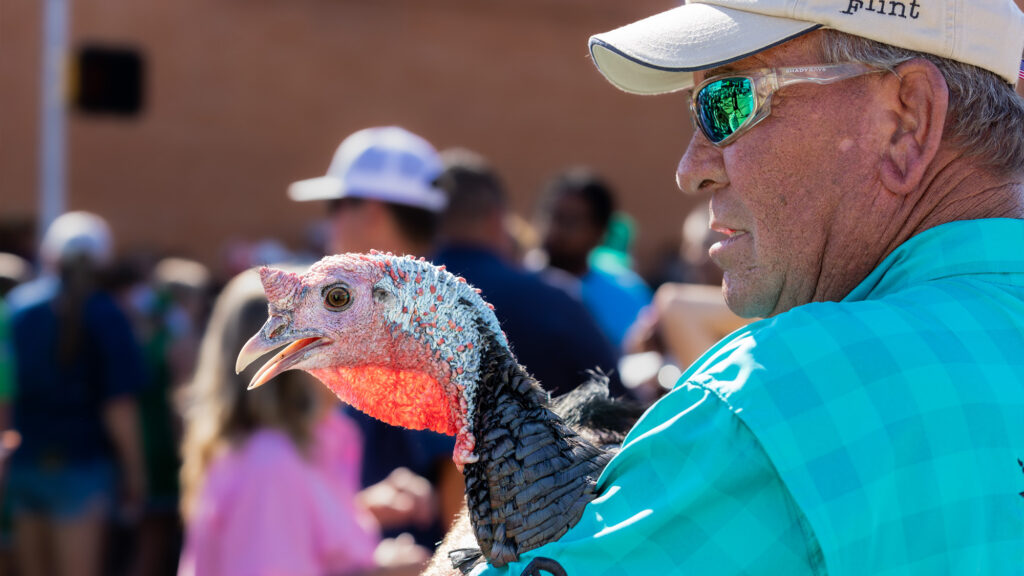
In the early 1900s, ranching families on the prairies surrounding Cuero began turning their small turkey flocks into a regional industry. When a processing plant opened beside the railroad in 1908, farmers gained a place to sell their birds at market price. The turkeys could then be processed, packaged, loaded onto railcars, and shipped across America.
Getting them there was the hard part.
With automobiles still uncommon and livestock trucks nonexistent, farmers drove their flocks much like cattle. The journeys crossed fields, roads, and rivers, sometimes from farms miles outside town. By November, as many as 10,000 birds might strut through Cuero’s streets at once. Spectators traveled to see the commotion, while enterprising residents offered rooms and hot meals.
Cuero turned the spectacle into a festival in November 1912. Named for a popular ragtime dance, the first Turkey Trot reportedly drew 30,000 visitors and 18,000 turkeys. Corn scattered along Main Street kept the procession moving. Agricultural exhibits, dances, a football game, feather-covered floats, and a visit from Gov. Oscar Branch Colquitt rounded out the event. Minnie Lee Mangham became the first Turkey Queen.
Fourteen Turkey Trots were held through 1972, eventually adopting a Turkish theme, led by Sultan Yekrut (“turkey” backward) and Sultana Oreuc (“Cuero” backward).
As the local turkey industry declined and live birds disappeared from the parade, the original Turkey Trot came to an end. But Cuero’s community spirit remained, and residents reimagined the tradition with Turkeyfest.
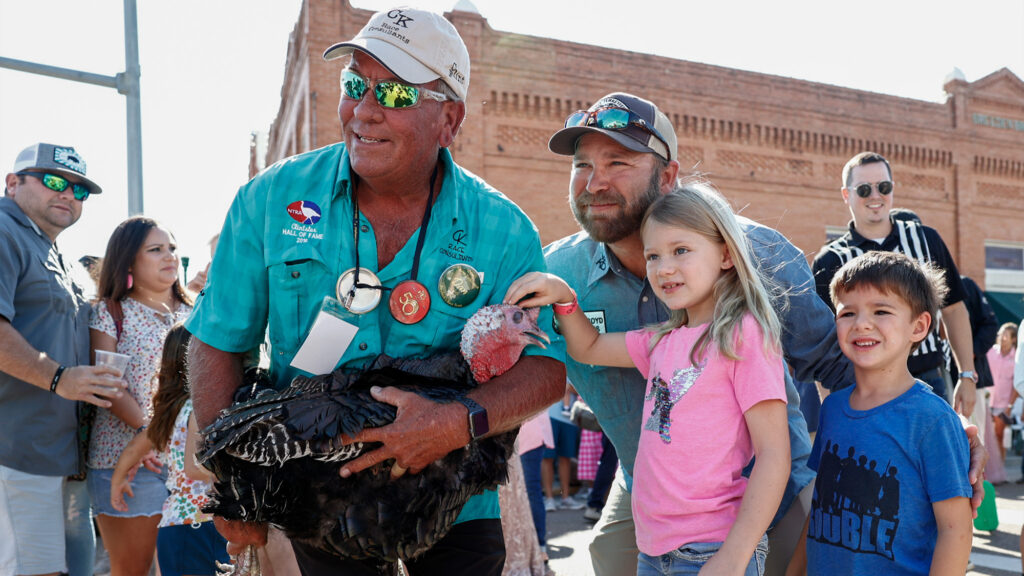
Turkeyfest hatched in 1973, swapping turkey herds for live music, parades, arts and crafts, and friendly competition. Cuero was proud to strut their stuff as the “Turkey Capital of the World.” The trouble was, Worthington, Minnesota, claimed that same title at its own annual King Turkey Day festival, founded in 1938.
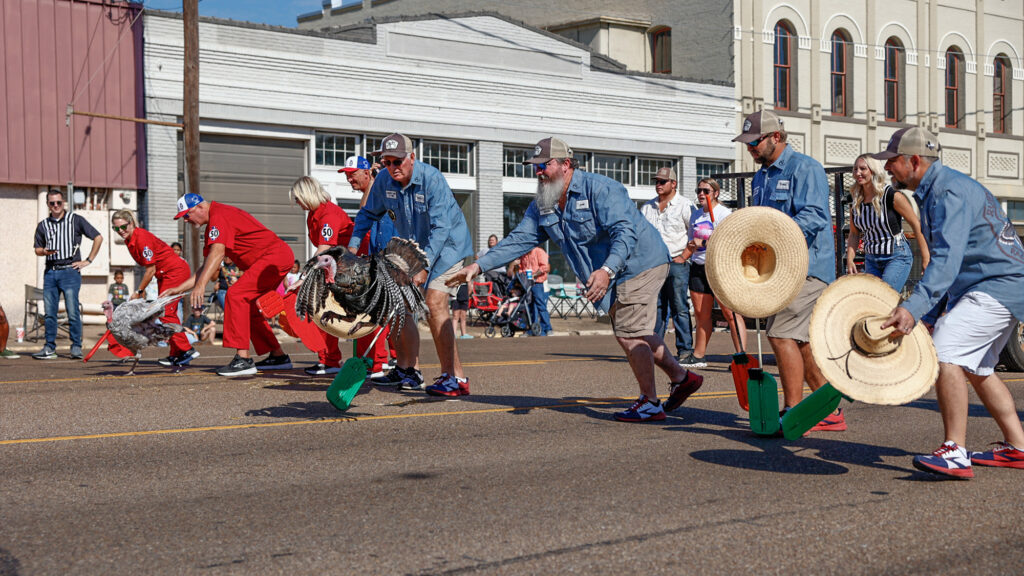
Newspaper editors devised the Great Gobbler Gallop to settle the dispute. One turkey from each town raced in Worthington in September, then again at Turkeyfest weeks later. The fastest combined time earned its town the title and the “Traveling Turkey Trophy of Tumultuous Triumph.” The loser received the “Circulating Consolation Cup of Consummate Commiseration.”
The rivalry continues today, with each town fielding a new turkey annually. Although the birds change, their racing names remain. Cuero’s contender races as Ruby Begonia, while Worthington’s takes the track as Paycheck.
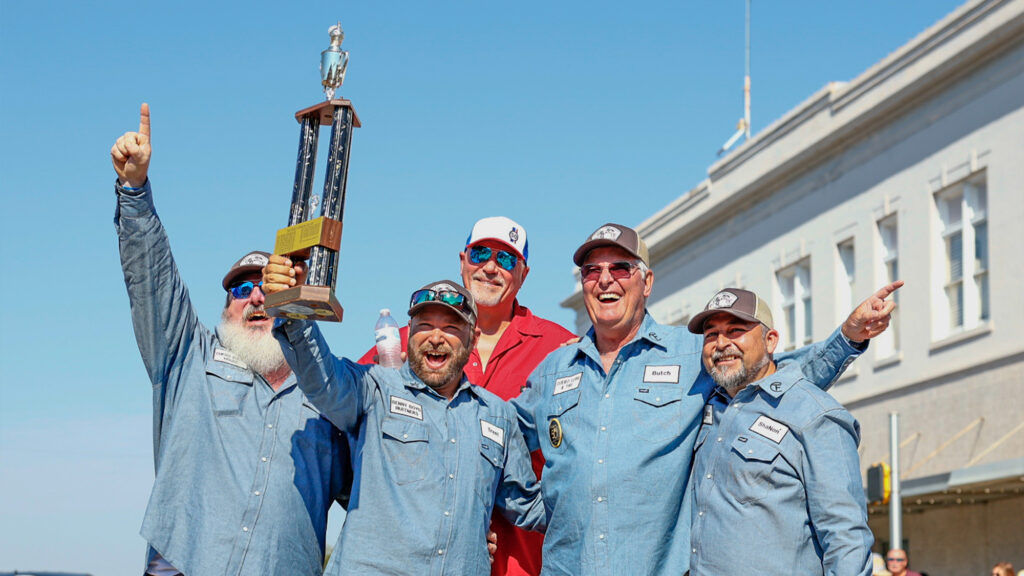
The 2026 Turkeyfest celebration, scheduled for Oct. 9–11, will feature live bands, street entertainers, a parade, a barbecue cook-off, and a horseshoes and washer tournament. At the center of it all, Ruby Begonia will race for Cuero pride once again, carrying forward one wonderfully peculiar, beloved chapter of Texas history.
Continue exploring the stories that shaped our state with a look back at the Great Storm of 1900 that devastated Galveston.
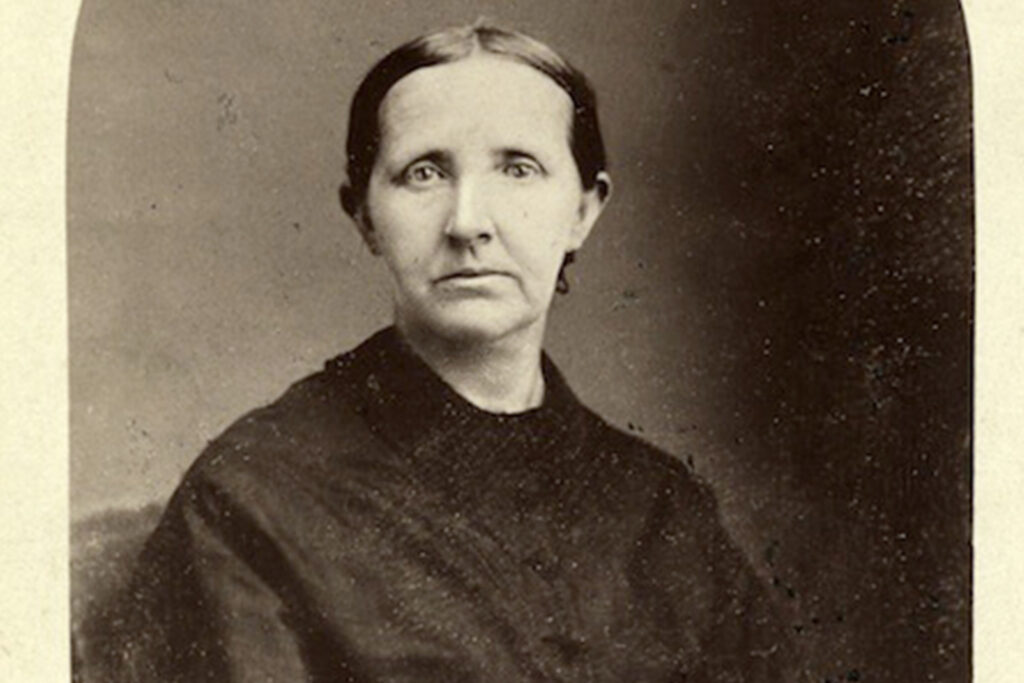
Texas Titans: Sarah Horton Cockrell, Dallas’ First Capitalist
She built Dallas’ infrastructure.
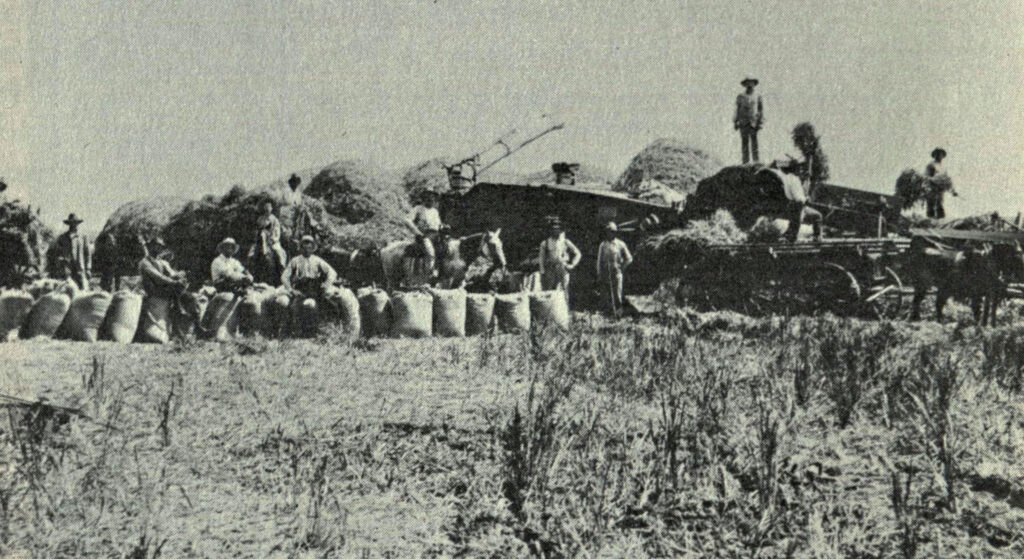
A History of Texas Agriculture
From cotton to cattle, the story of Texas has always been a story about the land.
Is There Really Buried Treasure in Texas? (Legends Say Yes)
Here are some of the legends of lost Texas treasure.
Weird History: The Great Texas Camel Experiment
In the 19th century, when the U.S. Army encountered the challenge of transporting goods across the vast expanse of West Texas, they turned to an unusual ally: camels
Meet Wise County’s Luffa Authority
How a single crop helped build a sense of community in Aurora.
The Incredible Story of the Battleship USS Texas (BB-35)
The battleship USS Texas was a technological marvel when it first launched in 1912. More than 100 years later, it’s being restored.