Please sign in as a member or guest below to access it.
Please sign in as a member or guest below to access it.

Mani Skaria’s process, which allows farmers to plant seven to 10 more trees per acre, dramatically increases both their production and their profitability.
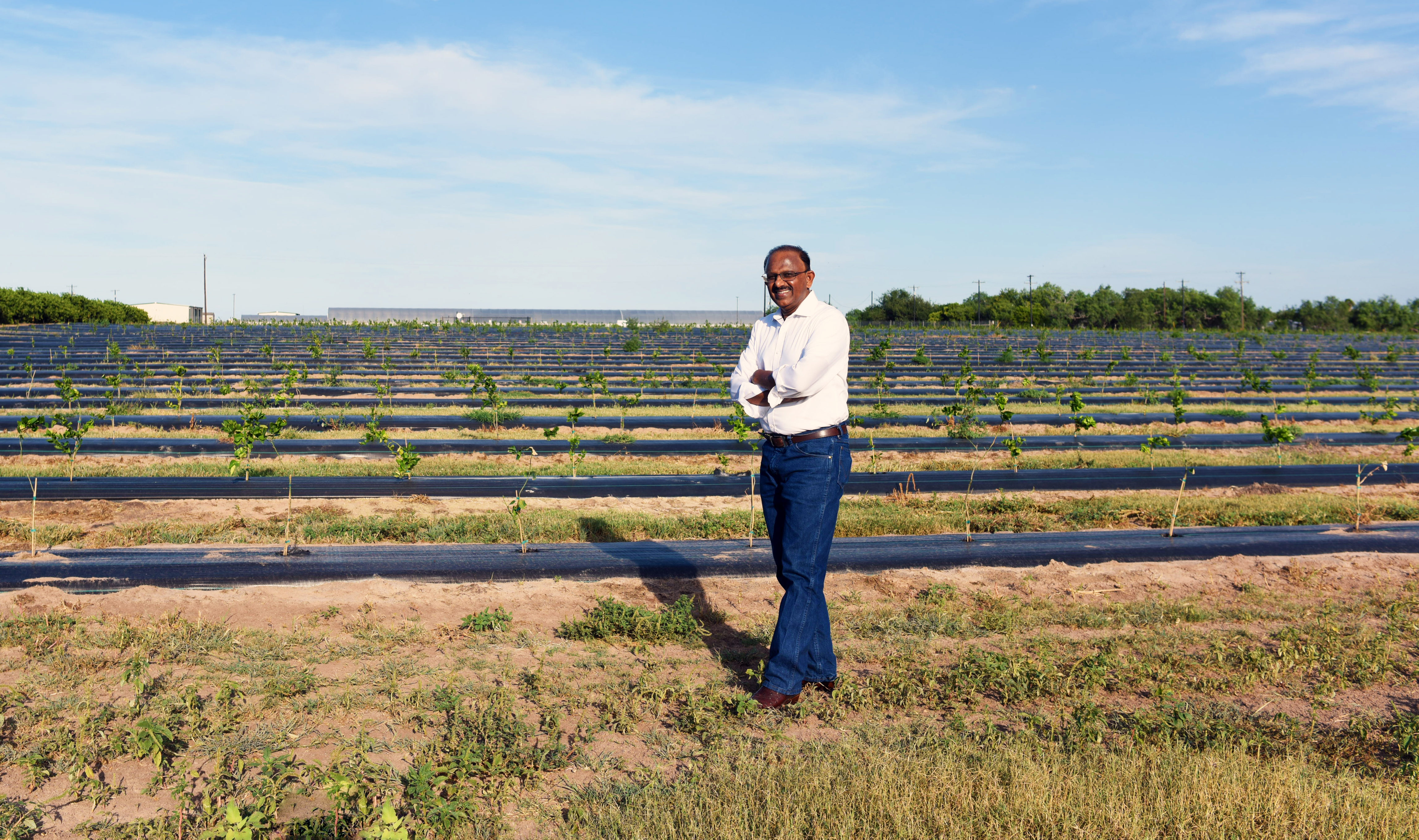
Hidalgo County Texas Farm Bureau Insurance Agent Paul Townsend describes his client Dr. Mani Skaria as always being “kind of cutting edge.”
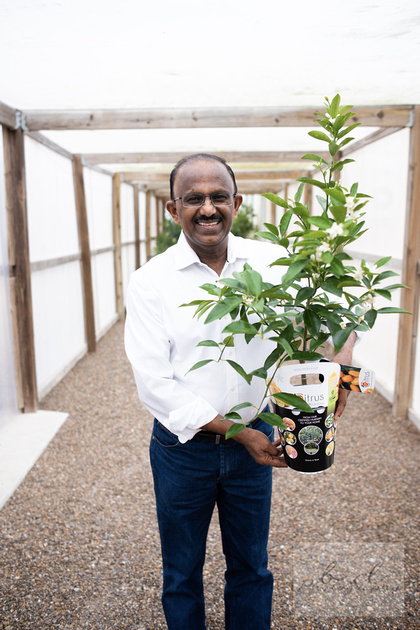
Last May, Skaria and his company US Citrus received the South Texas Better Business Bureau’s Mary G. Moad Ethics Award for demonstrating “an utmost adherence to the ethical aspect of doing business, practicing the principles of corporate social responsibility and human resource development.”
This was just the latest achievement for the retired plant pathologist who left his post at the Texas A&M University-Kingsville Citrus Center to pursue a dream of developing citrus trees that would both improve Texas farmers’ bottom line and be good for the earth.
“He’s always been very energetic and very knowledgeable, especially when it comes to citrus,” Townsend says.
Before coming to A&M, Skaria worked at Washington State University, helping apple farmers develop more efficient methods. When he came to Texas, he quickly realized that the citrus industry could only remain viable if more trees were planted per acre. Many longtime farmers told him that was impossible. Skaria made it his mission to convince them otherwise.
His solution was a technique called micro-budding, which yields fruit-producing citrus trees in two to three years instead of the usual four to five. Citrus trees are typically incubated in a nursery until they reach a viable height and can be transplanted to the field. Skaria’s seeds can be planted directly in the ground.
His process also allows farmers to plant seven to 10 more trees per acre, dramatically increasing both their production and their profitability.
“This was something that had been burning in my mind,” Skaria says. “I was finding a solution to a problem.”
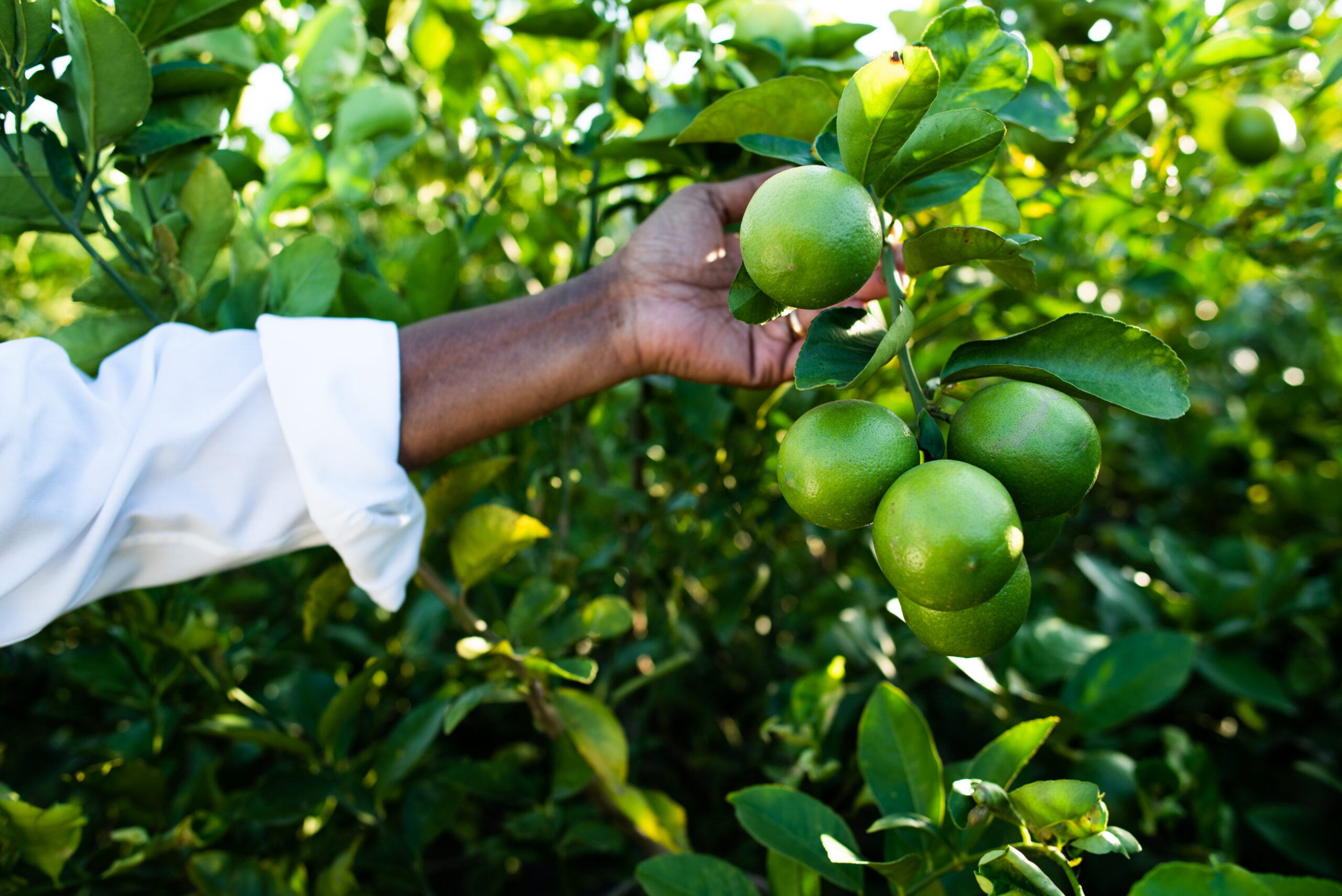
His innovations could not have come at a better time. Texas’ grapefruit crops have recently been put at risk by plant diseases, pests, and other challenges. The ability to plant more trees that become viable faster should help combat these perils.
Townsend has planted a US Citrus lime tree in his backyard, about 15 feet from another lime tree he bought at The Home Depot.
“Mani’s is outgrowing it by 2 or 3 feet,” Townsend says.
Juancarlo Rendón, Townsend’s agency manager at the Hidalgo County office, got to meet Skaria when he came in for his annual insurance review. Skaria explained all about his work.
“He’s a great guy, and he has a nice, good family here in the valley,” Rendón says. “I think what he’s doing is one of the coolest things in the world.”
Skaria, who grew up in India, came to the U.S. in 1979 to pursue his Ph.D. Now, he’s found a home in Texas. His next plan is to start a micro-budding institute, where he hopes to apply the same principles to pecan, almond, pistachio, and other similar trees.
“If you don’t innovate, somebody else will run away with the changes,” he says.
Find more stories about our Texas Farm Bureau family at Camp Cowboy.

One Texas Sewing Group Has Made 9,000 Cloth Face Masks for Frontline Workers
Deann Rives has organized a nationwide operation out of her house — while still working full time as a Texas Farm Bureau Insurance Agent.

Universal Kids Resort Opens in Frisco
Reviews of the new family-friendly theme park experience have been mixed, but there’s a lot to like.

How to reach the most remote zone in all of Texas.
Our First Responders: Delaney Sweeney
Delaney Sweeney works with just one other veterinarian at Wilkinson Veterinary Clinic in Alice. When the pandemic arrived, all other veterinary clinics in the area shut to all but emergencies, leaving Sweeney and her fellow vet to see what felt like all the animals in the county. For two to three months, their daily pet […]
A Guide to the Coziest Harvest Home
Fill your house with warmth and abundance this autumn using our guide to your perfect harvest home.

Don’t Miss These Texas Holiday Parades
What’s better than holiday magic you don’t have to plan yourself?