
The History of Bootmaking
Cowboy boots are everywhere in the Lone Star State, from Dallas galas and Hill Country honky-tonks to South Texas ranches. What started as a frontier necessity quickly evolved into a cultural staple and a defining characteristic of Texas culture.
Bootmaking is a meticulous art form. Stitch by stitch, legendary craftspeople have built iconic Texas boot brands that have sturdily stood the test of time over the past 150 years. Now, a new generation of bootmakers is breathing new life into the craft, redefining what it means to wear Texas pride.
Follow the history of Texas bootmaking, from the open range to fashion week runways.
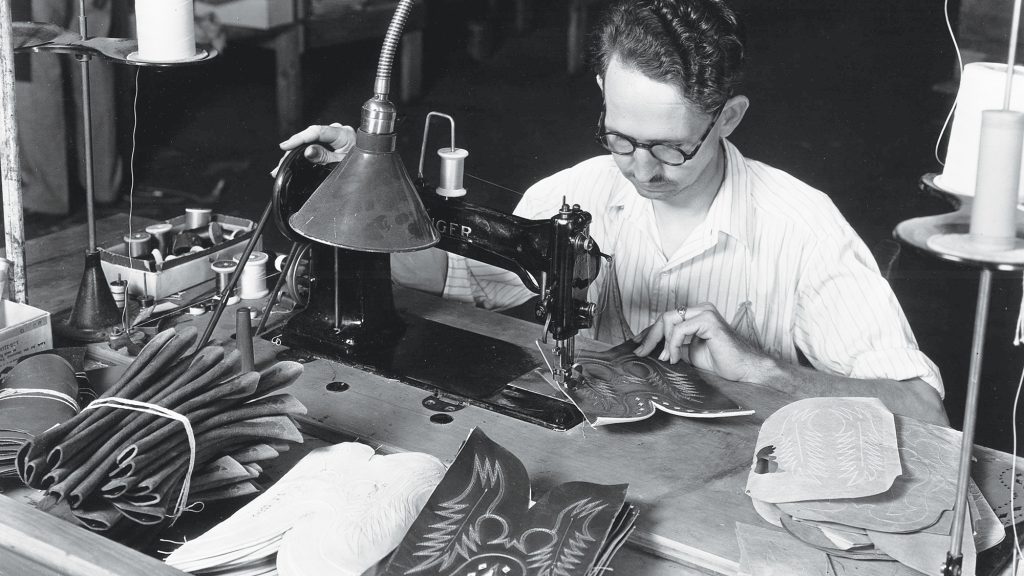
The History of Bootmaking in Texas
Although it’s hard to pinpoint the exact origin of cowboy boots, they became a Texas staple in the mid-to-late 1800s, following the Civil War, during a period of continued westward expansion. A growing nation wanted beef, and Texas was a key supplier, the foundation for a booming cattle industry. Hardworking cowboys — many of whom were former enslaved people and Mexican vaqueros — needed footwear that was up to the task of taming the West.
Cowboys started asking cobblers for boot modifications. Each request had a practical purpose for life along the Chisholm Trail. Higher heels lodged in the stirrups better. Slimmer silhouettes without laces had a lower risk of getting caught in stirrups. Round toes offered a more comfortable fit. A sturdier instep built a longer-lasting boot.
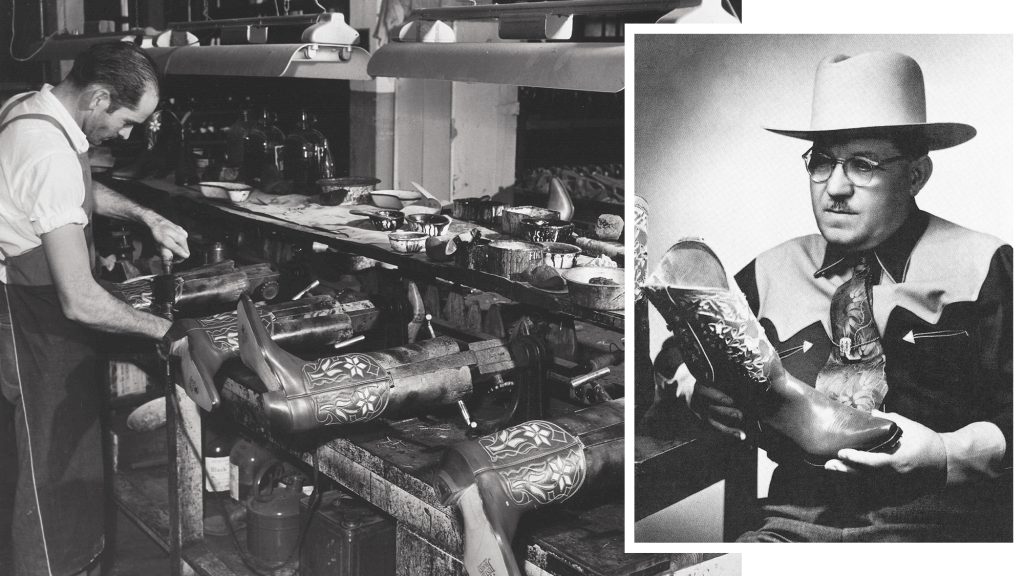
The Rise of Iconic Texas Bootmakers
One of the first known stores to sell cowboy boots was in the 1870s in Coffeyville, Kansas, a convenient stop along the busy Chisholm Trail. (Boots sold for around $12–$20, a small fortune at the time for a worthwhile investment.) Bootmaking started trickling down throughout Texas. Mexican, Italian, and German immigrants played a vital role in Texas’ burgeoning boot industry, bringing skilled techniques in leatherwork and design that inspired the modern cowboy boot. Bootmaking hot spots sprang up throughout Texas between the 1870s and 1890s, laying the foundation for some of Texas’ most iconic boot brands.
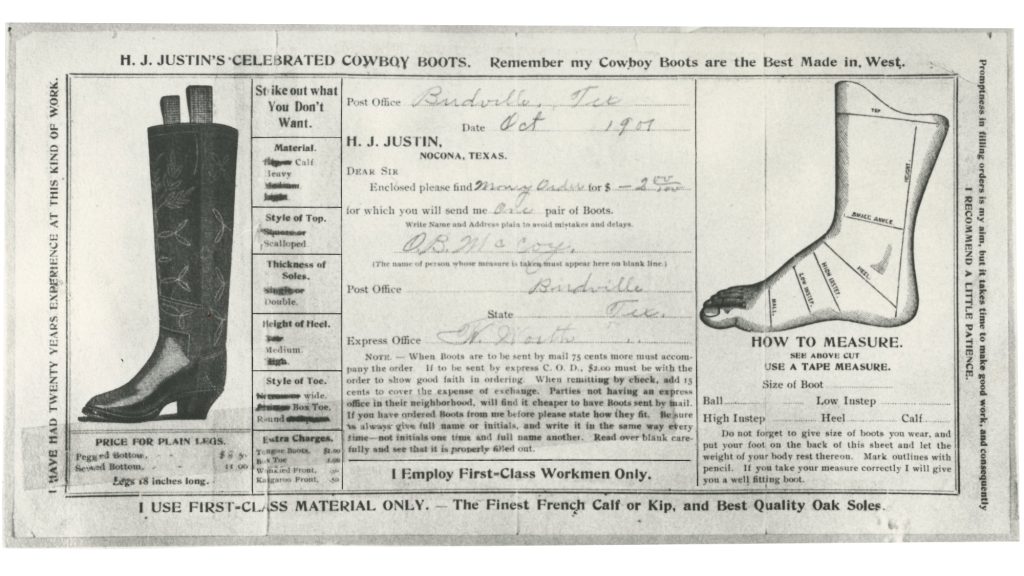
In 1879, H.J. Justin started making custom boots near the end of the railway at Spanish Fort, off the Chisholm Trail. He sewed rows of stitches across the tops of boots, stiffening the leather and preventing the tops from folding down. Over time, this practical stitching pattern evolved into a unique, sought-after decoration. Justin’s business, Justin Boot Company, quickly grew through word of mouth, thanks to trailhands who were satisfied with the quality of his work. Over 45 years later, Justin’s daughter, Enid Justin, founded Nocona Boot Company, securing her place as one of the most influential women in the industry.
In 1883, Italian brothers Salvatore and Joseph Lucchese opened a bootmaking shop in San Antonio shortly after arriving in Galveston. Salvatore was always eager to try out new machinery, including acquiring the first inseamer machine shipped to the Southwest. Today, Lucchese is the official bootmaker of the Dallas Cowboys Cheerleaders.
In 1911, Anthony “Tony” Lama, the son of Italian immigrants, settled in El Paso after a stint in the U.S. Cavalry and made a name for himself as a skilled cobbler while stationed at Fort Bliss. More than a hundred years later, Tony Lama boots have become “the world’s most recognized Western boot brand.”
Toward the latter part of the 20th century, Texas Cowboy Hall of Famer Billy Klapper and Alan Bell moved the art of bootmaking into the new millennium. Klapper, who was featured on contemporary Western series “Yellowstone,” developed 682 spur patterns and 816 bit patterns in his expansive career. For nearly 50 years, Abilene-based Bell crafted boots for race car driver Kyle Petty and cowboys from the Four Sixes Ranch. Both men have since passed, but their legacies live on through their craftsmanship.
In the Limelight
Cowboys and vaqueros herded some 5 million cattle along the Chisholm and Goodnight-Loving trails between 1865 and 1890. But the need for cattle drives faded with the expansion of railroads and the invention of barbed wire fences.
Yet the appeal and lore of the Western cowboy became an enduring fixture in American pop culture and imaginations. Cowboys were the eternal “good guys,” offering a hero-led escape in the form of books, movies, songs, and radio shows. (More than 100 West-set series aired between 1949 and the late 1960s, including “Gunsmoke.”)
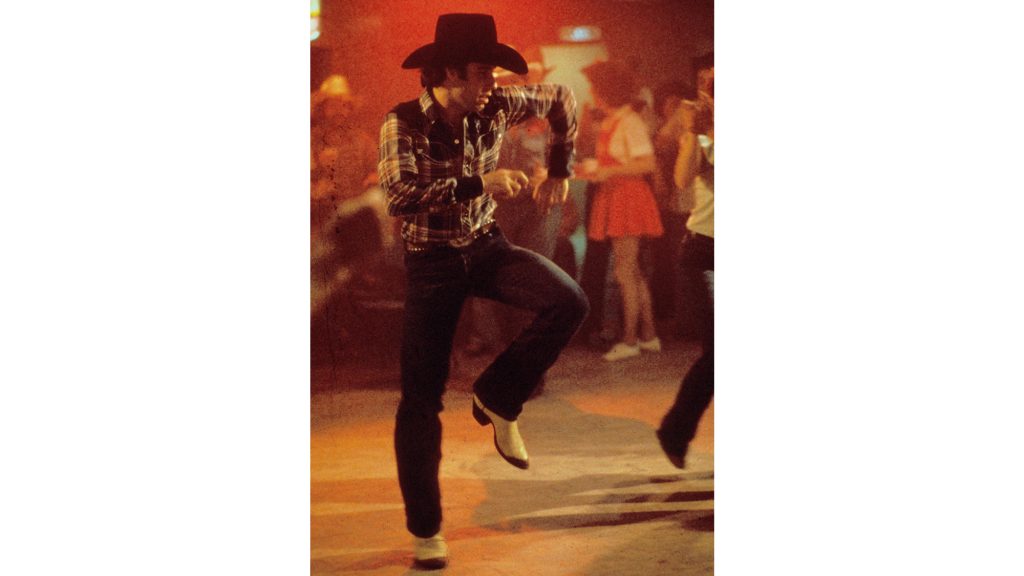
By the time the 1980s rolled around, Americans were doing a double take at Western wear thanks to the inescapable hit television show “Dallas” (1978) and the box office darling “Urban Cowboy” (1980). In fact, moviegoers were so taken with John Travolta’s portrayal of “Bud” that they were lining up for Tony Lama’s specialty lizard wingtips (seen here). Demand was so high that the company was producing 5,200 pairs of boots a day in the early ’80s.
These days, you’re just as likely to see a pair of cowboy boots in an influencer’s Instagram Reel as you are on a dusty ranch. Over and again, the cowboy boot proves to be an enduring staple.
Sole-Ful Boot Brands
Although production capabilities have rapidly improved, there are still Texans dedicated to their craft. Meet five of Texas’ most notable cowboy boot brands and their bootmakers.
Camargo’s Western Boots, Mercedes
Master craftsman Henry Camargo is one of the last in the state to stitch each boot by hand — a skill he has honed since opening his shop in the 1980s.
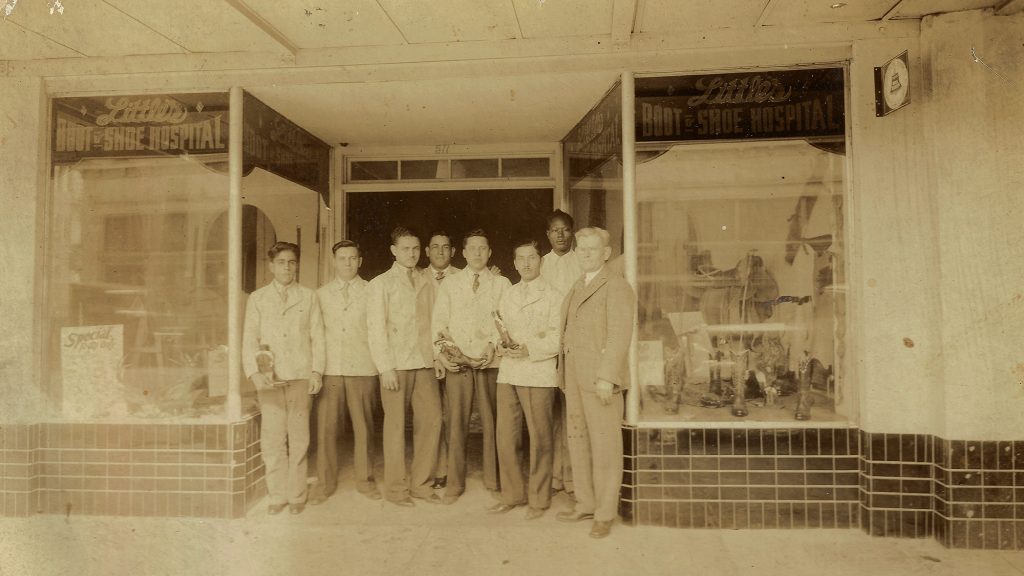
Little’s Boot Company, San Antonio
For more than a century, Little’s skilled artisans have built a legacy on quality, only using the finest leathers and tailoring each pair to the wearer’s unique foot shape.
M.L. Leddy’s, Fort Worth and San Angelo
This fourth-generation family business, known for intricate details, has outposts in Fort Worth and San Angelo. For some Texans, buying a pair has become a family tradition.
Texas Traditions, Austin
Lee Miller carries on the legacy of “the Michelangelo of cowboy boots,” Charlie Dunn, by crafting one-of-a-kind pieces for the likes of Lyle Lovett and Willie Nelson.
Maida’s, Houston
One of the oldest family-owned and continuously operating boot and shoe companies in the United States, the shop’s 264-step process uses equipment and techniques perfected over the past century.
Emerging Boot Brands
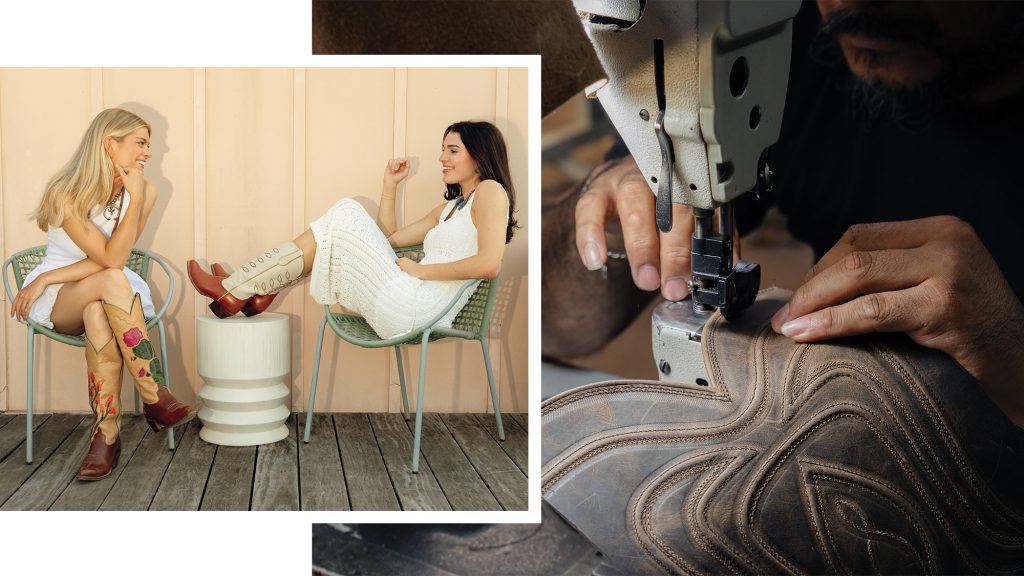
For Texans, boots are more than footwear. Each stitch carries a wealth of history and legacy. Whether crafted by skilled legends or bold newcomers, each pair carries the spirit of the West forward to a new generation. Here are a few of the state’s contemporary bootmakers adding their own flair.
Frualein Boot Company, San Antonio
Sisters Sarah Caruth and Margaret Walker forged Fraulein in the pandemic. Named after their late father’s favorite song, the company produces boots with a vintage feel. (Think: ’70s country superstar Crystal Gayle.)
Tecovas, Austin
Paul Hedrick felt Western wear was becoming too bland, so he launched Tecovas in 2015 with a modern take on an age-old industry that honors the spirit of the West.
Miron Crosby, Dallas
Sisters Sarah Means and Lizzie Means Duplantis are the masterminds behind the Dallas-based luxury boot brand. Launched in 2017, the sisters pull inspiration from their family’s West Texas cattle ranch and the stylish streets of New York City.
Get the Fit
Cowboy boots are more than a fashion statement; they’re an investment. A handcrafted, well-fitted pair can last years. Before you pull on a pair, know what to expect.
- Your heel should settle into the boot with a satisfying thump.
- The top of the boot should fit snugly and securely. With a little time and wear, the leather will stretch and mold to your foot.
- Toes should lie flat with no cramping or curling.
- A slight heel lift is normal.
- Socks play a major role. Go with a breathable, moisture-wicking pair that fits snugly.
With boots in the bag, complete your look with a DIY personalized cowboy hat.