
Complete Water Heater Guide
In most American homes, water heaters are the second-largest energy expense (behind your HVAC system), according to the U.S. Department of Energy. The average cost for water heater repairs in Texas is $325 (about half the national average), and the price to replace a unit here is about 10% less than the national average. A home’s water heater — between usage, maintenance, and replacements — accounts for a big chunk of lifetime spending.
But Texas homeowners needn’t resort to taking cold showers or boiling water on the stove before bath-time. Here’s everything you need to know about keeping your water hot and investing in a unit that will reduce your overall expenses.
How to Lower Your Energy Bills With Your Water Heater
Like most home utilities, we often take our water heaters for granted, but they make up about 18% of a home’s annual energy usage. Use these tips to cut that number without running less water.
Set your unit’s temperature to 120 F. Most newly installed water heaters are preset to 140 F, but reducing the temperature to 120 F can save 4–8% on energy consumption. A lower temperature not only results in a lower energy bill but also slows down sediment buildup and helps your water heater last longer.
Insulate your water heater and the first 6 feet of its pipes. Home improvement stores sell insulation blankets specifically designed for water heaters and their pipes. Insulation reduces heat loss, meaning your unit doesn’t need to work as hard, giving you a whopping 7–16% slash in energy costs per year.
Flush the tank once a year. You can’t prevent sediment and mineral deposits from accumulating in your water heater’s tank, so make draining the tank an annual chore to keep your system running efficiently (and increase its longevity). Turn off the water heater, connect a hose to the drain valve, and open the valve to empty the tank into a large bucket or sewer drain. Once it’s empty, flush it out with cold water, close the drain valve, and refill the tank.
When You Need a New Water Heater
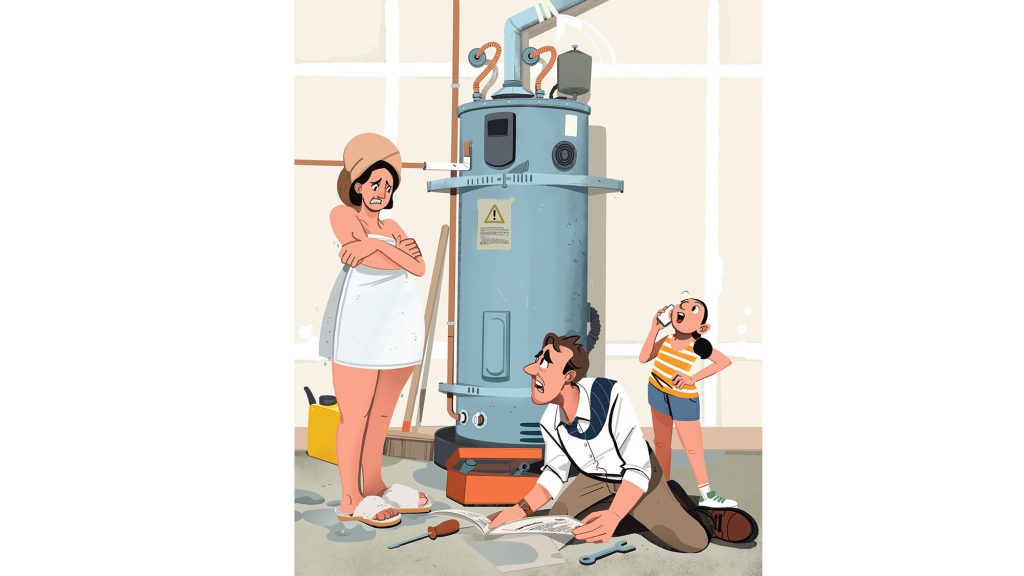
There does, however, come a time when every water heater kicks the can. The average unit’s life expectancy is eight to 12 years, but depending on the type and how well it has been maintained, you could be looking at far less or far more.
In short, age isn’t the only indicator that a water heater needs to be replaced. Signs you need a new water heater:
- Sudden or gradual loss of hot water throughout the home
- Rust-colored water or water that smells like sulfur
- A leaky or noisy tank
- Frequent or costly repairs
When you decide it’s time to install a new water heater, there are two main options, each with its own pros and cons regarding cost efficiency.
Storage water heaters operate on either gas or electricity and typically last between 10 and 15 years. Their upfront cost is cheaper (usually between $600 and $2,500), and they supply hot water throughout the entire home. However, because they’re always on and standing by, their overall energy use is often inefficient, leading to higher bills.
An increasingly popular option, tankless (or on-demand) units typically last around 20 years and are 8–34% more energy efficient than storage water heaters, resulting in approximately $100 in annual savings. On the downside, they can cost up to $3,900 to purchase and install and provide significantly less simultaneous hot water than units with a tank — so homes with large families and multiple bathrooms may need more than one.
Lawn care is another huge consumer of water in Texas. Here’s how to water your lawn and garden efficiently.