Please sign in as a member or guest below to access it.
Please sign in as a member or guest below to access it.

From the desert springs of West Texas to the mineral-rich wells of North Texas, you’ll soon be floating in a spring-fed pool.
By the time guests arrived at Mineral Wells’ Baker Hotel in the 1930s, they had already traveled far in search of its famous curing waters.
The 14-story Spanish Colonial Revival landmark rose improbably above the basin floor, framed by oak-decked hills. Inside, bellhops whisked luggage past the terrazzo-floored lobby, glittering ballrooms, and beauty salon. The edifice featured a bowling alley, a gymnasium, and the first hotel swimming pool in Texas, filled with mineral water drawn from the ground below.
Celebrities including Clark Gable, Judy Garland, and Roy Rogers checked in alongside ordinary Texans seeking the same elusive goal of health.
For decades, Mineral Wells was one of the country’s great “taking the waters” destinations. Visitors arrived confident that the area’s mineral-rich groundwater could soothe tired joints, settle a nervous stomach, and restore vitality or sanity. Water from the town’s most famous well, later sold under the Crazy Water brand, became the stuff of Texas legend.
While Texas lacks the geothermal abundance of Arkansas or Colorado, it built its own healing-water culture around aquifers: vast underground reservoirs that rush mineral-laced water toward the surface through wells and springs scattered across the state. In the late 19th and early 20th centuries, these inspired popular hotels, bathhouses, and resorts. Today, a new generation of travelers is rediscovering them.
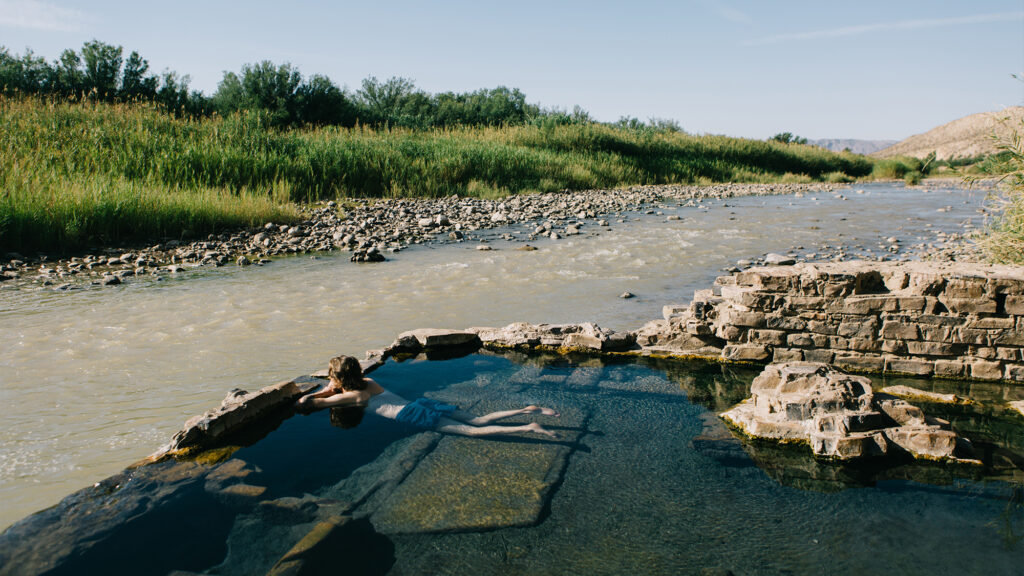
For those seeking genuine geothermal hot springs, the journey leads west. At Big Bend National Park’s Langford (or Boquillas) Hot Springs, 105-degree water bubbles up at the edge of the Rio Grande, inside the stone foundation of a century-old bathhouse once frequented by tuberculosis patients. Soaking is free; a desert trail past limestone cliffs is the only admission required for a unique dip, with Mexico visible across the river.
Also in the Chihuahuan Desert, Chinati Hot Springs offers a more private experience. The retreat’s mineral waters emerge at temperatures ranging from the mid-80s to more than 110 degrees. Staying in a casita, you can soak under a sky so dark and thick with stars it feels like its own kind of cure.
Mineral wells fed a different resort tradition, drawing directly on underground aquifers. San Antonio’s Hot Wells Hotel opened in the early 1900s atop 104-degree sulfurous water from the Edwards Aquifer and drew the likes of Teddy Roosevelt and Mexican president Porfirio Díaz before fire destroyed it in 1925. Bexar County stabilized the ruins in 2019, turning them into a historical park whose illuminated remains evoke Roman baths. In 2023, Camp Hot Wells opened nearby, tapping the same aquifer, with claw-foot and cedar soaking tubs, build-your-own charcuterie boards, and free foot baths for patrons.
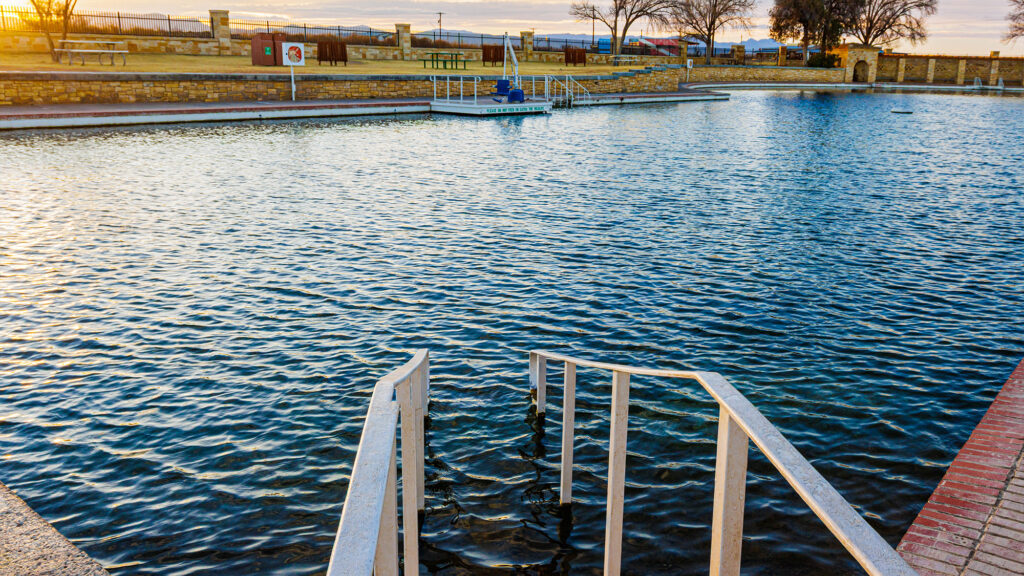
Cool, mineral-fed springs make up the rest of the list, because not every celebrated Texas spring runs hot. Balmorhea State Park, fed by San Solomon Springs, is one of the world’s largest spring-fed pools, holding steady in the low seventies. Near Spicewood, Krause Springs’ natural pools and waterfalls have been running cool and constant since 1955.
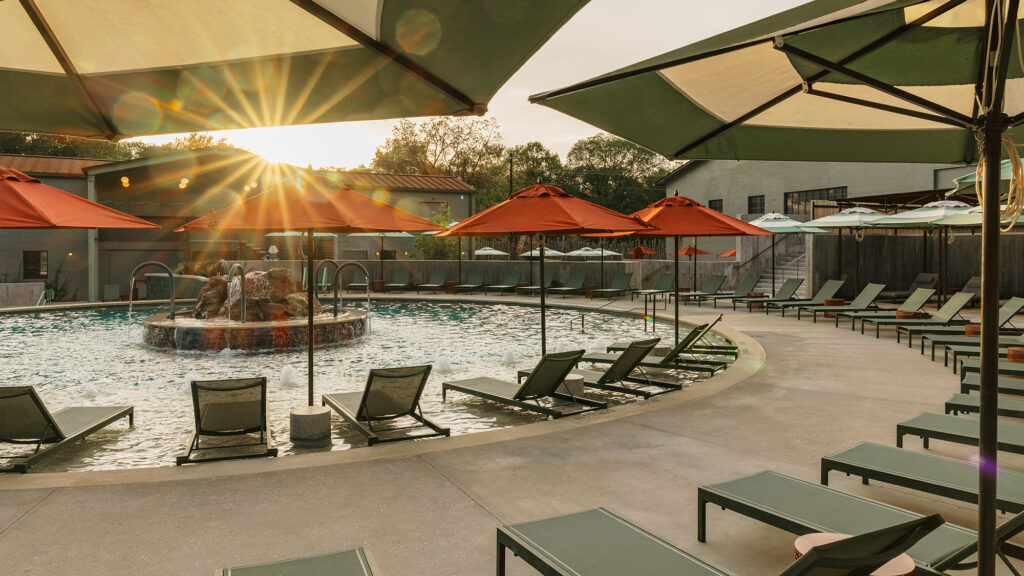
The newest chapter in modern wellness is here. To much acclaim, Ottine Mineral Springs opened to the public last year, drawing 106-degree water from an aquifer 1,500 feet down to fill soaking pools and grottos. Saunas, cold plunges, and a restaurant round out the new-school spot.
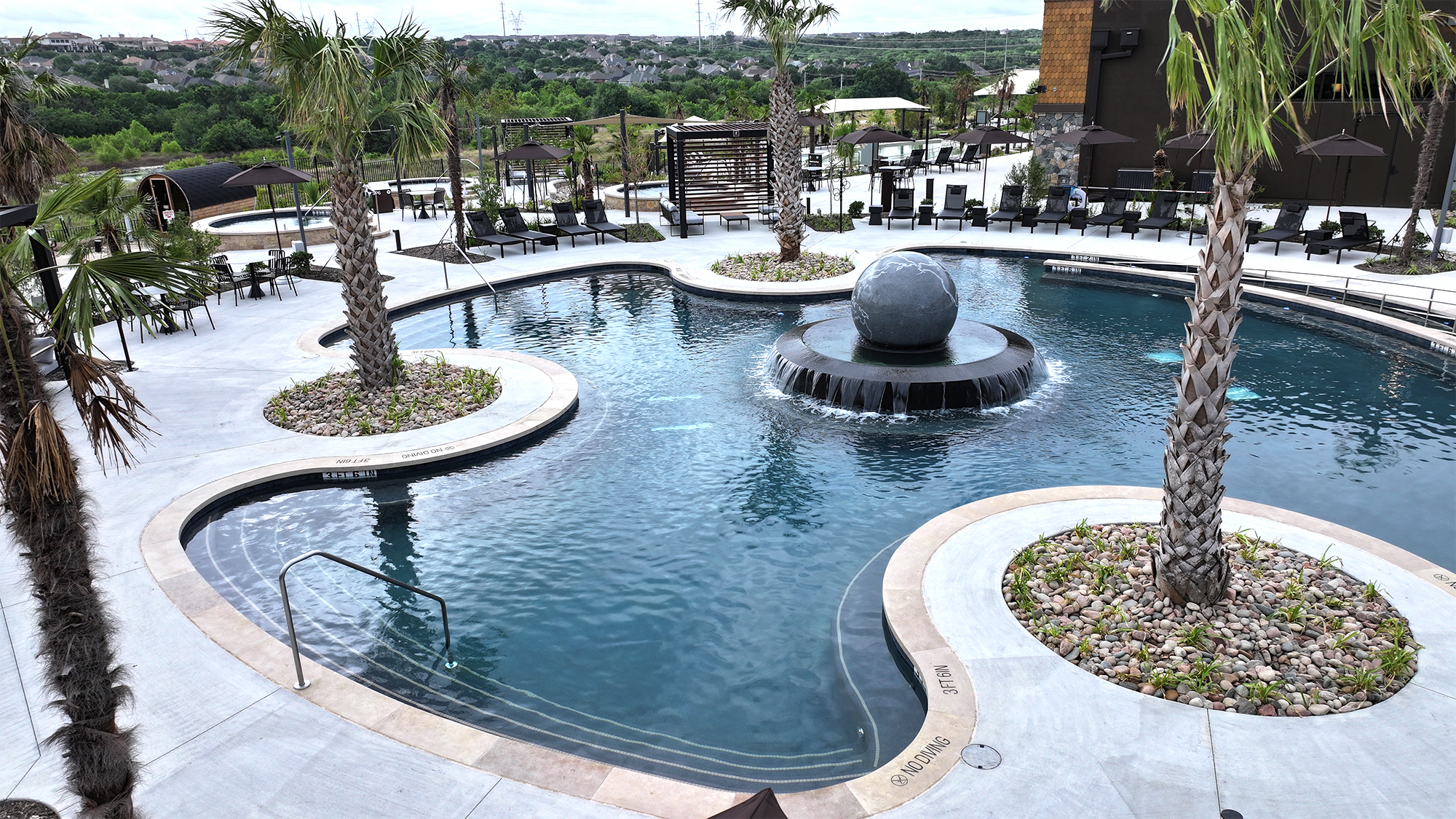
Near Frisco, WorldSprings bills itself as the nation’s largest mineral-springs resort, with 46 pools calibrated to mimic famous therapeutic waters, from Iceland’s Blue Lagoon to the Dead Sea by way of Japan, South Korea, and Australia.
The promises of miracle cures may have faded, but the pull of the water remains. Whether the source is a desert spring, sulfur well, or resort pool, Texans have been answering the call for more than a century: Slow down, get in, and let the water do what it’s always claimed to do.
Discover seven hidden-gem lakes in Texas to enjoy more of what nature has to offer.

(Set in Texas)
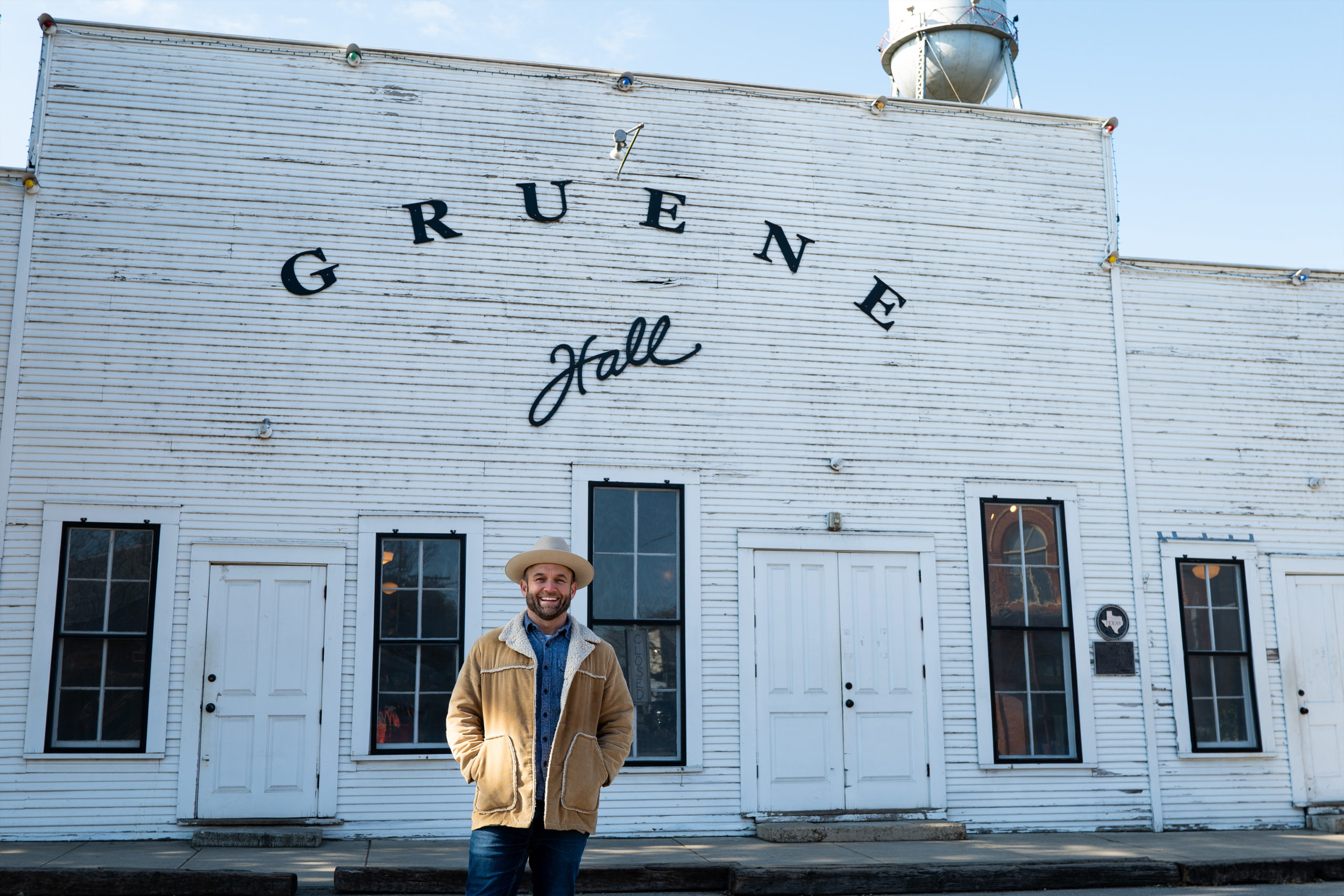
Pronounced “green.”
Your Guide to Stargazing in Texas
Get out of the city to see things out of this world.
A Guide to the Coziest Harvest Home
Fill your house with warmth and abundance this autumn using our guide to your perfect harvest home.
6 Must-Visit Texas Historical Sites
Explore our state’s wild and inspiring past by visiting some iconic locations.
Parks and Rec: Camp Out in your Car
Ditch the tent and turn your vehicle into the ultimate camping accessory.