Please sign in as a member or guest below to access it.
Please sign in as a member or guest below to access it.

A look back at holidays when our state’s outsize spirit and resilience shone bright.
Five short years ago, COVID-19 threatened to steal our Christmas cheer. But this is Texas, and we weren’t about to let a pandemic cancel the season. Amid lockdowns and social distancing, we got creative. Austin’s Trail of Lights was reimagined as a drive-through. Holiday drive-in movies made a comeback. Grapevine flipped its parade into reverse, with families driving past stationary floats. The Dallas Symphony Orchestra rolled out parking-lot concerts from The Concert Truck. Families shared turkey and tamales over Zoom, and if you needed pecan pie, Berdoll’s vending machine had you covered.
The word “unprecedented” was thrown around exhaustively, but it certainly wasn’t the first unusual Christmas in Texas. Our state’s holiday history is full of uniquely challenging moments — and joyful ones too. Here’s a look back at some of the most unforgettable Christmases in Texas history.
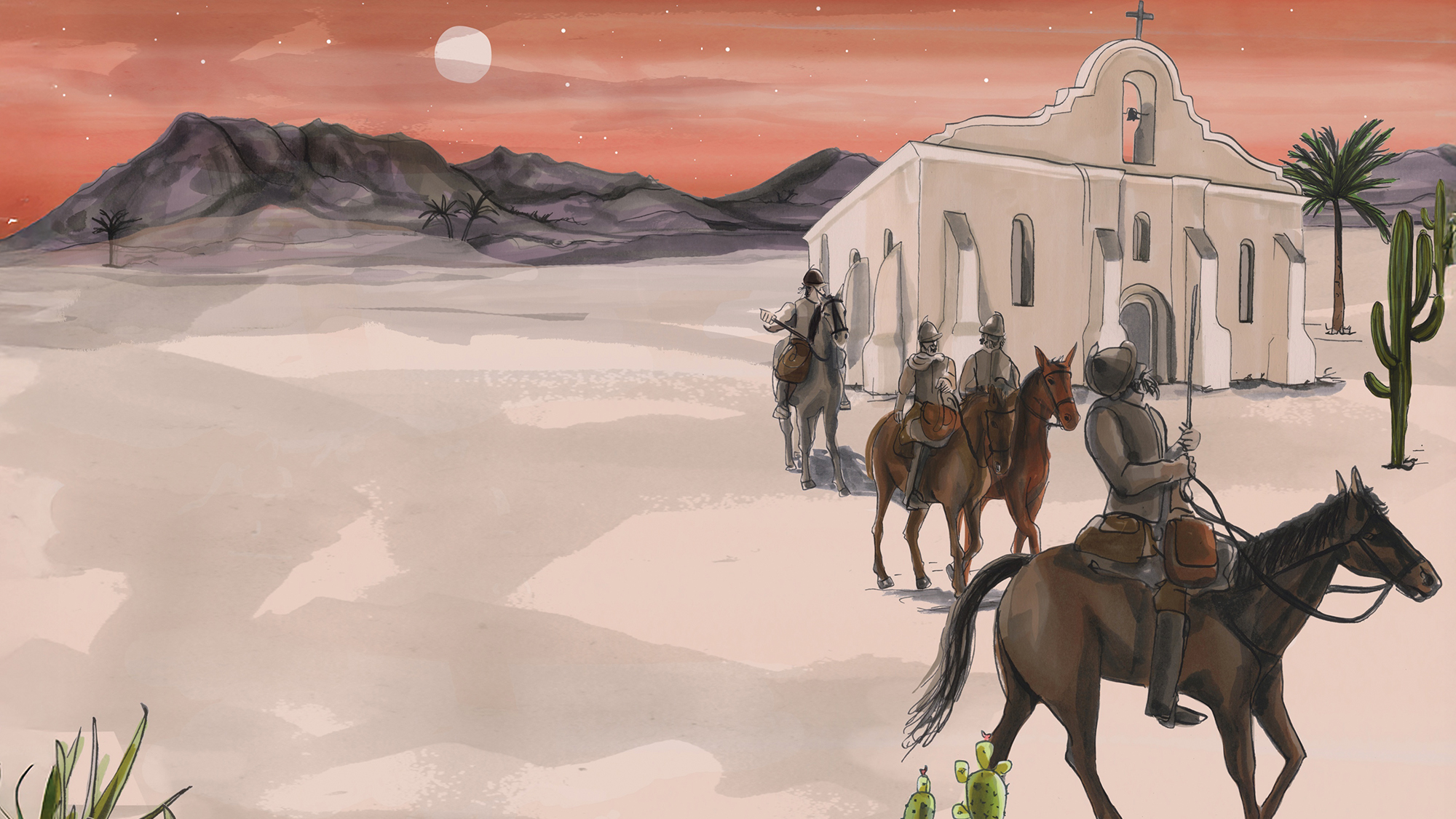
The very first Christmas celebrated in what would become Texas dates to 1528, and it might have been the first Christmas observed in the United States. Spanish explorers led by Álvar Núñez Cabeza de Vaca found themselves shipwrecked on what is now known as Christmas Bay in Brazoria County after a failed expedition to Florida. The Spaniards recorded encounters with the Native community, and the first Noel was marked with a mass with prayers and hymns. No twinkling lights or photo ops with Santa — just a peaceful celebration in what would become the site where the first Europeans set foot in Texas.
The Christmas of 1836 marked the very first holiday of an independent Texas. Months earlier, the Texas Revolution had secured freedom from Mexico. Newspapers beamed with pride, proclaiming Texans were finally “in full and undisturbed possession of our civil and political rights.” Yet joy was tempered with loss: Just two days after Christmas, Stephen F. Austin, the “Father of Texas,” died. That holiday captured both the triumph and fragility of a young nation still finding its footing.
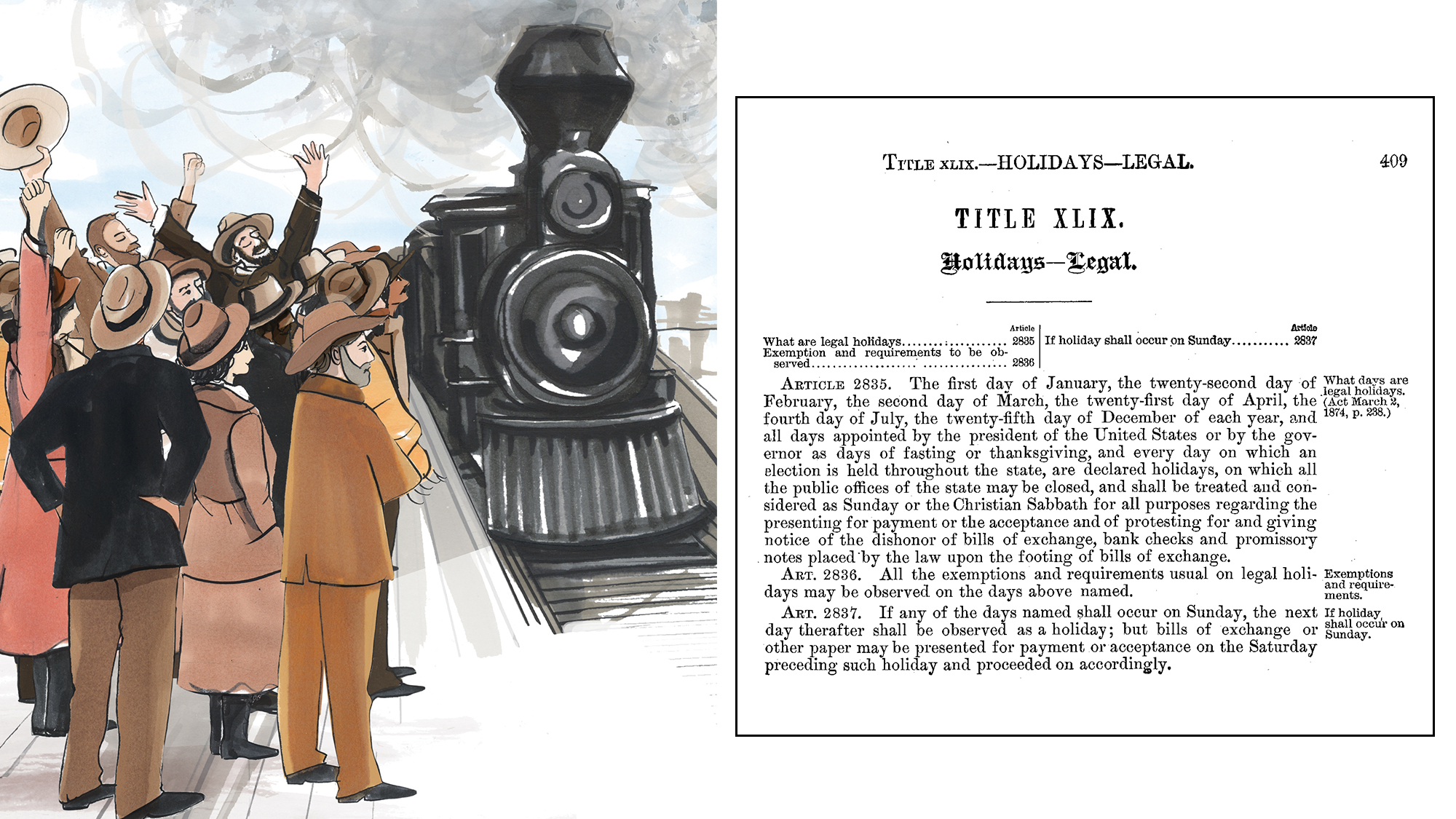
On Christmas Day, 1871, Austin had reason to cheer as steel tracks finally reached the capital. The Houston and Texas Central Railway brought the first train into town, turning Austin into a bustling trade hub. Construction boomed, the population doubled, and Christmastime looked a little different thereafter. Imported goods began to appear on holiday tables, all delivered on steel rails.
Texans had celebrated Christmas for generations, but it wasn’t until 1879 that it became an official holiday. Don’t blame our ancestors for dragging their boots; Texas had been preoccupied with revolution, annexation, the Civil War, and years of frontier battles. When lawmakers finally signed Christmas into law, it marked more than a day off. It was the start of a new era of tradition and stability.
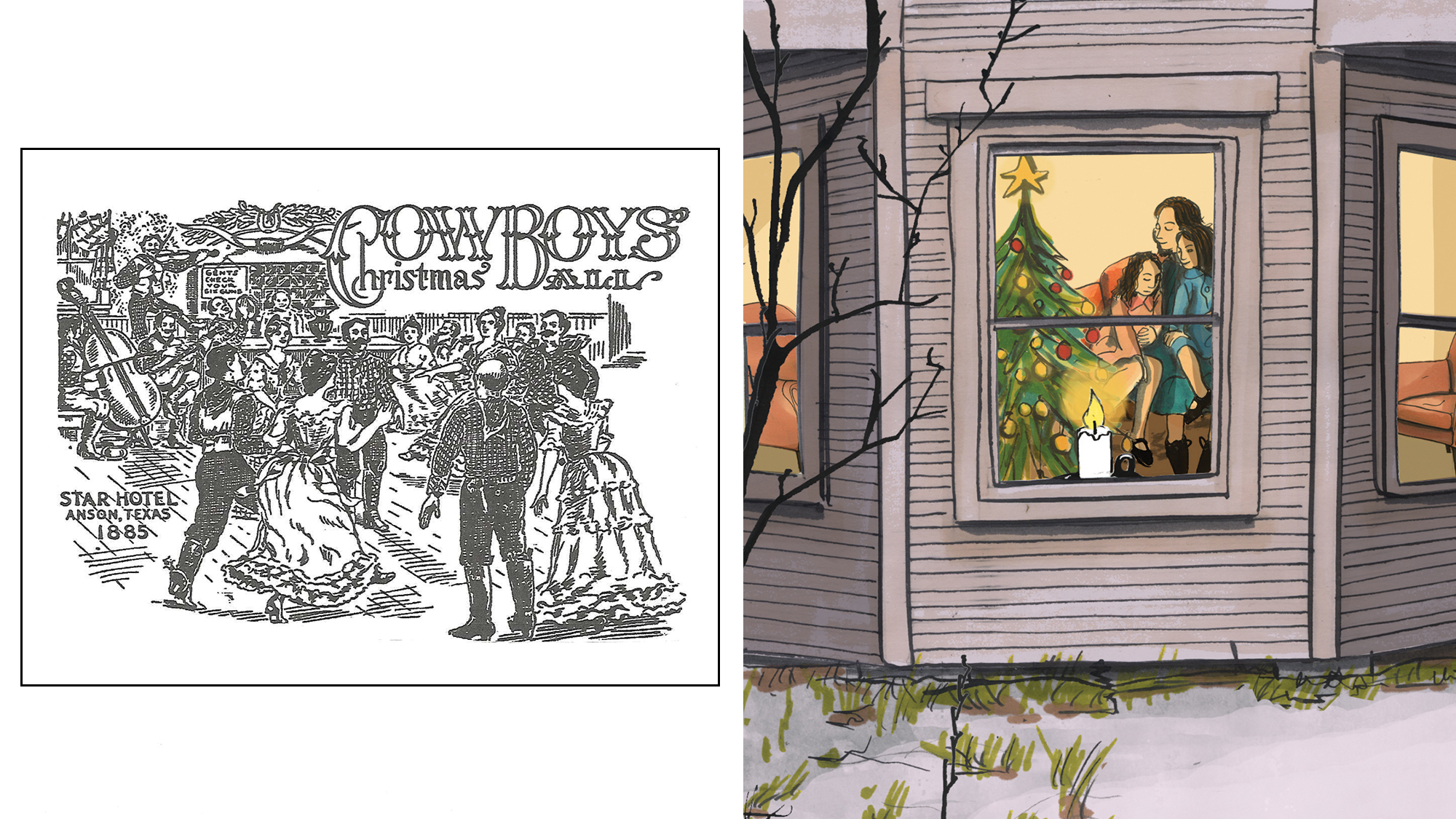
What began as a cowboy wedding dance in 1885 at the Star Hotel in Anson grew into one of Texas’ most iconic holiday traditions. Writer Larry Chittenden was so taken by the night that he penned “The Cowboys’ Christmas Ball,” a poem that captured frontier life in all its boot-stomping glory. Interest in the Texas Cowboys’ Christmas Ball was revived in the 1930s, when Leonora Barrett and Hybernia Grace performed during the 1936 Texas Centennial Exposition in Dallas. The ball then grew into a nationally recognized event, held each December in Anson’s Pioneer Hall. Guests today dance waltzes, polkas, and the Virginia reel — some even dressed in 19th-century attire.
The Christmas of 1918 carried both joy and grief. The Great War had ended just weeks earlier, but soldiers had yet to return home. Celebrations were dampened by the Spanish influenza pandemic. Public gatherings were restricted, churches were half empty, and many families mourned loved ones lost to the war and pandemic. Instead of parades and packed town squares, Texans lit candles at home, prayed for returning soldiers, and leaned on family. It was a holiday of mixed emotions — relief that the war was over but grief that so many seats at the table were empty.
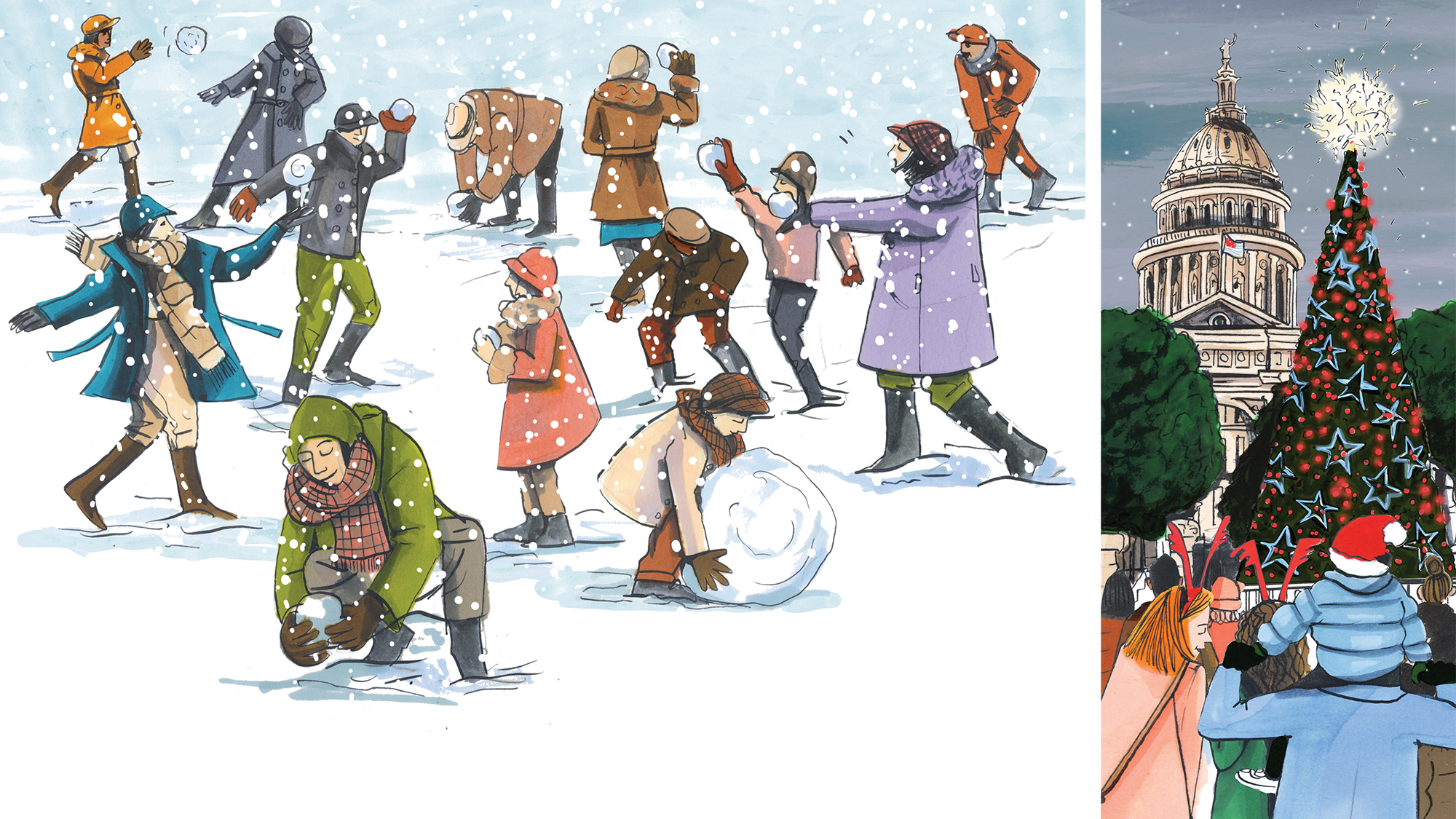
In December 1929, Central Texas was buried in snow like never before. Hillsboro measured 26 inches in a single day, which is a state record that still stands. Temperatures plunged, fireplaces roared, and kids reveled in rare snowdrifts taller than fence posts. Meanwhile, Dallas barely saw a dusting and hit 70 degrees on Christmas Day. Only in Texas, right?
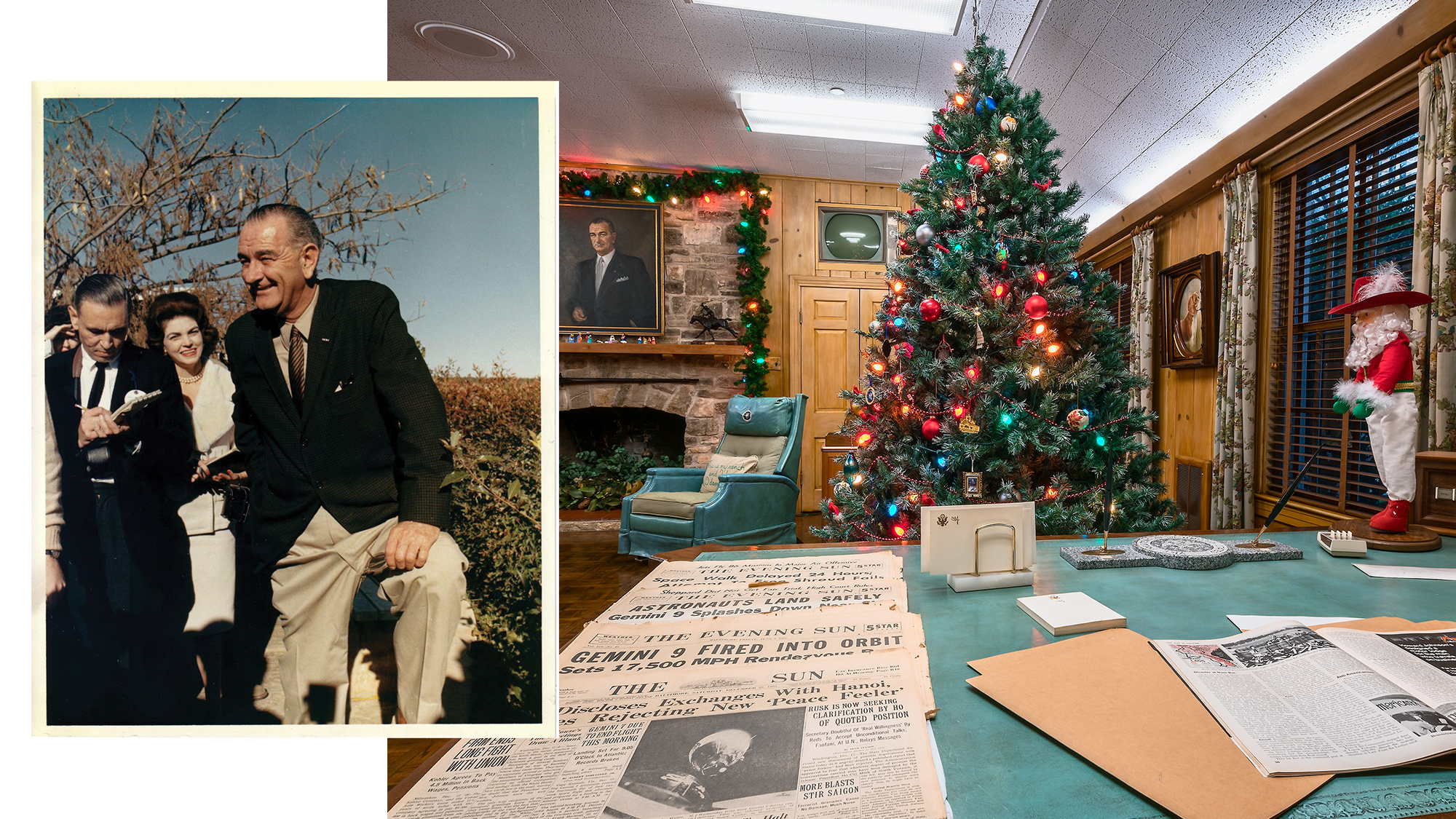
When Lyndon B. Johnson was president, Christmas at the LBJ Ranch in Stonewall blended homestead hospitality and presidential pageantry. Journalists toured the grounds, dignitaries rubbed shoulders with tall-hatted socialites, and Lady Bird kept the holiday dinner running (although she famously fussed when the president’s lengthy tours delayed the serving of her famous gravy). Guests were even sometimes given commemorative ashtrays. (It sure was the ’60s!)
In 1994, Austin unveiled a new tradition: the Texas Capitol Christmas Tree lighting. Rising tall on Congress Avenue, the tree glittered with ornaments the size of cowboy hats and thousands of lights visible for blocks. Each year since, Texans have gathered to sip cocoa, hear carolers sing, and watch the Capitol glow against the December sky. What began as a single event is now a beloved tradition, anchoring Austin’s holiday season and showcasing the enduring pride of the Lone Star State.
Just before Christmas in 2007, a fierce snowstorm hammered Amarillo, piling up wrecks along icy highways. One chain-reaction pileup involved more than 50 vehicles. Dozens were injured, and, tragically, at least one person died. But in true Texas fashion, generosity shone through the storm. Stranded drivers opened their wrapped presents to share warm clothes with families caught in the cold. It was a tough holiday but also a reminder of the grit and heart that Texans bring to the table in moments of need.
Our history proves it: No matter the circumstances, the Texas spirit has always triumphed with resilience and generosity. Happy holidays to you and yours.
Curious how nutcrackers, Moravian stars, and other German holiday handicrafts became Texas holiday staples? Discover the stories behind these crafts, where to find them today, and even how to make your own.

When you think of Texas beaches, you may not think of surfing. But the state has a rich and loyal history dedicated to the sport.
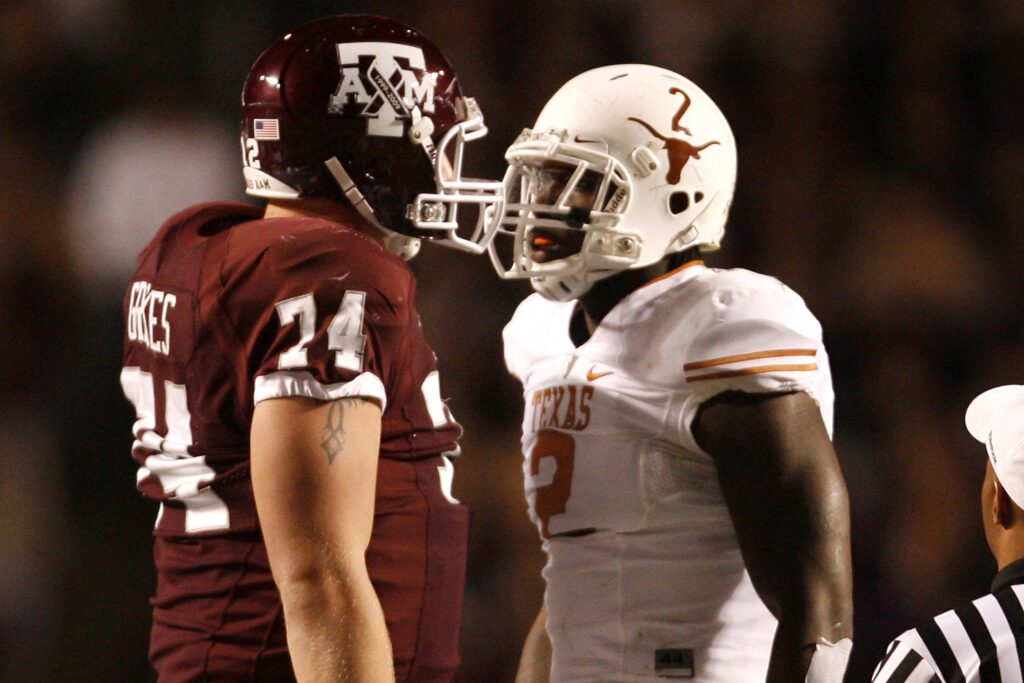
Feud-Ball: The Two Most Iconic Rivalries in Texas
In Texas, disputes are settled in the end zone.
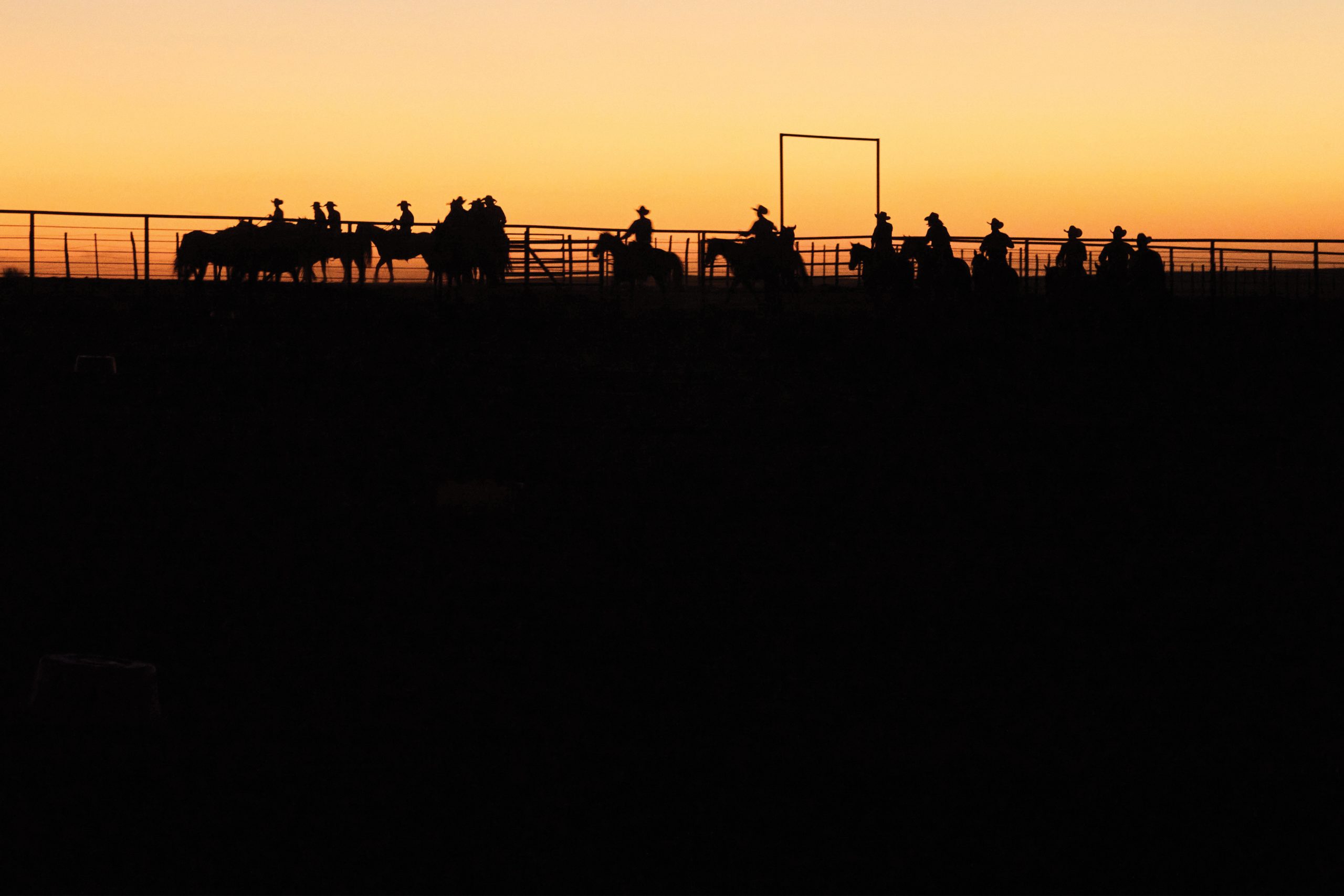
The History of the Four Sixes Ranch
A look at the real-life Texas ranch seen in “Yellowstone” that’s larger than New York City.
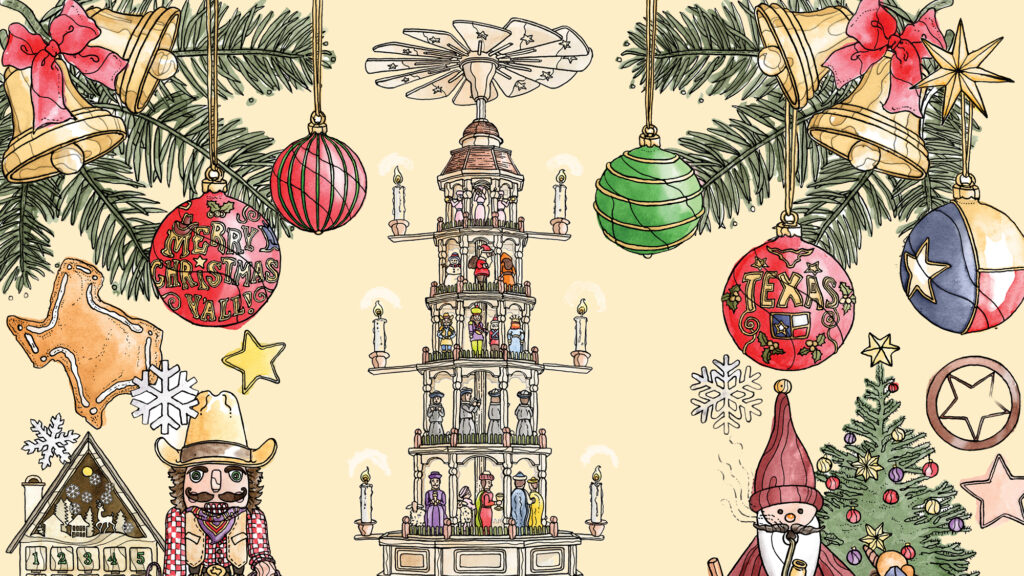
How German Traditions Shaped Christmas in Texas
Nutcrackers, candlelit pyramids, Moravian stars, and more.
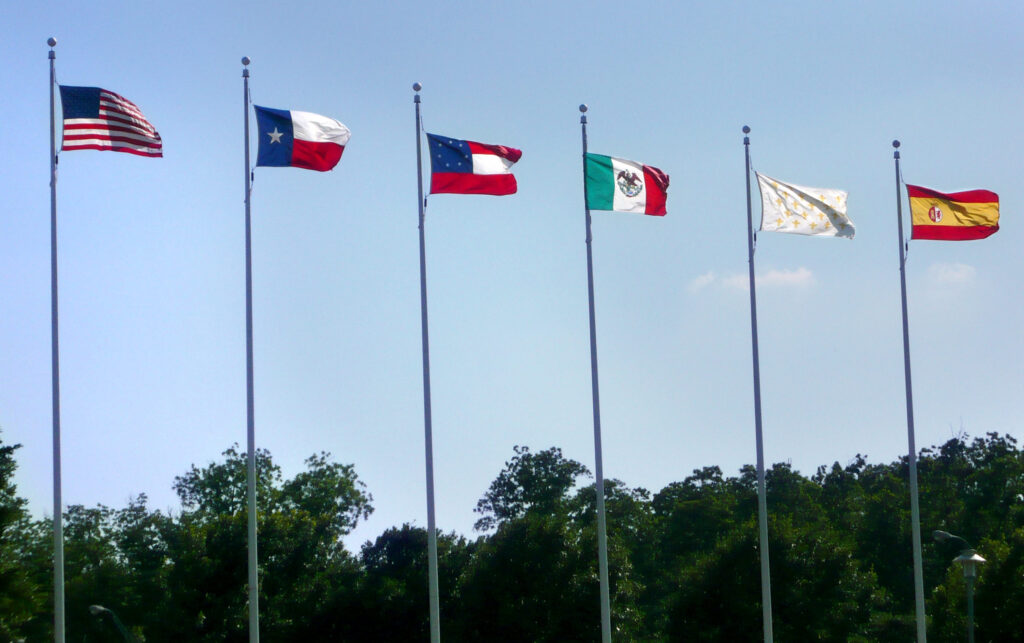
The History of the Six Flags Over Texas
Over the years, six flags have been raised and flown over Texas. Here is the story behind each one.
Tracing Texas’ Place in Cinematic History
Follow this path through a century of Texas films.