With the harshness of winter behind us, springtime’s soft and and colorful form has taken root. Bring some freshness into your home with tips for creating a beautiful spring flower arrangement.
Selection
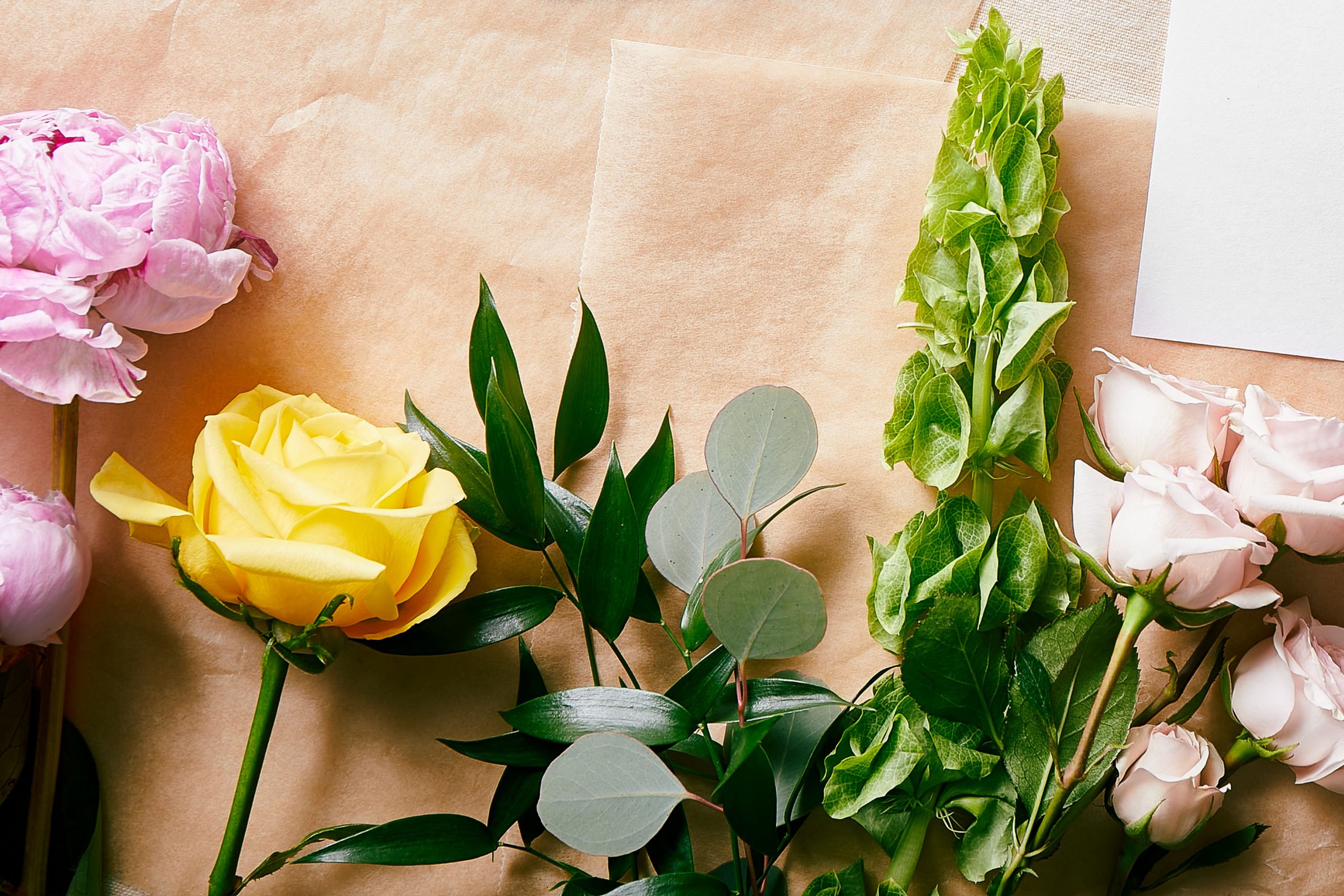
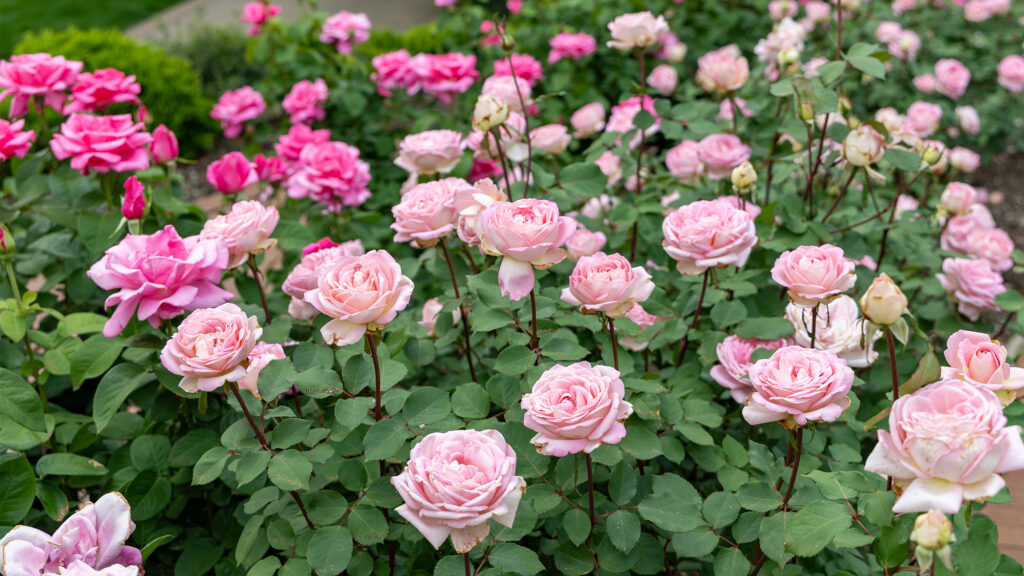
- Primary flowers: These are the largest blooms and the focal point of the arrangement; think peonies, roses, anemones, and hydrangeas.
- Hardy greenery: Any green can be used, even kale leaves. Eucalyptus, olive branches, ferns, Italian Ruscus, myrtle, dusty miller, lily grass, and evergreen branches are all popular choices to support your arrangement.
- Filler or detail flowers: Smaller flowers add dimension, color, and contrast to your arrangement. Some popular choices are baby’s breath, bells of Ireland, thistle, spray rose, sweet pea, feverfew daisies, Queen Anne’s lace, and most wildflowers.
- Line flowers: These are tall flowers that add height to the arrangement, like delphinium, stock flower, larkspur, and snapdragon.
Color Palette
- Use a color wheel: The color wheel is helpful for visually separating warm colors and cool colors while being able to quickly identify a color’s complements (which appear directly opposite of where a color sits on the wheel).
- Have contrast: Using complementary colors can add visual appeal and depth to the arrangement. Likewise, if you choose a more neutral flower palette, you can use a more colorful vase.
- Think seasonally: Spring colors include lighter pastels in pink, lavender, blue, yellow, and green. Bolder varieties will allow your pastels to shine. Light purple, white, pink, and green are a beautiful spring color combination.
Tools
- Floral shears: Help you make clean, precise cuts through even the toughest stems.
- Bamboo skewers: Add structural support to flowers like daisies and hydrangeas.
- Grid shapes: These hold flowers in a grid shape; you can buy them or make your own with Scotch tape.
- Vases: You may use nearly any container that holds water — from a basket with a plastic liner to a galvanized bucket. Wide-mouthed Mason jars are a popular container choice for beginners and can be paired with flower frog lids.
Conditioning
- Cut stems at an angle to help flowers absorb more water.
- Condition flowers by soaking stems in a bucket of cold water overnight before arranging.
- Remove all leaves below the stem’s water line.
- As flowers begin to wilt and die, remove them from the arrangement to reduce bacteria in the water, keeping the rest of the flowers healthy.
- Add 1 teaspoon each of apple cider vinegar and sugar to the water to keep flowers fed and disease free.
Arranging
- Add a grid structure to the container before placing flowers.
- Place your greenery in a lattice pattern using the grid to create a sturdy base.
- Add primary flowers so they can be seen from every angle. Using an odd number of primary flowers can make it appear more organic.
- Add your line, filler, and accent flowers to fill in the gaps and bring volume to the arrangement.
Want to find the perfect wildflowers for your bouquet? Check out our wildflower identification guide.