Please sign in as a member or guest below to access it.
Please sign in as a member or guest below to access it.

From the chupacabra to Pecos Bill — In the battle of fact or fiction, where does your favorite Texas tall tale net out?
Harp too much on facts, storytellers say, and you’ll kill a good tale.
“People like to be led down a merry road,” says Houston folklorist Scott Bumgardner. Besides, he says, “Everything is bigger in Texas, darlin’. We were our own country, so we’ve got something extra to be proud of.”
Even legendary writer J. Frank Dobie loved to exaggerate, Bumgardner adds, and “he didn’t have any opposition to making a story a little bit more interesting.”
Of course, many sagas do start with a whiff of truth.
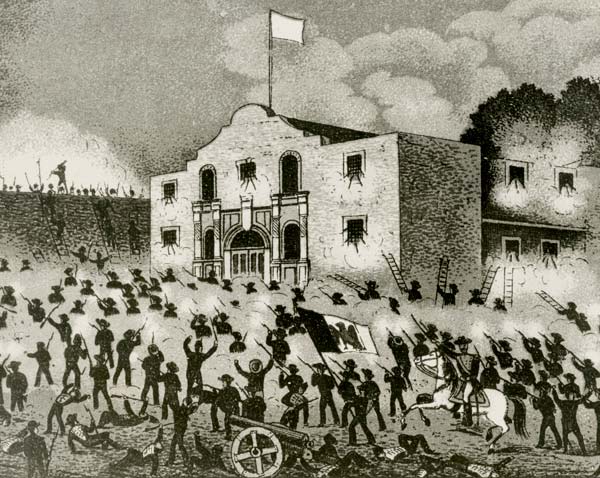
For instance, the Battle of the Alamo boasts a healthy blend of facts and lore. Many stories — such as the legend of Davy Crockett’s coonskin cap, which may actually have been a skunk-skin cap — have been debunked or called into question.
The oft-told tale of gold buried beneath the San Antonio monument likely isn’t true, either, says author and folklorist Donna Ingham, since an exploratory dig turned up mere shards of pottery and such. The same goes for Col. William B. Travis drawing a line in the sand and asking for a symbolic step from men willing to die for Texas’ independence; that’s another story to bite the dust.
But the story of two survivors — a young mother, Susanna Dickinson, and her child, Angela (also known as the Babe of the Alamo) — completely true, including the tale of Travis giving a parting gift to the baby.
“So there [Angela] was crawling around, playing on the floor, doing what babies do, and Col. Travis himself could not resist her baby charms,” Ingham wrote in her 2001 book, Texas (& Texanized) Myths & Legends. “In the midst of all his concerns about being way outmanned by the Mexican army and about having none of the reinforcements he had asked for and hoped for, he picked Angelina up and lifted her onto his lap.
“Then he took a hammered gold ring with a black cat’s-eye stone off his finger, tied it through with a string he found in his pocket, and slipped it over Angelina’s head like a necklace. ‘If my boy was here,’ he said, ‘I’d give this to him. But I won’t be needing it anymore, so you keep it for me.’”
Another story that blends fact and fiction might be that of Pecos Bill, the legendary cowboy raised by coyotes. Every Texas kid knows he was a towering fellow who wrestled tornadoes, made a rattlesnake into a lasso, and rode a horse called Widow Maker.
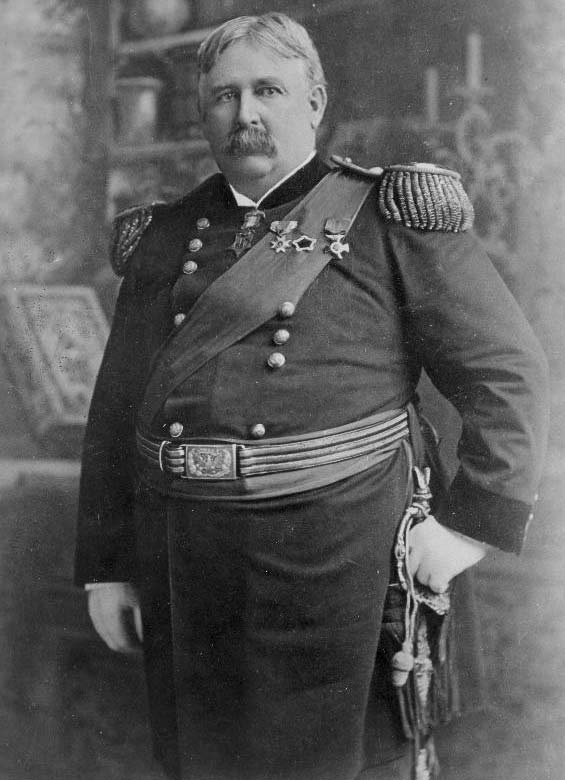
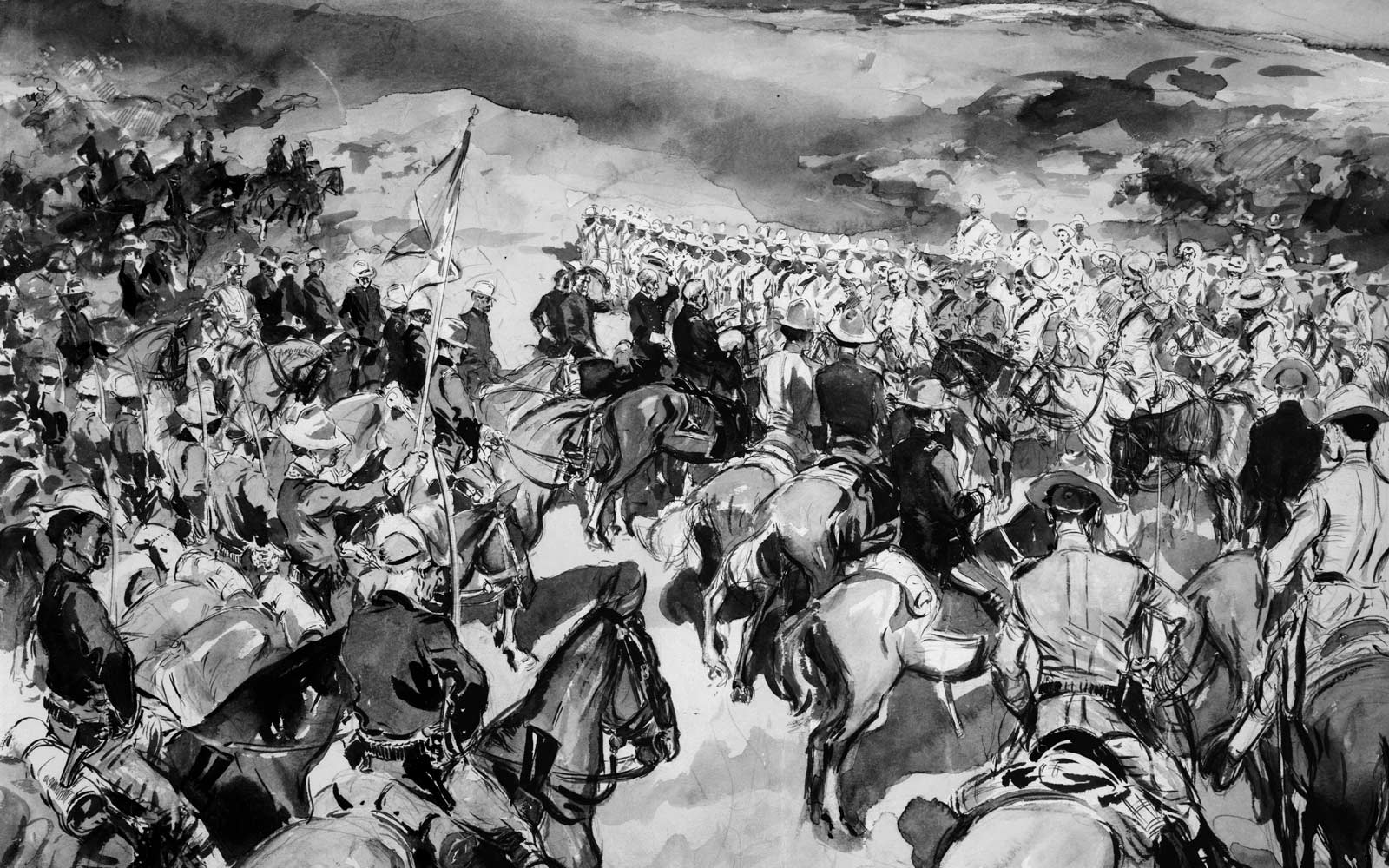
The story goes that writer and illustrator Edward “Tex” O’Reilly, largely credited with immortalizing the beloved character, based it on his interactions with William Shafter, a rather hefty — but not especially tall — Union soldier and expert horseman.
Known for his bravery in the Civil War, Shafter is said to have fought with gusto long after his boots filled with blood on the battlefield. He later marched his exhausted troops across West Texas, urging them on until they reached the Pecos River and earning himself a nickname behind his back: Pecos Bill.
O’Reilly not only knew Shafter, he even fought with him in Cuba during the Spanish-American War. Austin-based historian Kay Reed Arnold made the latter discovery about a decade ago, but she’s reluctant to dub Shafter the original folk hero.
She unearthed an older Pecos Bill reference as she began documenting her find, suggesting that the story predates William Shafter’s time. So Arnold doesn’t think he is the real deal.
“It makes me uncomfortable with it as a historian,” she’ll tell you with a laugh, “but I’m OK with it as a folklorist. … There are facts, and then there’s the story.”
“If it’s real lore, you’ll probably never know,” Bumgardner says of the Lone Star State’s many legends, including ones of treasure buried along conquistadors’ paths. “The best stories generally start out with a grain of truth.”
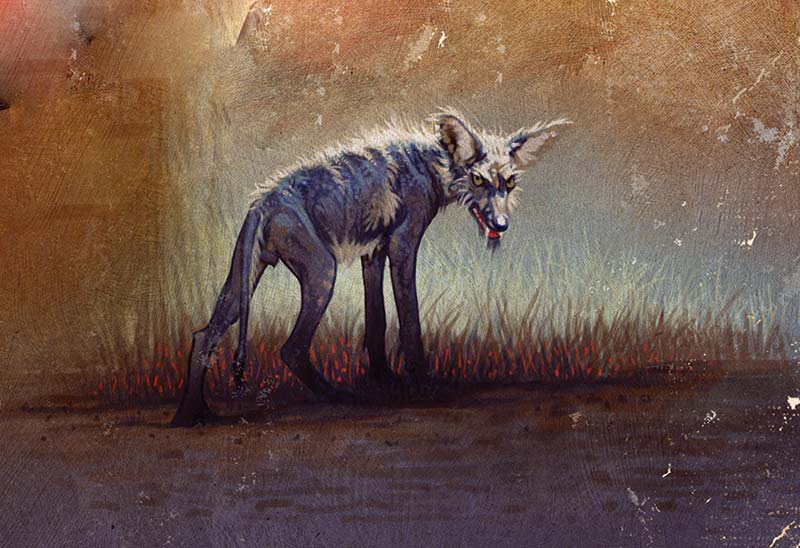
Some are still unfolding, too. Eerie accounts of the bloodsucking, livestock-killing chupacabra have long circulated in Texas and Mexico, for example, and when Cuero rancher Phylis Canion came across the hairless remains of a strange animal in 2007, she insisted she’d found proof of the mythical creature.
Wildlife officials called it a dog with mange, but the carcass was admittedly puzzling enough to prompt widespread headlines and lab work at Texas State University, where biologists determined the poor critter was simply a bald coyote. Further DNA tests from the University of California, Davis suggested it was part Mexican wolf.
“The problem with that is we haven’t had Mexican wolves in Texas in a very long time,” says Ingham, who researched chupacabras for her book. “It didn’t solve the mystery. [Canion] still believes it’s a chupacabra.”
Maybe she’s right. Or maybe folks want her to be.
“Texans are known for stretching it,” says Arnold. “The fish gets bigger and bigger every time you tell the story, and I think the whole mystique of Texas plays right into that. We play it up. We really do.”
So sure, some of our biggest legends might not be the most truthful. But fact or fiction, folklore is a part of our culture, and it makes the Lone Star State as great and grand as the fictional Pecos Bill himself.
Don’t just unearth the truth about Texas tall tales — learn how to uncover the mystery of your own family tree.
A History of Texas Agriculture
From cotton to cattle, the story of Texas has always been a story about the land.
7 of the Most Texas College Traditions
Tradition is what binds us together. If you’re looking at colleges this fall, learn about your potential schools’ favorite traditions.
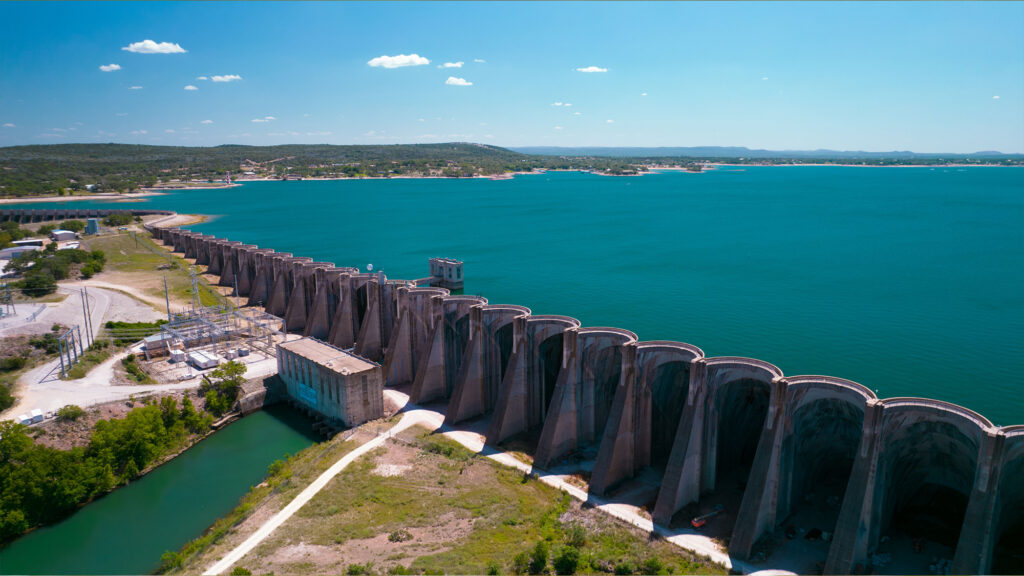
The Underwater Ghost Town of the Hill Country
It’s not haunted, but old Bluffton does occasionally rise from its grave.
A simple chrysanthemum corsage bloomed into one of Texas’ most beloved — and recognizable — traditions.
How Texas built a legacy in leather.

Why the World’s Largest Airline Loves to Call Texas Home
Every American Airlines plane that lands at DFW International is arriving home.