Please sign in as a member or guest below to access it.
Please sign in as a member or guest below to access it.

‘Ordinary Americans, extraordinary actions.’
Dense fog clung to the South Vietnam valleys on Jan. 6, 1968, making visibility nearly impossible — a critical issue for “dustoff” crews, the U.S. Army’s helicopter ambulance evacuation units used throughout the Vietnam War to improve soldier survival rates.
U.S. Army Maj. Gen. Patrick Brady flew his Bell UH-1H Iroquois “Huey” helicopter into the heavily guarded enemy territory anyway.
He pushed his Huey deep into dense fog and smoke, hovering low and sideways, using the backwash from his rotor blades to clear a landing zone. He landed, despite enemy fire. Then, he did it again — and again, at one point rescuing wounded soldiers who lay 50 meters from the enemy after several failed rescue attempts.
With a damaged aircraft, partially shot controls, and a wounded crew, Brady kept returning, switching helicopters when necessary — even landing in an active minefield at one point. At the day’s end, he’d flown three helicopters into “impossible rescues,” carrying 51 wounded men to safety.
Nearly two years later, Brady was awarded the Medal of Honor — the nation’s highest award for military valor in action — for his extraordinary skill and courage. Brady’s remarkable story is one of hundreds highlighted at the National Medal of Honor Museum in Arlington, which opened in March 2025.
“Our mission is to tell stories about normal Americans who did something extraordinary when the nation needed an action,” says Chris Cassidy, outgoing president and CEO of the National Medal of Honor Museum Foundation. Cassidy, a retired U.S. Navy SEAL who was awarded two Bronze Stars and a former astronaut who completed three spaceflights and 10 spacewalks, stepped down from his position last October.
In 2019, after a yearlong search, Arlington beat out 19 other cities — including Denver — for the coveted museum location. The North Texas city was selected for its centralized location; proximity to a large, international airport and attractions such as AT&T Stadium and Globe Life Field; and strong local support for MOH recipients. Approximately 70 recipients have lived in the region, and more than 1.7 million veterans and activeduty military personnel call Texas home.
The museum opened in Arlington’s entertainment district to great fanfare with performances by Grammy-winning “God Bless The U.S.A.” singer Lee Greenwood and the U.S. Navy Band Commodores. Several elected officials and famous faces, including actor and veteran advocate Gary Sinise, former President George W. Bush, and Dallas Cowboys quarterback Dak Prescott, also attended.
Most notably, more than half of the living MOH recipients were also present for the opening ceremony. “It was significant to watch the Medal of Honor recipients themselves come that day because I think a lot of them didn’t think that [the museum] would actually get built,” Cassidy says.
Put on a headset and jump into a 1968 Bell UH-1H Iroquois “Huey” helicopter for this virtual reality experience that places visitors in the middle of a crucial dustoff mission. As part of the dustoff crew, you’ll make life-or-death decisions that result in either bringing soldiers safely to base or enduring a hard landing in the Vietnam jungle.
Throughout the Vietnam War, these dangerous helicopter medical evacuations snatched wounded soldiers from battlefields, getting them to life-saving medical care. “You had a better chance at survival if you were wounded in the jungles of Vietnam than if you were in a car crash, simply because of that dedicated resource and well-trained crew to fly those missions,” Brady said in a past interview.
The virtual experience, which lasts about 15 minutes, is less about the adrenaline rush of piloting a Huey and more about bringing visitors into a complex, layered decision-making experience.
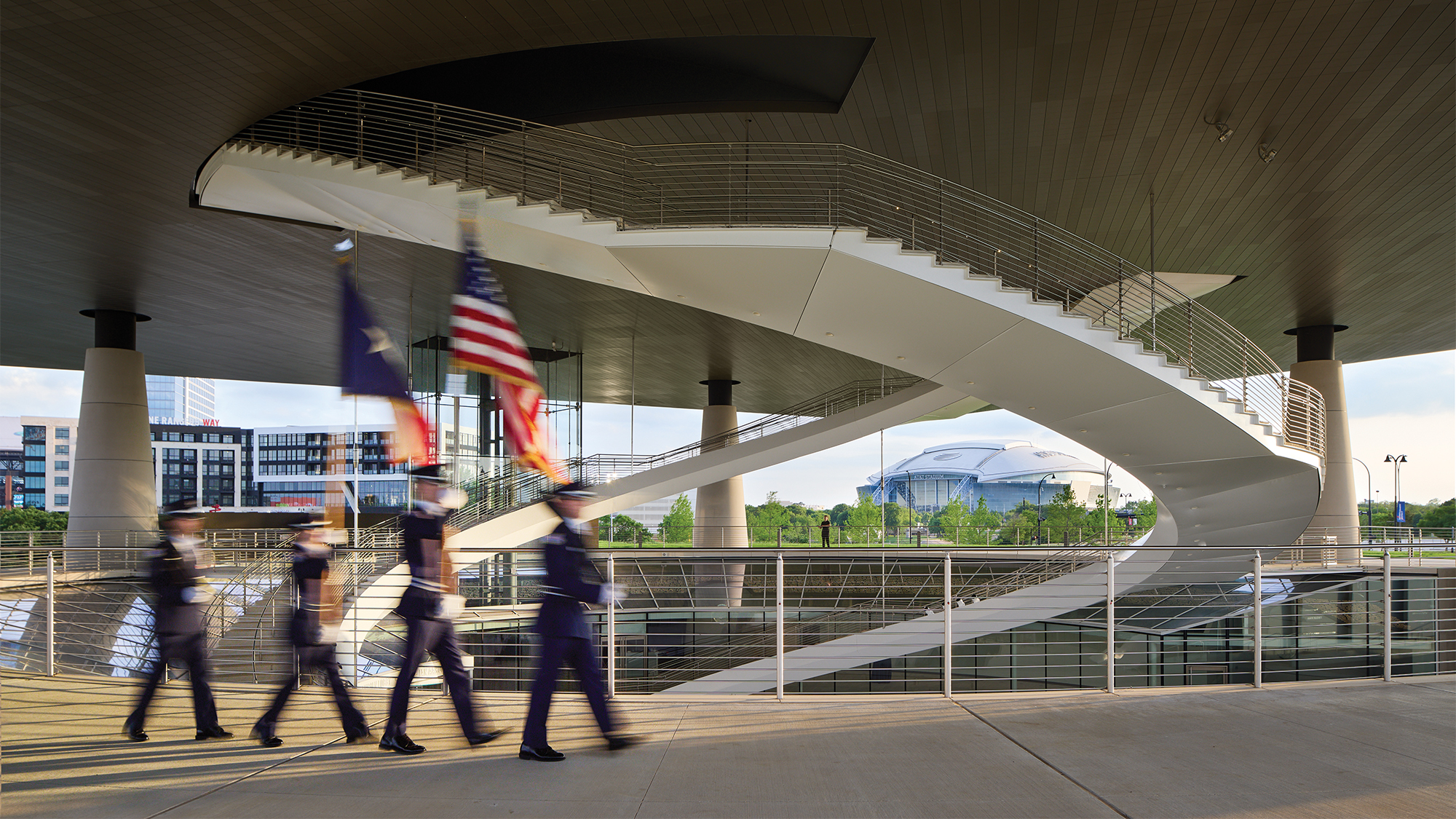
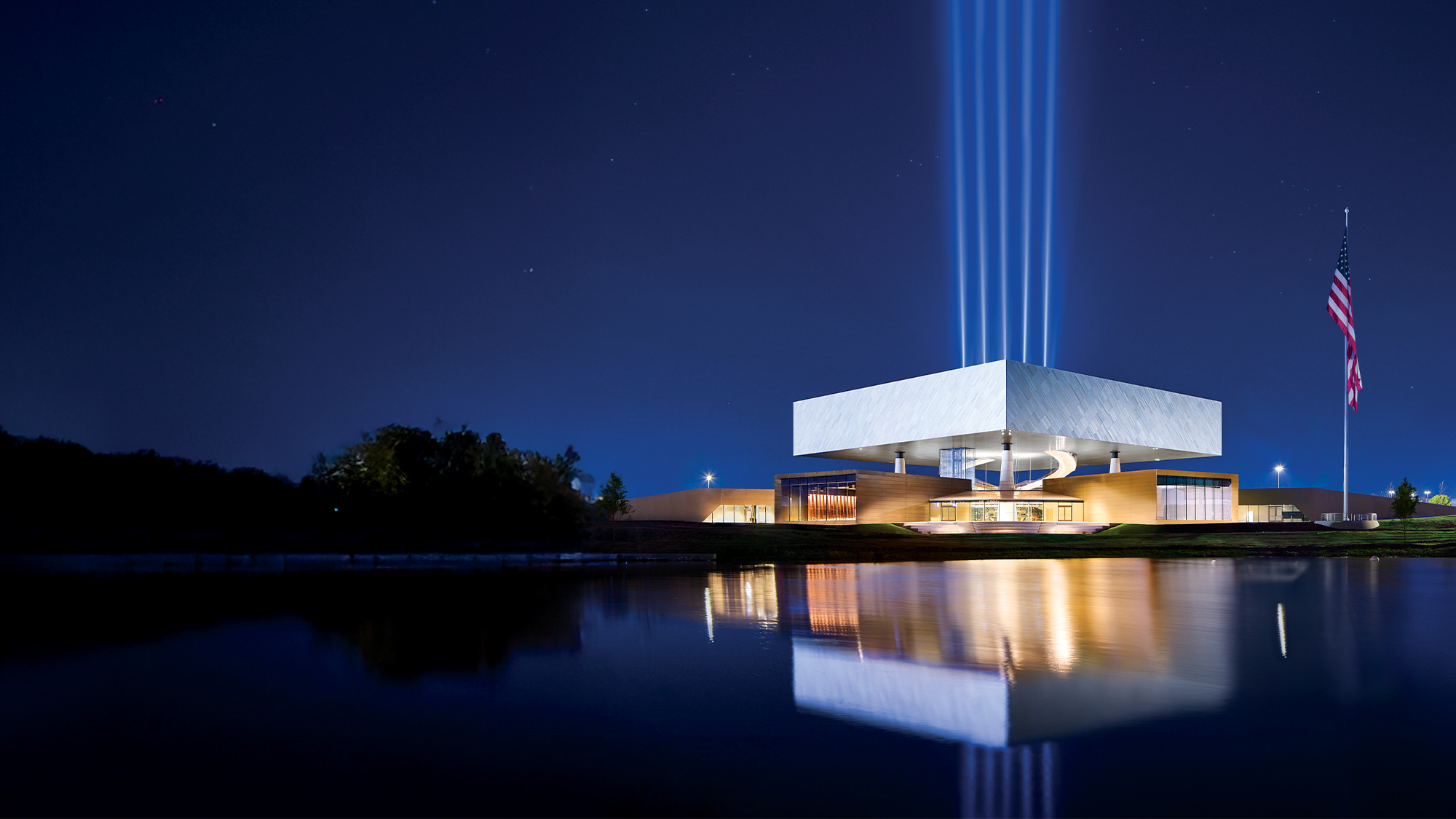
At first, the museum appears suspended in the sky, floating 40 feet above the ground, hovering over the adjacent lake and AT&T Way. But the massive, silver structure is held up by five columns representing the five traditional branches of the United States armed forces.
That’s by design.
New York-based Rafael Viñoly Architects crafted the building’s blueprint, ensuring that all 102,000 square feet symbolized “both the weight of responsibility carried by Medal of Honor recipients and the inspirational virtues they embody — courage and sacrifice, commitment and integrity, citizenship and patriotism.”
Cassidy appreciates the symbology. “The military allows us the freedoms that we enjoy,” he says. “The military takes an oath to support and defend the Constitution of the United States and the burden that carries. The load is carried by the branches of the military, and the load of this building, physically, is carried by those five columns supporting the whole structure.”
The 5-acre campus also includes a 300- seat amphitheater overlooking Mark Holtz Lake; Old Glory Plaza, home to one of the largest American flags in the United States; and an arboretum and grove, featuring trees from the Bush family’s personal tree farm.
Visiting the museum is a carefully curated, moving experience enriched by the honorees’ stories.
The moment visitors step into the building’s ground floor, they’re surrounded by the names — and legacies — of the more than 3,500 Medal of Honor recipients, displayed in the Ring of Valor that wraps around the museum’s rotunda.
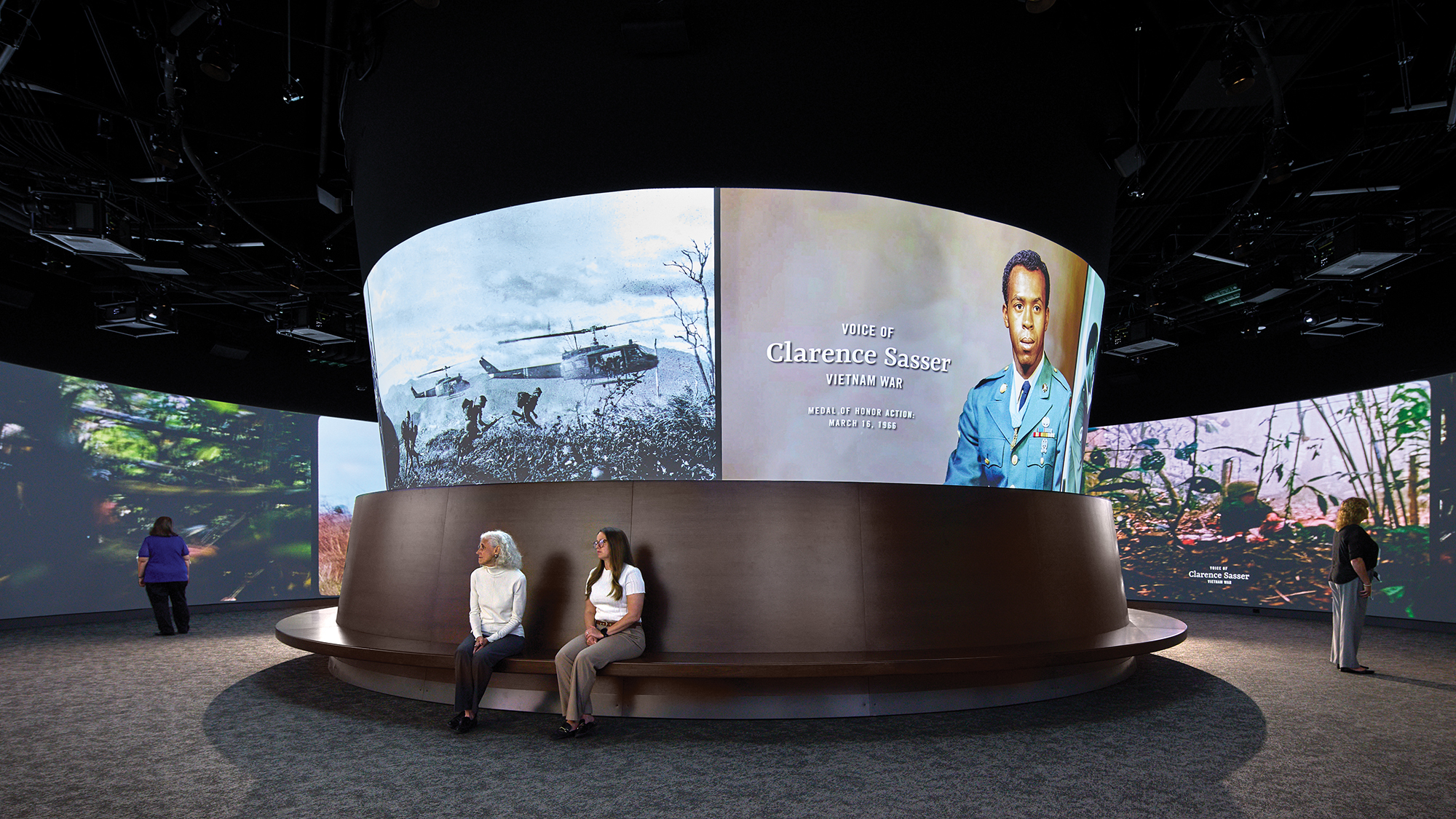
Visitors take an elevator that leads to a dark, 360-degree spherical theater with floor-to-ceiling screens. An 8-minute film explains what the medal is and honors various recipients.
It’s one of Cassidy’s favorite parts of the museum. “I go up there, either by myself before the museum is open [or randomly with other guests] to watch it. … It’s meaningful to me.”
Once visitors finish the film, they enter the main 31,000-square-foot exhibition hall, which is strategically filled with hundreds of artifacts ranging from a recipient’s prosthetic arm to personal journals and letters.
Museum curator Greg Waters embarked on a “worldwide scavenger hunt,” scouring 40 states for hundreds of artifacts that are now displayed in the museum. Determining which stories to tell was key, and available artifacts played an important role. “Having authentic artifacts is critical to telling stories in a museum,” Waters said in a museum interview.
The museum’s exhibits tell stories with touch-points throughout most of our nation’s history, from the Civil War to Afghanistan. Through interactive exhibits, visitors step into virtual battlefields and landscapes, while “meeting” the recipients who served there.
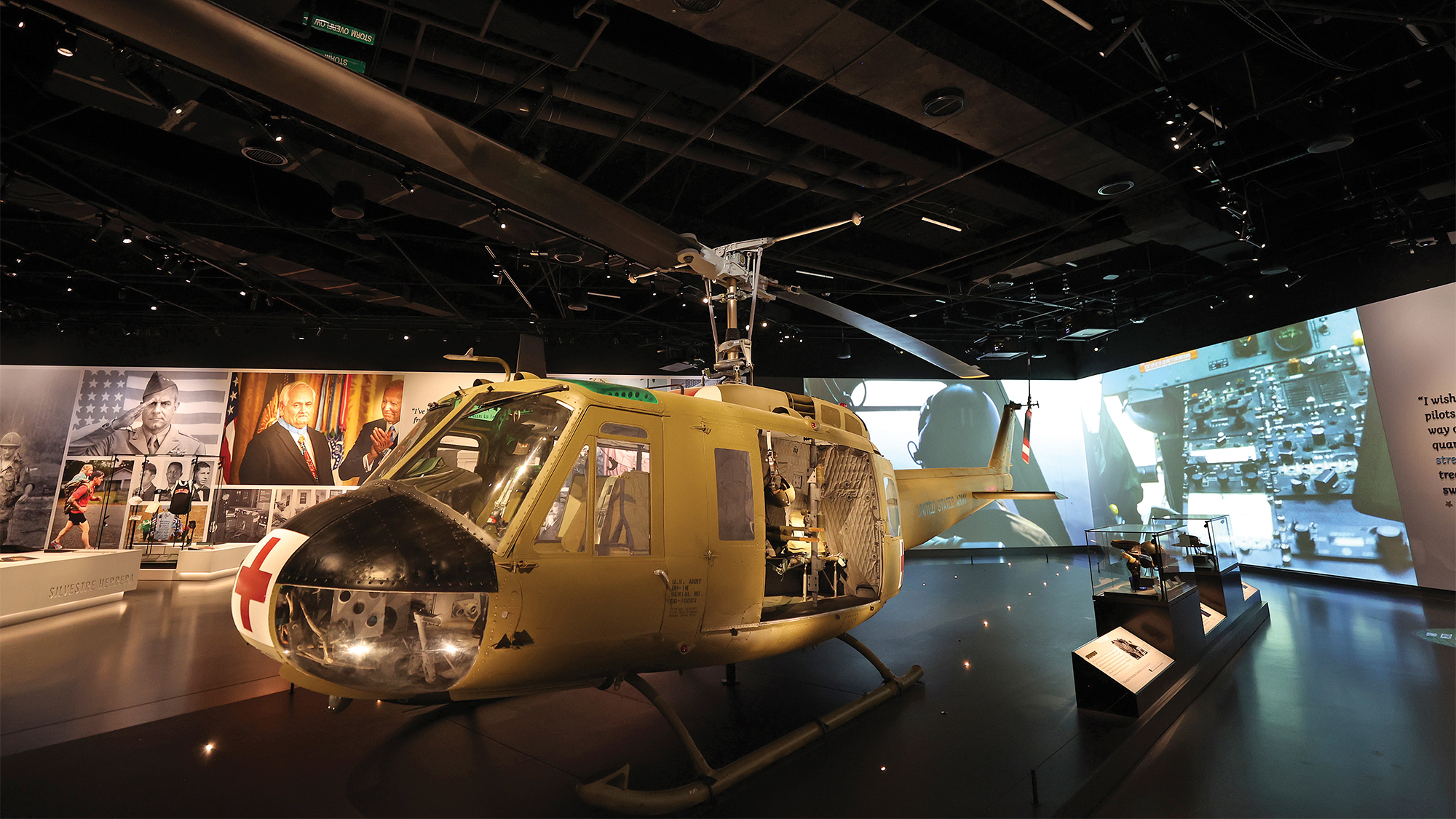
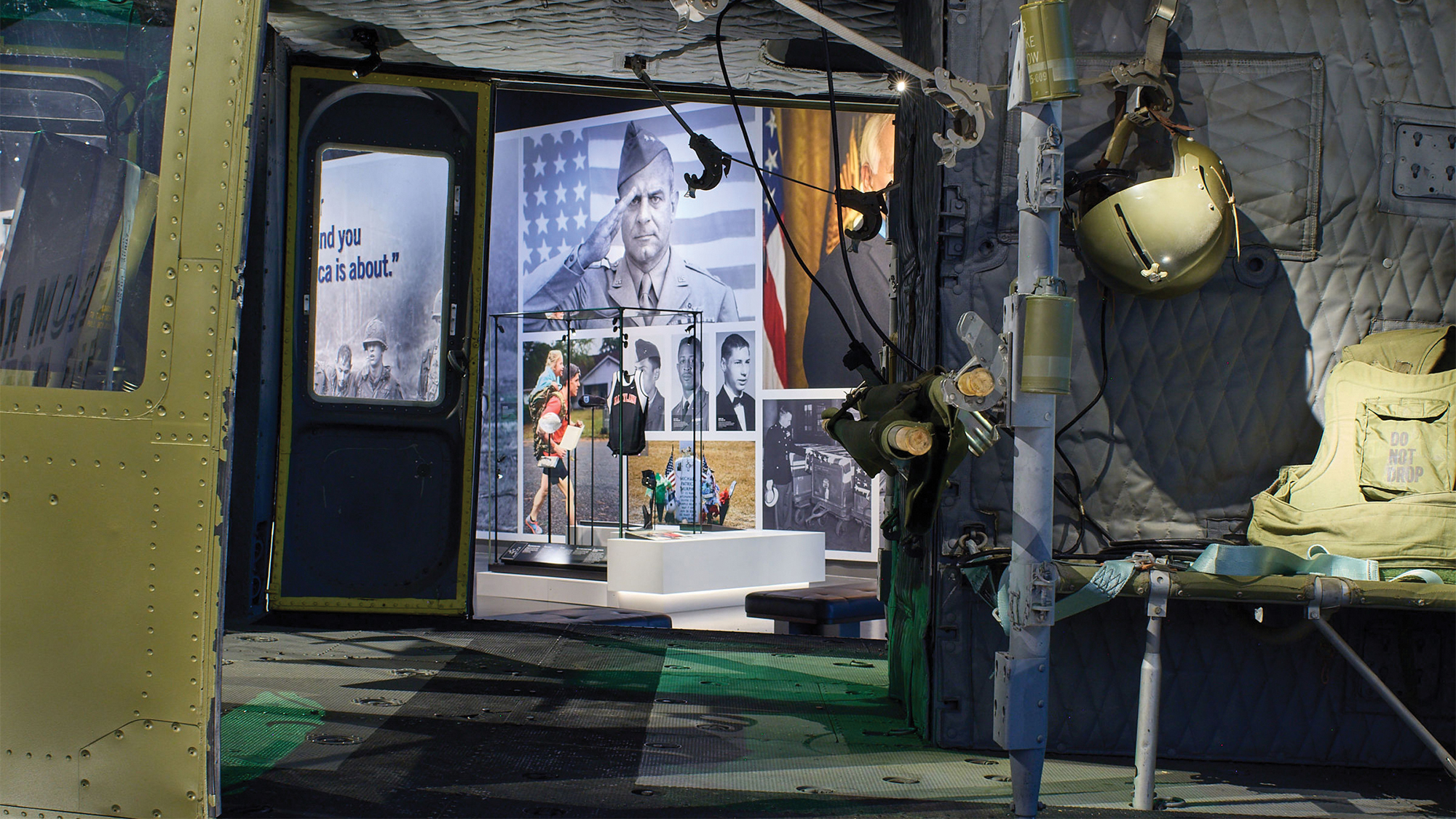
The largest artifact, a fully restored Bell UH-1H Iroquois “Huey” helicopter — just like the ones Brady flew — gives a rare look inside the machinery that assisted with more than 900,000 battlefield evacuations throughout the Vietnam War.
The museum doesn’t shy away from some of our nation’s more complex history, highlighting the contributions — and sacrifices — many immigrants have made to the United States and chronicling the racial discrimination that initially held back some recipients from receiving the medal.
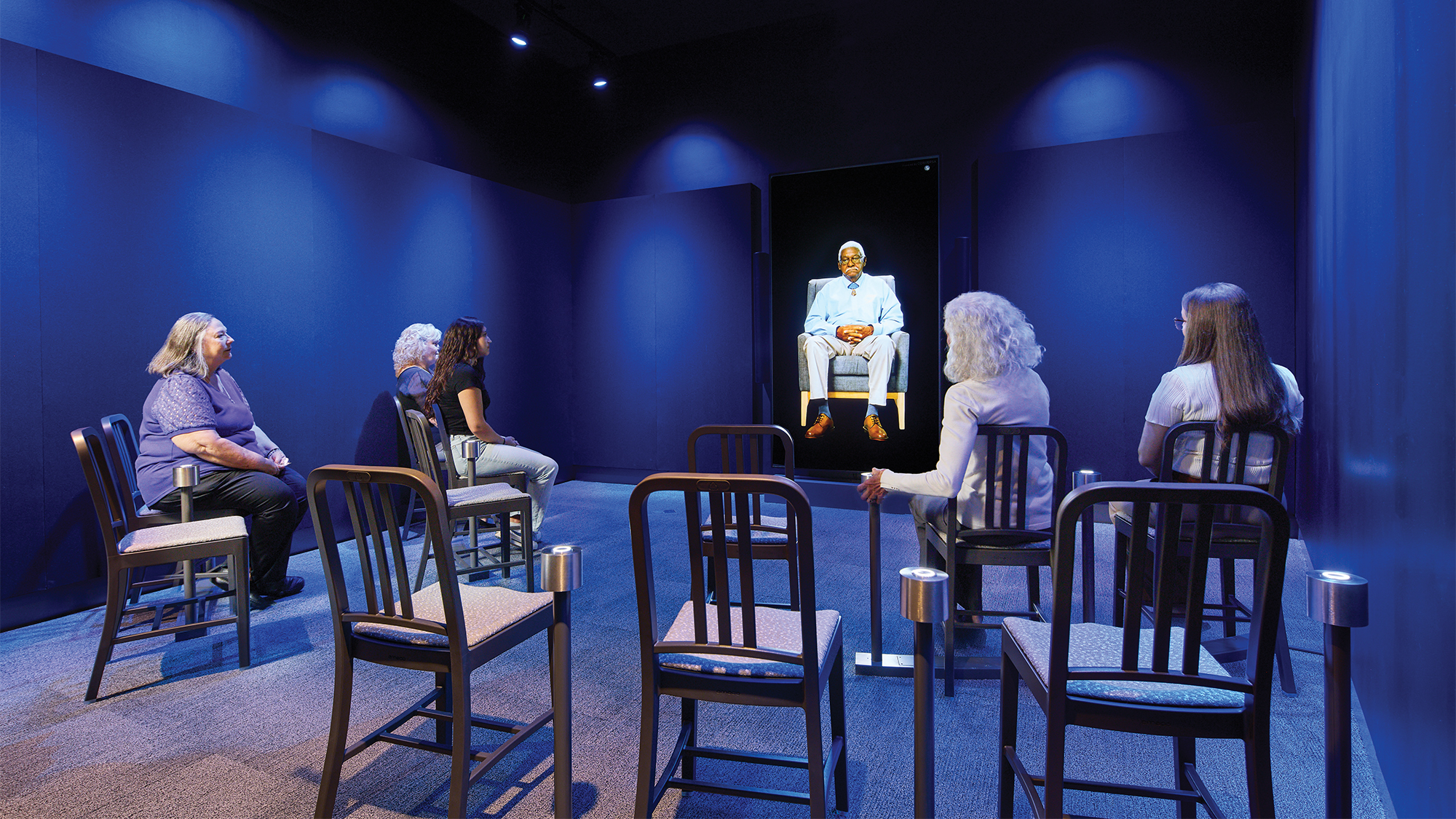
Step into a room and have a one-on-one conversation with a Medal of Honor recipient. Using innovative technology, the museum interviewed recipients over several days, detailing everything from their childhood memories to their experiences serving. The results led to an intuitive conversation with some of our nation’s most decorated heroes.
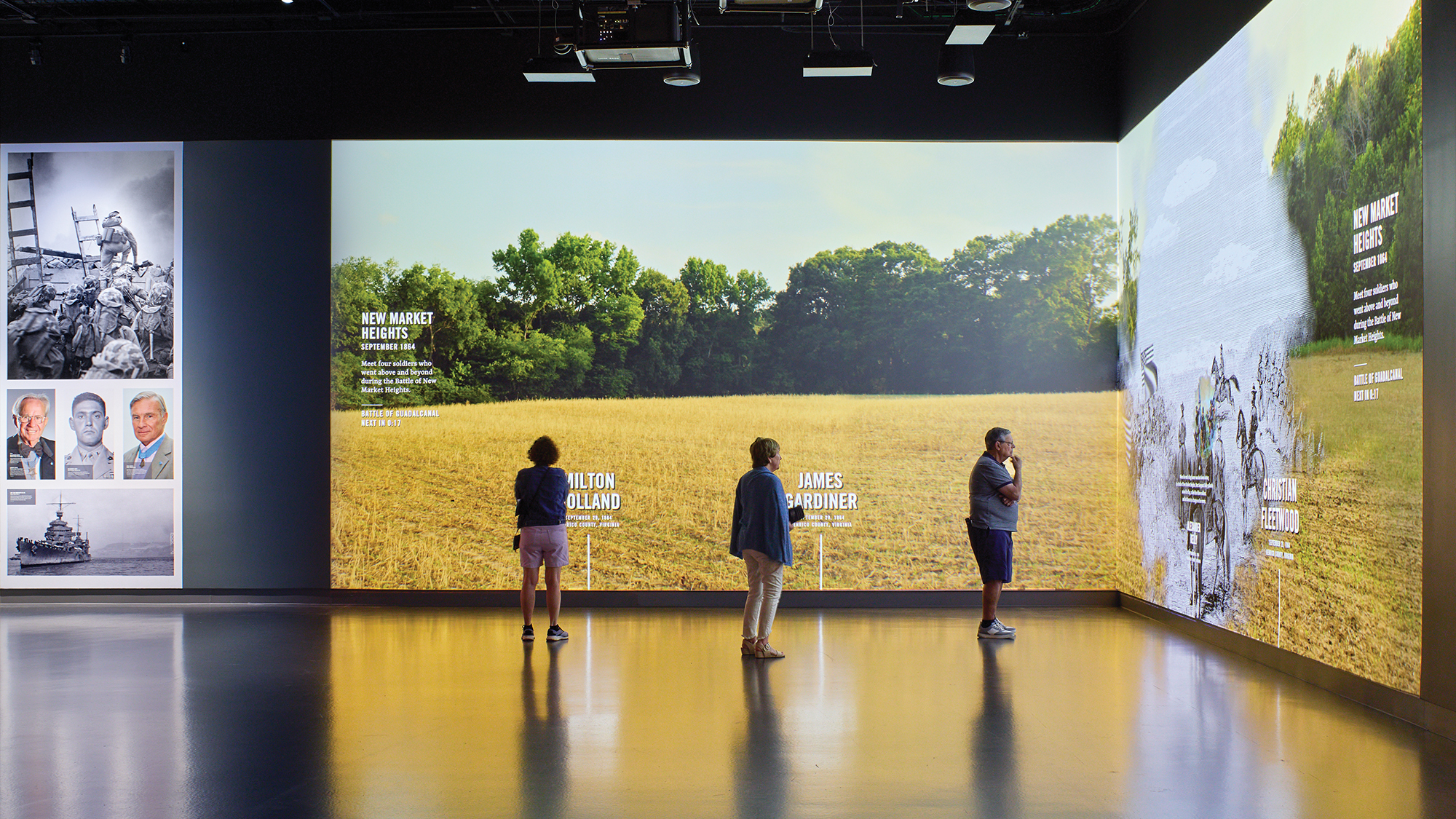
Aside from sharing personal stories, education and outreach are critical to the museum’s mission. The museum has partnered with seventh-grade classrooms across the country and has welcomed several North Texas schools for field trips throughout the past year.
Cassidy hopes the students’ takeaway is: What character traits do Medal of Honor recipients display? How can you bring those character traits into your own life?
Inevitably, each visitor will walk away with an experience that’s unique to them. Cassidy hopes visitors leave with a story — and a name — of a recipient who’s inspired them.
“Most people, in general, can name more players on the Dallas Cowboys than they can Medal of Honor recipients. And that’s not a fault of anybody; it’s just how society is,” he explains. “I hope that after a visit to the museum, you can name a few Medal of Honor recipients and share that with [others].”
Discover more military history deep in the heart of Texas.
Ye Olde Guide to the Texas Renaissance Festival
Hear ye, hear ye! The Texas Renaissance Festival will take place through October and November. Here’s a little of the history and what to expect.
Destination Lockhart: The Barbecue Capital of Texas
Century-old barbecue pits, smokin’ family feuds, and a small town with a goliath culinary history. This is Lockhart.

Support First Responders in Your Neighborhood
Meet and thank Texas’ everyday heroes.

How to Preserve Food: The Ultimate Guide
Discover the timeless techniques of food preservation, from pickling to smoking. Reconnect with historical practices that not only offer lasting flavors but also embrace sustainability and zero-waste living.
Discover unpaddled waters in each region of Texas.
A Tour of Texas’ Expressive and Ambitious Architectural History
The story of Texas is written in stone and glass. Join us as we travel around the state and explore some of the state’s most iconic and historic architectural gems.