Please sign in as a member or guest below to access it.
Please sign in as a member or guest below to access it.

A deep dive into the world of Texas roadrunners. (And a bit about cartoon ones, too.)
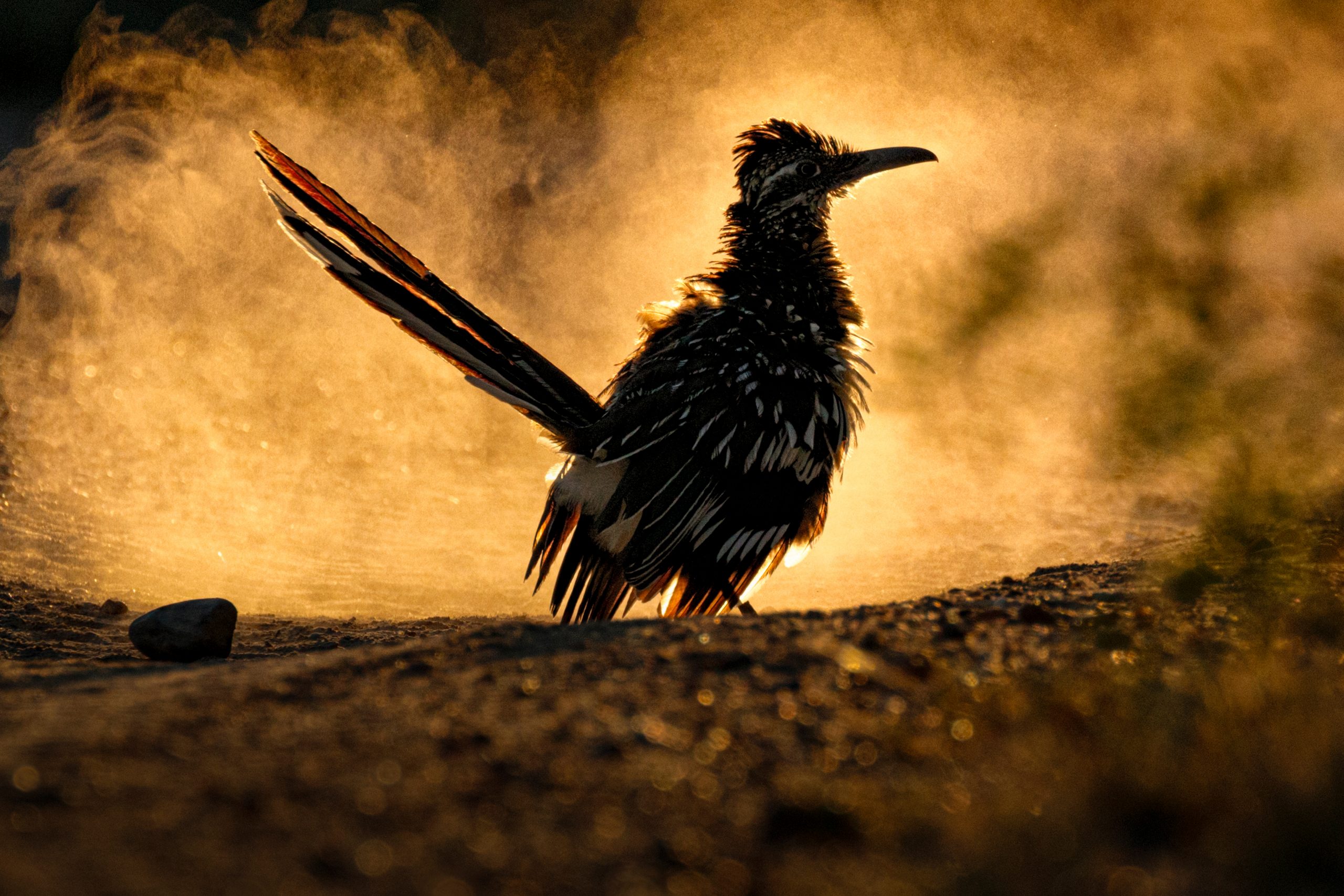
Everyone knows what a roadrunner is. It’s bright blue. It’s immune to Acme-brand dynamite. And it can go from 0 to 200 mph, leaving nothing behind but a puff of smoke and a “Meep! Meep!”
Well, not exactly. Real roadrunners, like the Greater Roadrunners of Texas, may not be as funny as their cartoon relatives. But at least you don’t need to worry about falling anvils while one’s around.
So what makes the Greater Roadrunner great? It’s one of two species of roadrunners (three, if you’re counting the Looney Tunes kind). The other is the Lesser Roadrunner found along the Pacific coasts of Mexico and Central America. As always, everything’s bigger in Texas: Greater Roadrunners here can grow to be about 2 feet long — about 6 inches longer than their Mesoamerican relatives.
Greater Roadrunners are native to the dry, brushy deserts in the North American Southwest — Southern California, Arizona, New Mexico, Texas, northern Mexico, Oklahoma, and even parts of western Louisiana. They’re a populous species here in Texas; in fact, they’ve been sighted in all 254 counties.
If you want to check them off your birdwatching bucket list, you’ll have the best luck in the arid Chihuahuan Desert of West Texas. Head to one of the quiet trails of Big Bend National Park, and a roadrunner may zip across your path.
Keep in mind that in Texas, roadrunners are protected under federal law. If you’re quick enough to see one, don’t try to catch it with anything but your camera.
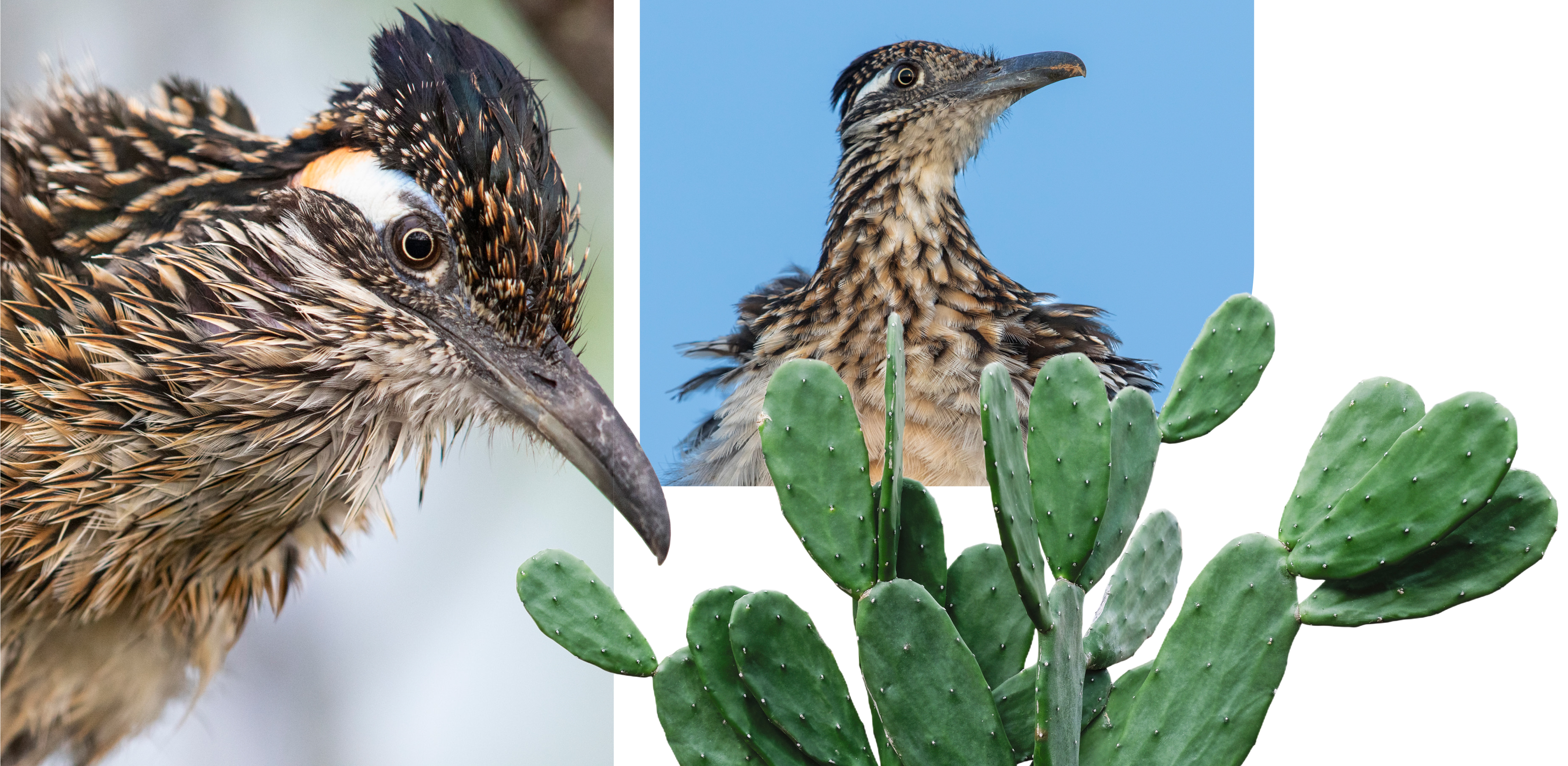
Identifying a roadrunner is easy in photos like the ones in this story, but the birds are often on the go and well-camouflaged in the wild, making them difficult to spot.
Although roadrunners can fly for short bursts, they prefer to dash around on foot, reaching speeds of up to 20 mph. They run like darts, with their heads low and back parallel to the ground, using their long tails like rudders to keep their balance. Their mottled gray and black plumage helps them keep hidden amid the dusty desert shrubs — an advantage both as the hunter and the hunted.
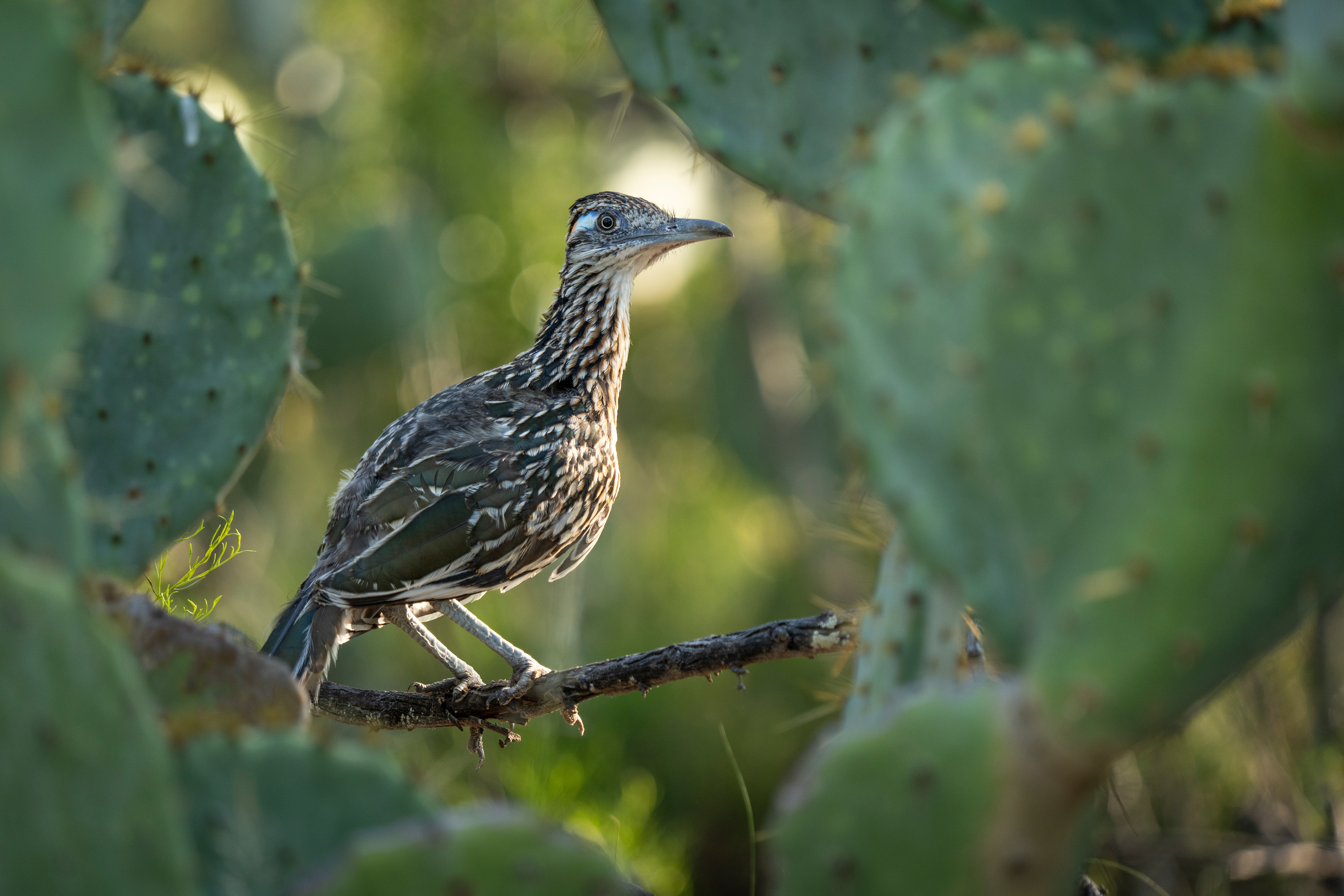
To find one in the wild, listen for their calls. Roadrunners make a chirping “coo” sound, much like a mourning dove. They typically make these coos from low perches, so if you hear the sound, look for roadrunners in nearby shrubs, trees, and cacti.
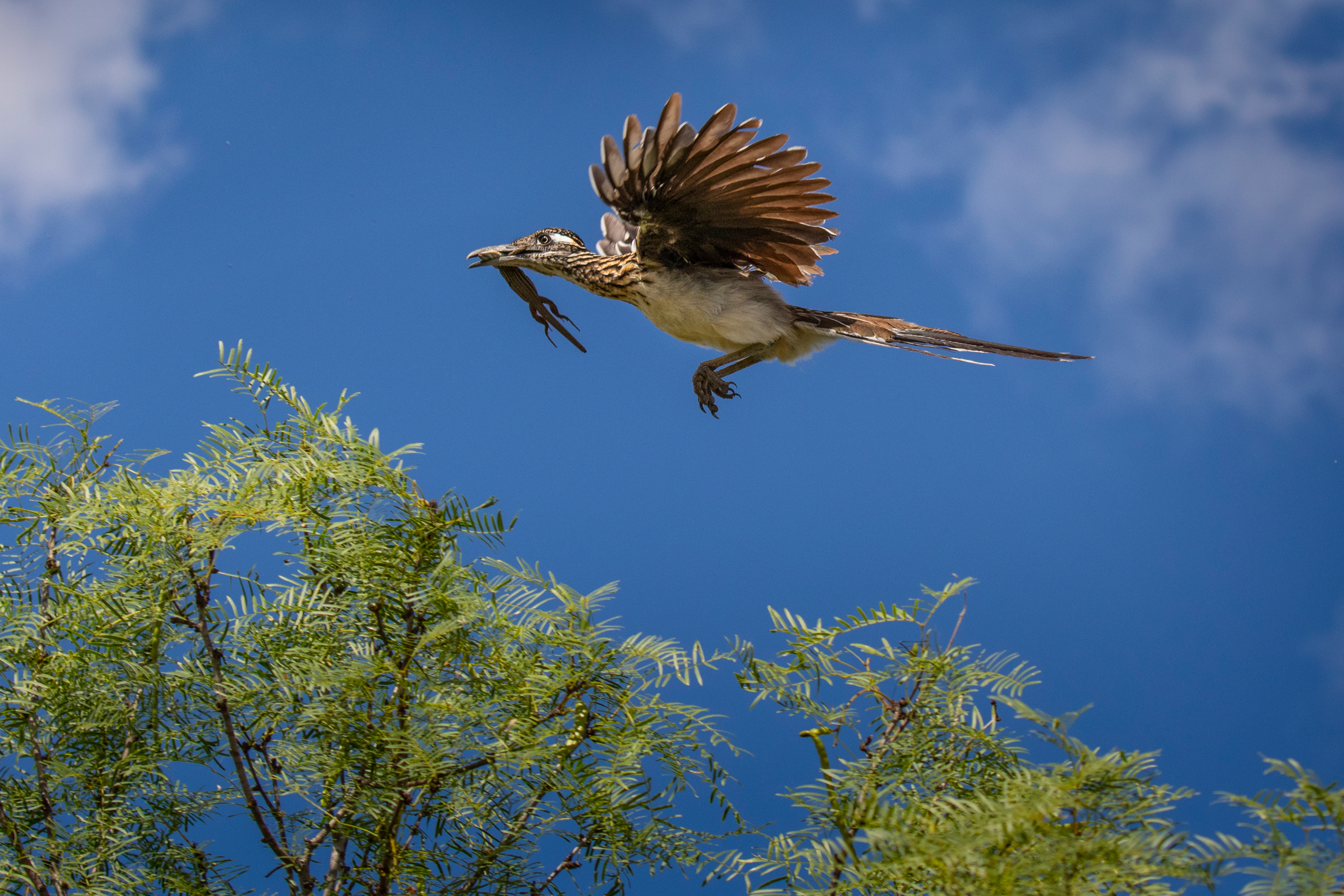
Greater Roadrunners are omnivorous, content to eat almost anything they can find or catch. Fruits, seeds, insects, mice, reptiles, carrion, and small birds such as sparrows are all options on a roadrunner’s menu.
Even horned lizards and venomous snakes are good eating. Roadrunners often partner up to kill and eat a rattlesnake, with one bird flapping to distract the rattling prey while the other sneaks up from behind, pins its head with a sharp beak, and beats it against a rock. (Dinner for two!) Because pickings are slim in the desert, any leftover snake is taken to go, with the tail dangling from the roadrunner’s beak until it has digested its meal over the course of the day.
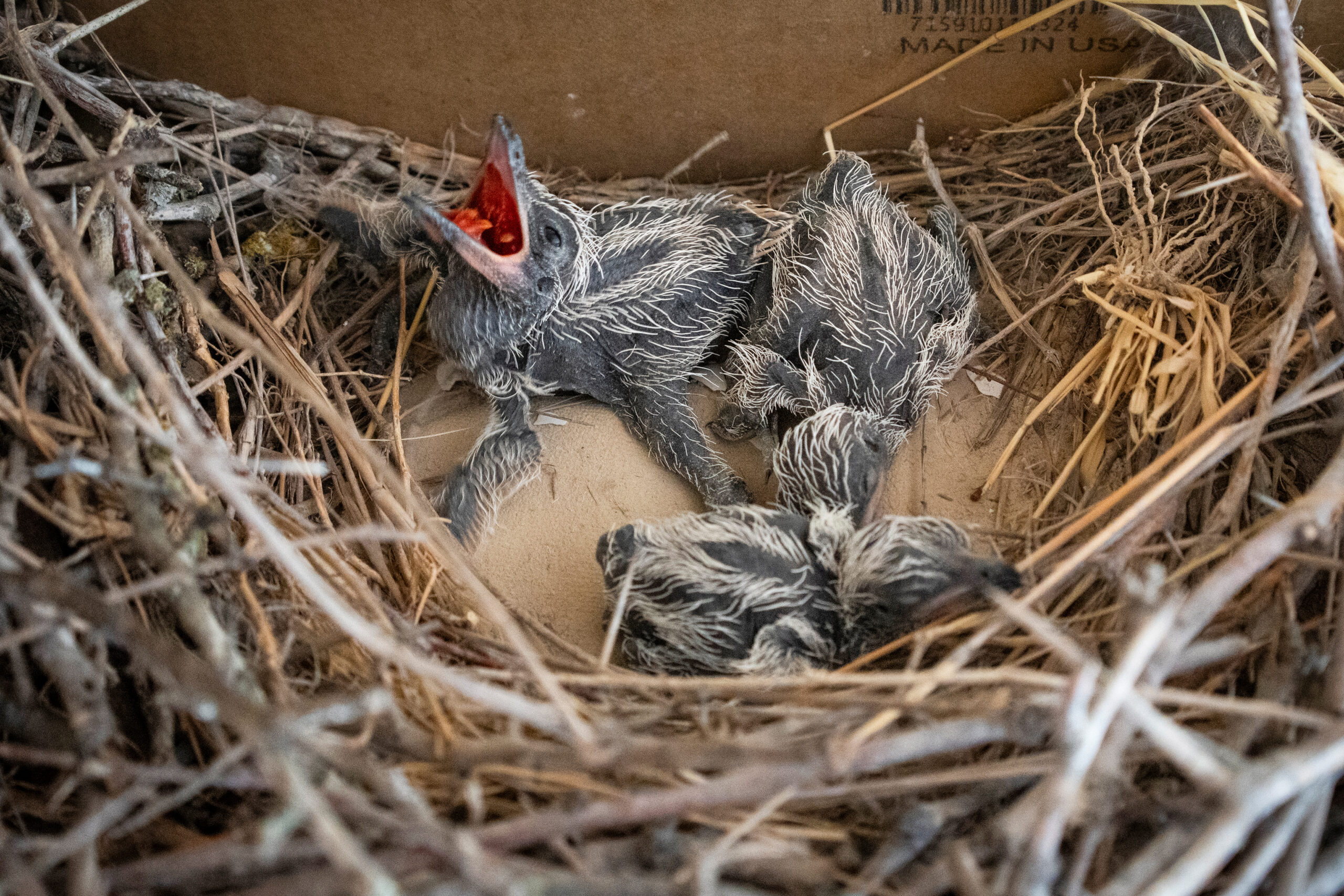
Besides rattlesnake hunts, roadrunners are typically solitary critters — except for early March to late October, when it’s mating season. It’s believed that roadrunners partner up for life, seeking out the same mate every spring, and both parents stick around to incubate their brood.
The couple builds a small, cup-shaped nest in brush, low trees, or even cacti. After laying a clutch of between two and six eggs, both Mom and Dad take turns sitting on them for three weeks when the babies hatch. After about four weeks, the brood will be fully-fledged roadrunners and ready to begin hunting independently.
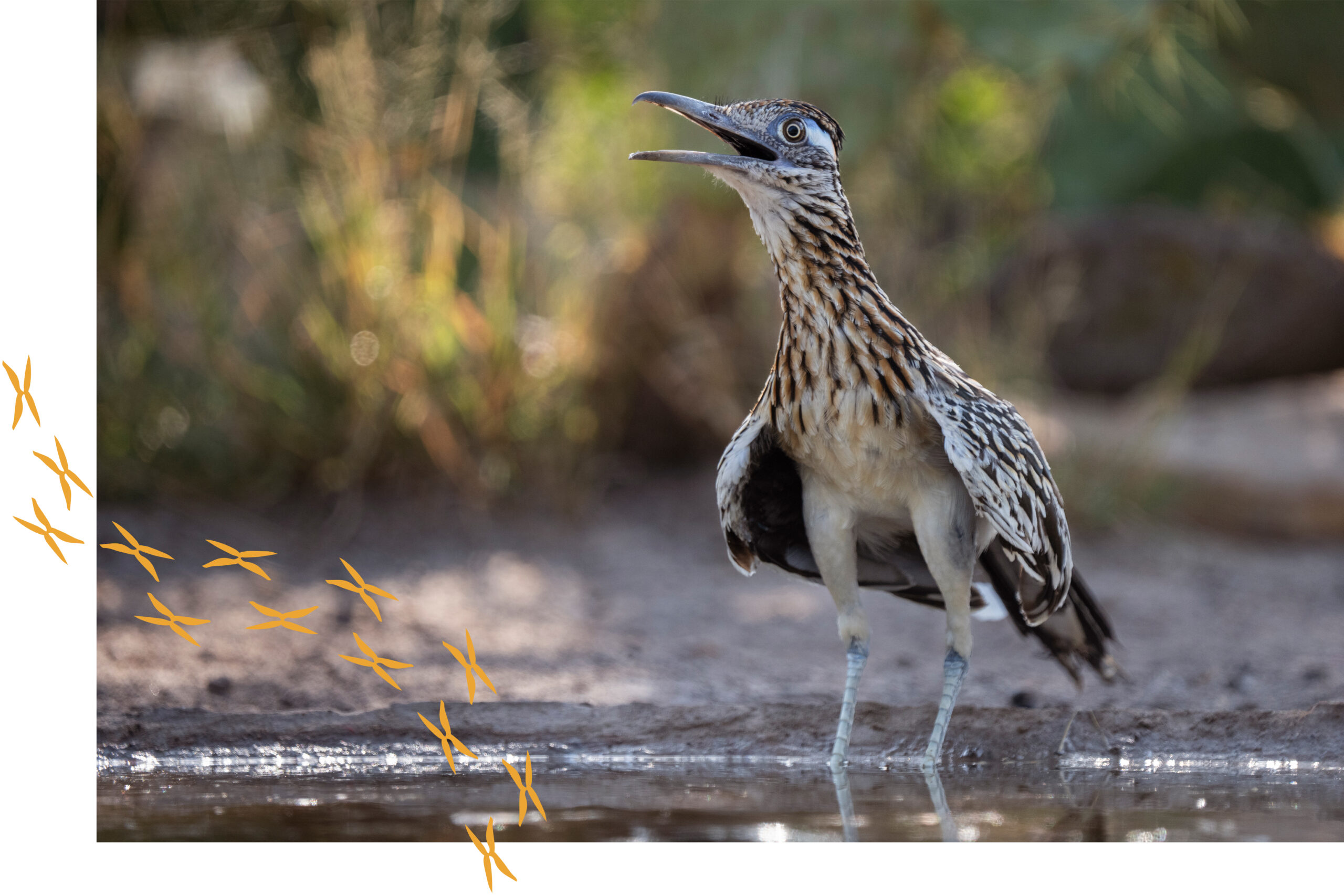
Roadrunners have four toes on each foot, two in front and two in back, which creates a distinctive X-shaped footprint. Due to this peculiarity, roadrunners have a place of reverence in Native American and Mexican folklore as symbols of speed, endurance, and protection from evil.
As the legend goes, the roadrunner’s X-shaped tracks disguise which direction it’s traveling, preventing evil spirits from following it. The shape is a sacred symbol in certain Southwestern tribes, used to ward off evil in art and homes. In ancient Anasazi and Mogollon cultural sites, stylized roadrunner tracks have been found in ancestral rock art. In Pueblo tribes, cradles were adorned with roadrunner feathers as spiritual protection.
Interested in spotting other native Texas birds? Check out our birdwatching guide.

The Coziest Backyard Glamping Guide
Have an adventure right in your own backyard.

Bring your goals and aspirations to life.
The Enduring Allure of the Texas Icehouse
Texas icehouses have always been more than convenience stores.

9 Texan Christmas Tunes for Every Holiday Gathering
Add these sentimental songs to your Christmas party and holiday road trip playlists.

Make This Giant DIY Slip-and-Slide
Way cheaper than the water park – and without leaving the comfort of your backyard.
“The Bulb Hunter” and His Search for Texas Perennials and Community
“The Bulb Hunter” spends his time rescuing precious Texas plants.