Please sign in as a member or guest below to access it.
Please sign in as a member or guest below to access it.

From old fashioned ice cream shops to the new creameries at the center of Texas’ ice cream renaissance, there are so many ways to enjoy everyone’s favorite frozen treat.
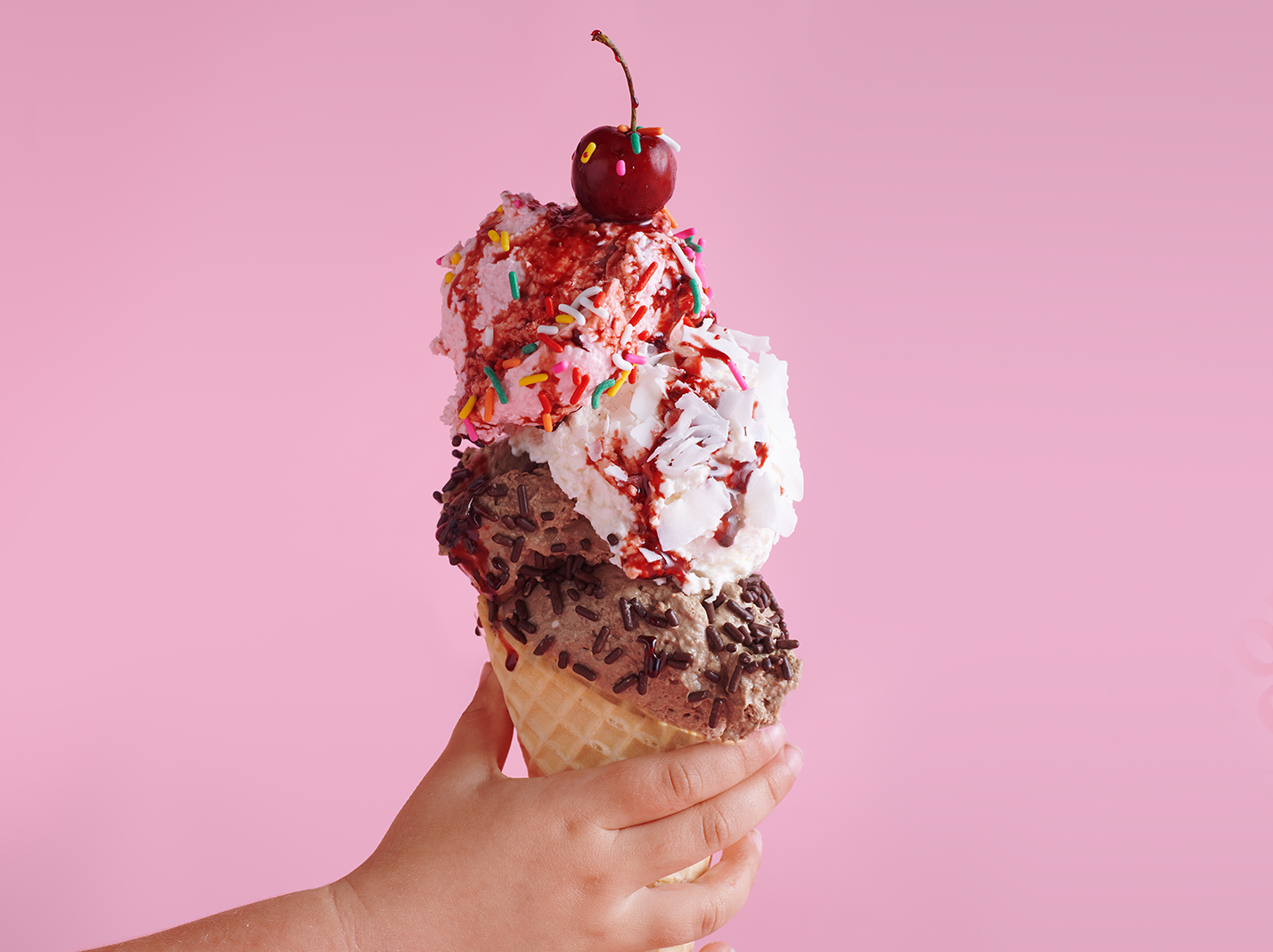
Texas is home to one of the world’s most iconic ice cream brands. But while nothing beats a big scoop of Blue Bell Homemade Vanilla on a hot summer day, in recent years, Texas has stepped up its ice cream game. From new creameries experimenting with flavors inspired by Texas agriculture to a revival of old-fashioned ice cream shops throughout the state, there has never been a better time to enjoy everyone’s favorite frozen treat. Let’s dive in.
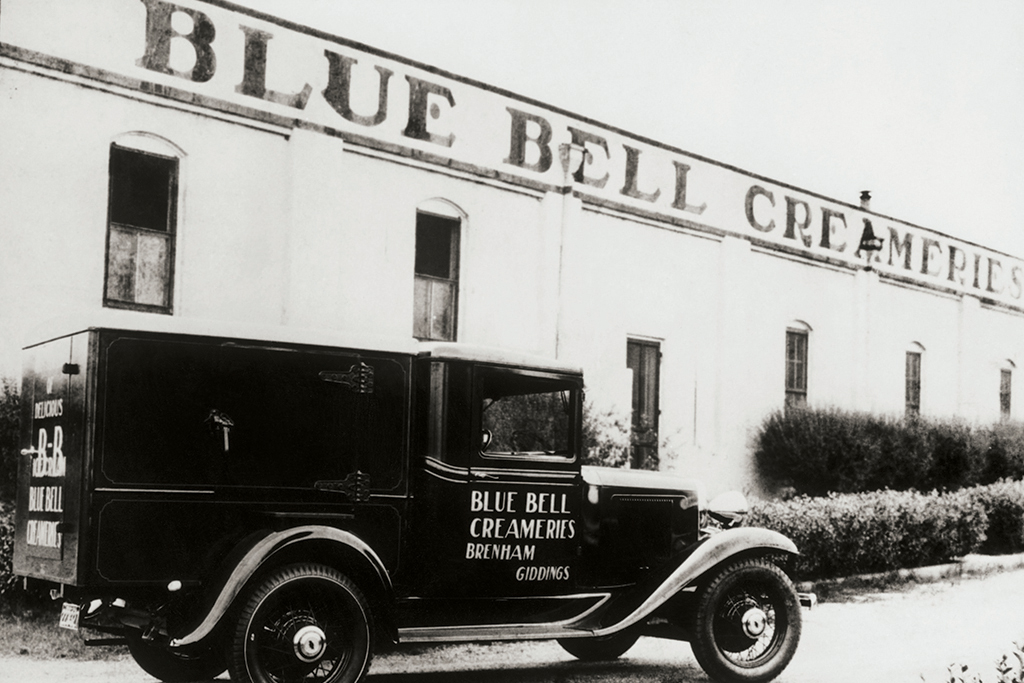
When people think of Texas ice cream, they think of Blue Bell. The iconic Texas ice cream brand got its start way back in 1907 when a dairy farmers cooperative in Brenham found themselves in a dilemma: what to do with all the excess cream produced by local farmers. They established the Brenham Creamery Company to produce butter, but within a few years the company was also making ice cream. In the beginning, the ice cream was made in a hand-cranked ice cream maker and delivered to local customers in a horse-drawn wagon. They produced about 2 gallons a day, and after an economic downturn in 1916, it looked like the creamery might go out of business. But three years later, a 20-year-old school teacher named E.F. Kruse took over operations. Kruse turned around the fate of the company, and by the time the Great Depression hit in the 1930s, Kruse had rebranded the company as Blue Bell and upgraded the wagon to a refrigerated motorized vehicle.
In 1936, Kruse wanted to increase production and push distribution even further than the local counties. Blue Bell invested in what was, at the time, cutting-edge ice cream technology: a continuous freezer that could churn out 80 gallons of ice cream an hour. Soon more and more Texans were cooling off during the long hot months with big scoops of Blue Bell ice cream.
Kruse passed away in 1951, and his sons took over management of the business. They finally stopped producing butter in 1958 to focus solely on the ice cream business. Blue Bell expanded steadily in the following decades, and as new generations of Kruses took over operations, Blue Bell became popular well beyond the state line.
Although before the 1980s you had to come to Texas to enjoy Blue Bell’s beloved ice cream, today you can find it in 22 states. And yet, despite that growth, the secret to Blue Bell’s success is that it has remained true to its homespun roots, producing a rich, country-style ice cream that is unique among large ice cream brands and has earned generations of die-hard devotees.
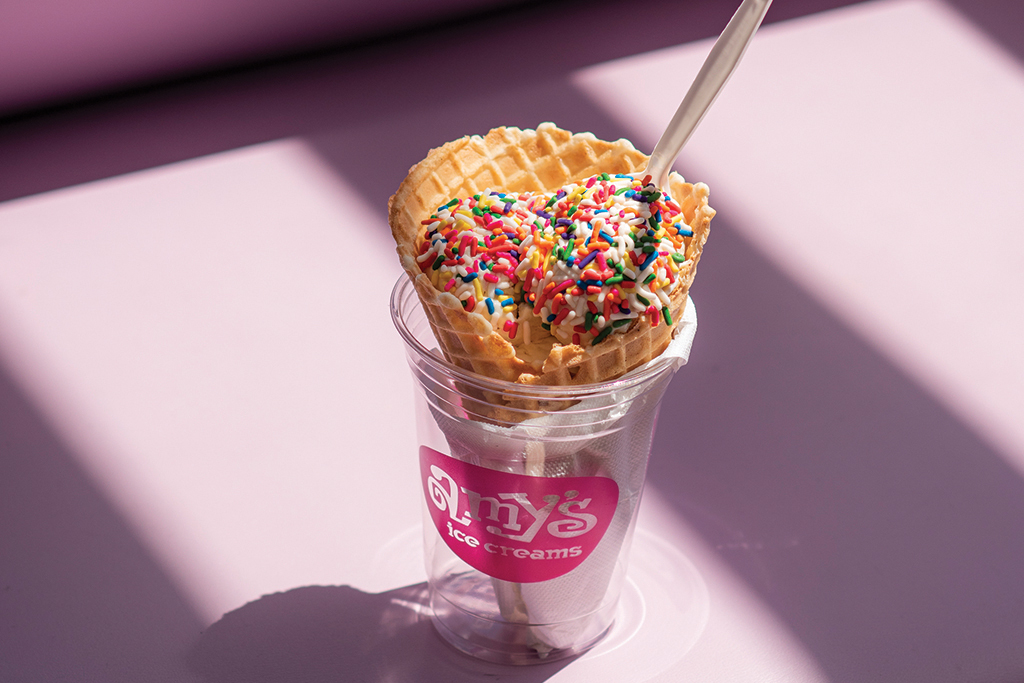
Ice cream is big business in Texas. The state ranks fifth for dairy production, and much of that milk goes toward producing ice cream. Among the largest ice cream producers in Texas is Blue Bell, of course, along with larger manufacturers such as Borden Dairy and Dean Foods, which produces ice cream under the Oak Farms brand.
But the past few decades have also seen something of a craft ice cream renaissance in Texas, with several new brands coming into the market with novel ways to rethink this classic treat. From new flavors to novel ingredients — including dairy-free ice creams — here are some of the most exciting small-batch Texas creameries.
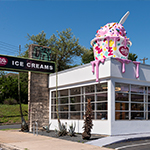
Amy’s Ice Creams
Amy’s is a veritable Austin institution. It was launched in the capital city in 1984 by Amy Simmons and her business partner Scott Shaw. Simmons had worked at Steve’s Ice Cream shop outside Boston while a student at Tufts University but decided to return to Austin to launch her own shop after Steve’s was purchased by a large corporation. Amy’s opened on Guadalupe near the University of Texas at Austin and began serving rich, high-butterfat scoops of Mexican vanilla, helping the shop become a hit with hungry students. The shop expanded throughout the city and eventually to Houston and San Antonio. Today, Amy’s is equally as famous for its hundreds of rotating flavors as it is for its quintessential Austin charm.
Photo by John Davidson
Lick Honest Ice Creams
Anthony Sobotik from Hallettsville met Chad Palmatier when they were living in New York. When Palmatier brought Sobotik to his hometown of Lancaster, Pennsylvania, Sobotik was blown away by the incredible handcrafted ice cream shops there. A seed was planted, and after years working in the food industry, the two decided to move to Austin to start an ice cream shop to make unique, artisanal ice creams inspired by flavors and ingredients unique to Texas.
Lick prides itself on tracing every ingredient back to the source. All of Lick’s milk and cream, for example, comes from Jersey, Brown Swiss, and Holstein cows that live on a family-owned farm in McGregor. And exotic- sounding flavors like cilantro-lime, dewberry corn cobbler, and sweet persimmon and sage are all inspired by locally grown, seasonal Texas ingredients.
Heritage Creamery
When a storefront space next to Blake and Kimberly Batson’s Common Grounds coffee shop in Waco became available, the Waco couple dreamed up a sweet new business idea: a homemade ice cream shop. After selling at the Waco Farmer’s Market for a year, the two opened their shop in 2016. Heritage Creamery’s secret is producing in small batches and focusing on quality local ingredients. The Batsons source low-temperature- pasteurized, non- homogenized milk from Mill-King Market & Creamery in McGregor and create flavors inspired by fresh, seasonal, locally grown ingredients available in Central Texas.
Photo courtesy of Heritage Creamery

Sweet Ritual
Amelia Raley was an Austin ice cream vet when she opened her vegan ice cream shop in 2011 with her former partner, Valerie Ward. Raley made ice cream served at the popular novelty shop Toy Joy before venturing out to start her own shop. Raley’s shop focuses on dairy-free alternatives, substituting milk with nuts, coconut milk, sunflower seeds, sesame seeds, hemp seeds, and even avocado. She continues to experiment with ingredients and flavors, using real fruit and natural spices. She also runs a vegan ice cream school out of her creamery to teach and inspire more adventurous ice cream makers.
Photo by John Davidson
Tèo Gelato
Matthew Lee left his job in the world of tech to head to Italy and apprentice at a Florentine gelato producer. That’s where he earned his nickname Tèo and learned that great gelato comes through patience and careful adherence to a time- and labor- intensive daily ritual. He returned to Austin and opened an Italian café in 2002. In 2014, Tèo was named one of the top five gelatos in the world at the Gelato World Tour, and a year later, his creations were picked up for distribution in grocery stores around the state.
Photo by Natalie Goff

Nadamoo!
This coconut-based non-dairy ice cream brand was born in 2005 out of its founder’s desire to find an ice cream flavor that her food- allergic sister could enjoy. But she didn’t just want to make a dairy-free ice cream — she wanted to make a product that still had the rich and delicious flavor of traditional ice cream. She developed a recipe that uses coconut milk, agave syrup, and other plant- based ingredients to produce an all- organic, all-vegan ice cream that is now beloved by customers throughout Texas, the U.S., and Canada.
Photo by John Davidson
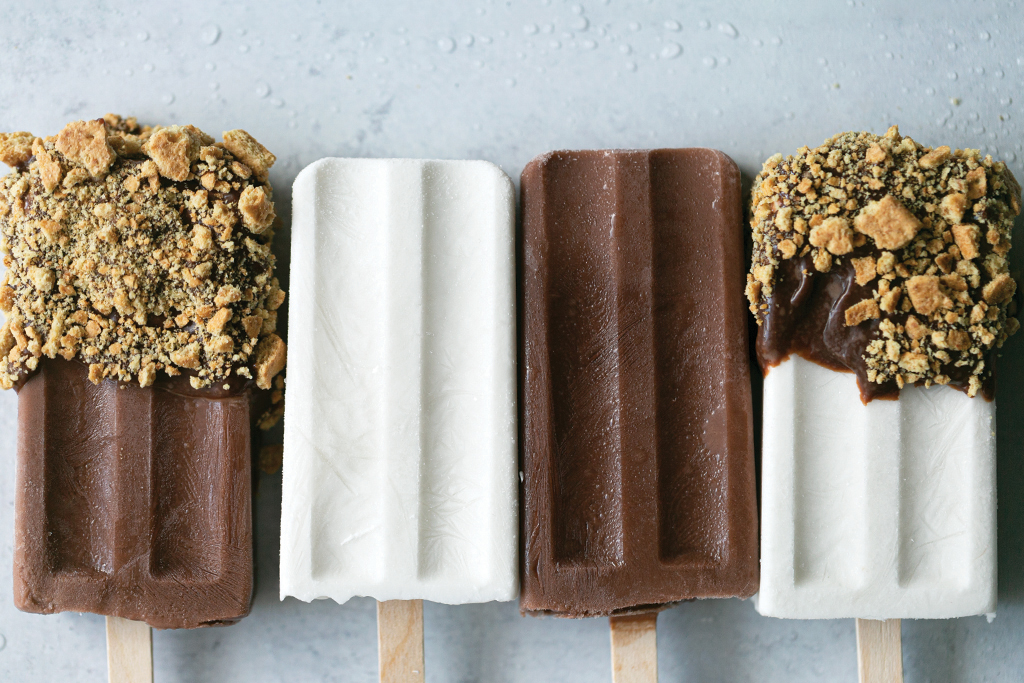
Mexican paletas are an increasingly popular addition to the Texas ice cream landscape, with the delicious traditional treats popping up in bicycle carts, neighborhood shops, and even new artisan paleta parlors. A popsicle-ice cream hybrid, paletas are made with water, milk, cream, and condensed milk and flavored with fresh fruits, nuts, chocolate, vanilla, and other ingredients. Some shops also serve paletas dipped in milk chocolate or covered in crushed graham crackers. Like all great artisan ice creams, the secret to great paletas is fresh ingredients. Try these classic paleta flavors:
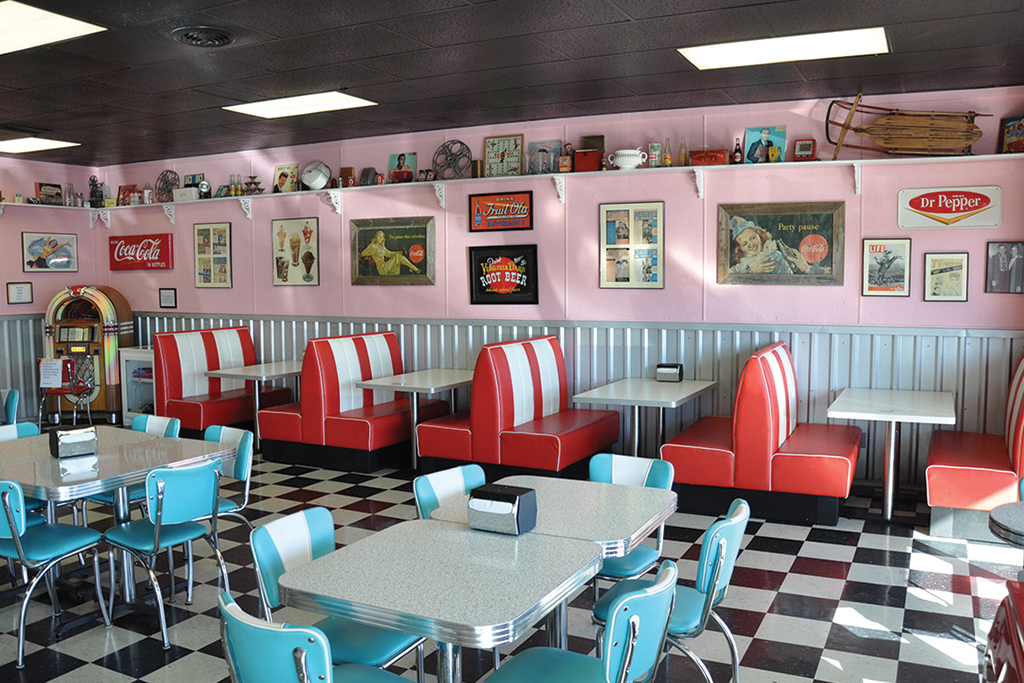
If you like your banana split served with a side of nostalgia, Texas has plenty of options. Jump in the car and head to Galveston, where you can have a malt prepared in a 100-year-old mixer — or head out west to Lubbock, where a ’50s-inspired ice cream parlor feels like stepping back into the world of Buddy Holly. Here are some of the state’s best old-timey ice cream shops.
La King’s Confectionery, Galveston
Candy-making runs in Jack King’s family. His father, Jimmy, learned the trade from Old World candymakers, and the recipes for the sweets at La King’s are based on 19th-century formulas. His ice cream also has a finger in the past, with a soda fountain that dates to the 1920s. King opened his confectionary in 1976, after he and his family moved from Houston to Galveston, and it has been a wildly popular coastal fixture ever since.
2323 Strand St., Galveston, TX 77550
Photo courtesy of La King’s La King’s Confectionery

Mike’s Old Fashioned Soda Fountain, Port Neches
Although it only opened in 2012, walking into Mike’s Old Fashioned Soda Fountain feels like being transported back to the turn of the century. The centerpiece of the shop is a long wooden bar adorned with vintage soda jerks and malt mixers. They scoop Blue Bell here — and serve delicious floats, shakes, and sundaes.
1308 Port Neches Ave., Port Neches, TX 77651
Photo courtesy of Mike’s Old Fashioned Soda Fountain
Beth Marie’s Old Fashioned Ice Cream, Denton
Although Beth Marie and Randy Cox opened their ice cream shop in 1998, the building in which it’s housed, located on the south side of Denton’s town square, dates to 1876, and the ice cream machine they use was manufactured in 1927. The machine can churn 10 gallons of ice cream in 18 minutes, making a handcrafted and decadently rich (14% butterfat) throwback to the early days of Texas ice cream. Today, the Coxes produce more than 130 flavors.
117 W. Hickory St., Denton, TX 76201
Photo courtesy of Beth Marie’s Old Fashioned Ice Cream
Leona Drug Store, Leona
Don House’s grandfather had a farm outside the tiny town of Leona, and as a boy, House remembers his father telling stories of coming into town with only a nickel and saddling up at the counter of the Leona Drug Store to enjoy a few scoops of cold ice cream. In 2008, House decided to bring the memory back to life. He purchased the dilapidated building that once housed the drug store and opened a classic soda fountain as a throwback to the 1920s. Shakes, malts, phosphates, floats, banana splits, hot fudge, limeades, and sodas are all prepared with vintage equipment.
126 Leona Blvd., N. Leona, TX 75850
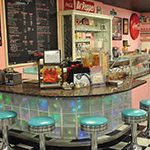
Holly Hop Ice Cream Shoppe, Lubbock
It is only appropriate that Buddy Holly’s hometown has an ice cream shop that’s a pitch-perfect tribute to the glory days of the 1950s. With vinyl furniture, classic ads on the wall, and a big Wurlitzer jukebox in the corner, the classic soda fountain serves up splits and sundaes, hand-dipped ice cream, and creamy malts.
3404 34th St., Lubbock, TX 79410
Photo courtesy of Holly Hop Ice Cream Shoppe
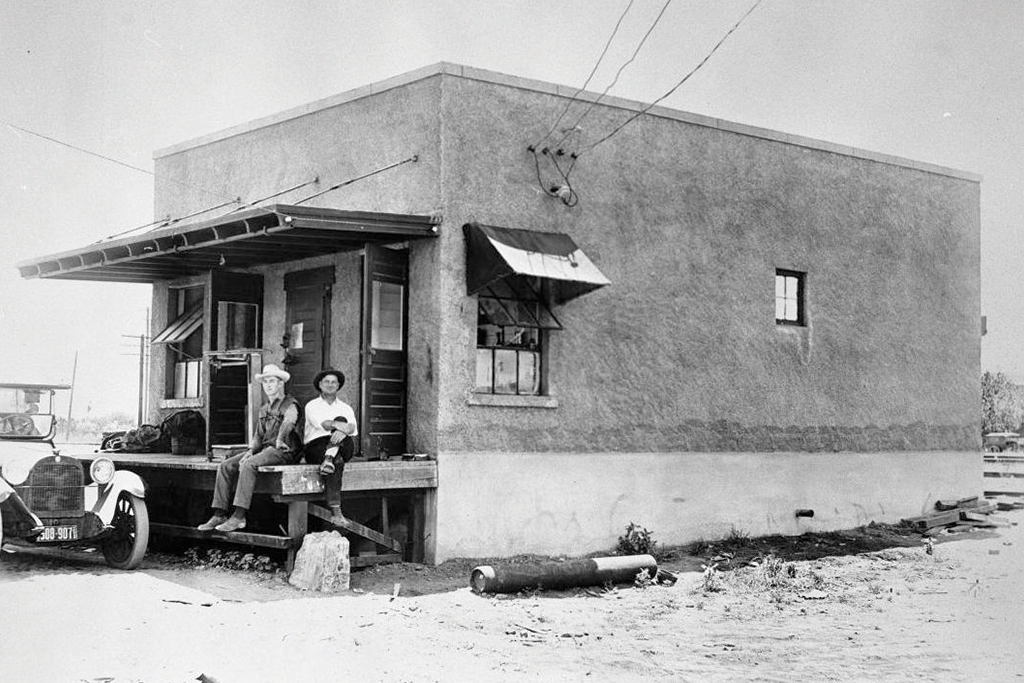
Ice cream has been a staple in Texan kitchens for more than a century, but before refrigeration, enjoying a few cold scoops at home meant heading down to the local icehouse. Texas icehouses were a staple of Texas town life throughout much of the early part of the 20th century. They were places where Texans bought ice, hung out, shared stories and news, and, yes, ate ice cream. Almost anything that needed to be stored on ice — milk, butter, cold Dr Pepper, creamy Blue Bell — could be found at an icehouse. You could also purchase ice to bring home for your home ice box.
As refrigeration became widespread, icehouses evolved. They began stocking more groceries, swapping out huge blocks of ice and insulated rooms for large refrigerators. They eventually evolved into convenience stores. A tiny icehouse in Dallas’ Oak Cliff neighborhood even grew into the massive Southland Corporation, which owns and operates 7-Elevens all over the world. But what remains the same about today’s convenience stores and yesteryear’s icehouse is that a cold pint of Blue Bell is rarely more than a few minutes away from every Texas home.
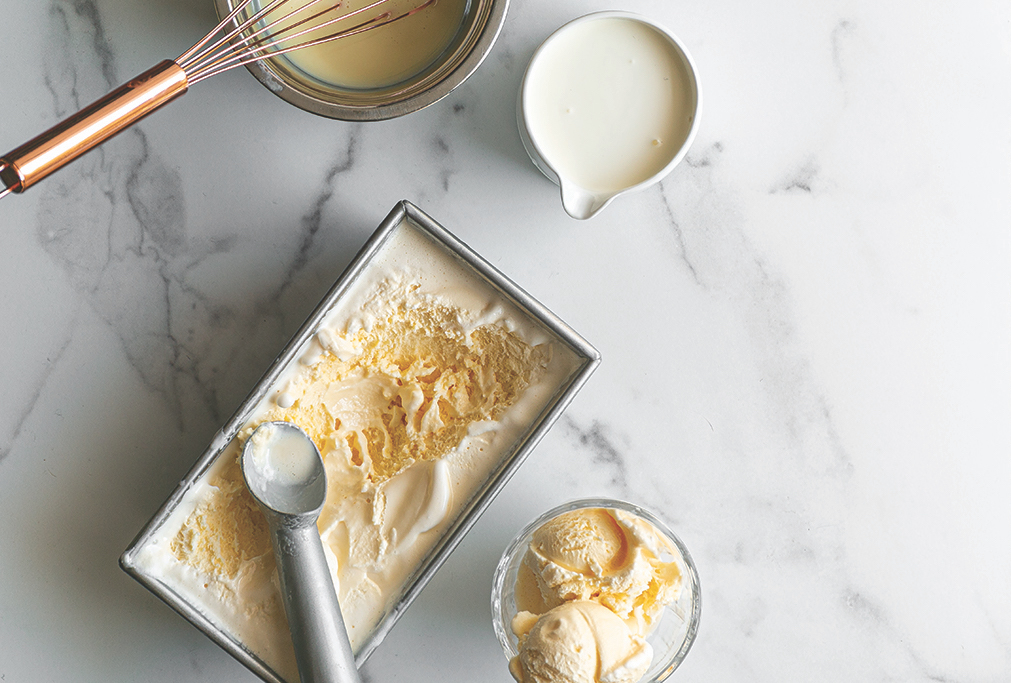
We don’t all have ice cream makers lying around our homes, but that doesn’t mean we can’t enjoy delicious cold ice cream on a hot summer night. This no-churn vanilla ice cream recipe only requires a few ingredients, a 9-by-5-by-3-inch pan, and patience.
Ingredients:
1 14-ounce can sweetened condensed milk
2 teaspoons pure vanilla extract
Salt, to taste
2 cups heavy cream, cold
Method:
In a large bowl, whisk together the condensed milk, vanilla, and salt and set aside. Whip the heavy cream in a mixer until it thickens and forms firm peaks, about 2 minutes on medium-high speed. Fold half of the whipped cream into the milk mixture, then fold the mixture back into the remaining cream. Pour into a 9-by-5-by-3-inch pan, cover, and place in the freezer. Wait five hours, until the mixture is frozen solid and scoopable.
Optional: You can create flavors by adding in cookies or fruit when the ice cream mixture is still soft, about two hours into the freezing process.
For an extra scoop of creativity, use your handmade concoction in a delicious ice-cream cake.
Roadrunners: The Texan Birds You Think You Know
A deep dive into the world of Texas roadrunners. (And a bit about cartoon ones, too.)
It’s prime time to play outside.
A dessert that doesn’t age.
Embrace this Northeastern tradition from the comfort of your backyard.
Texas summers are about as comfortable as having a rock in your boot. Beat the heat with these six easy heat wave hacks.

Texas’ Most Important Musicians Ranked by Decade
As Texas goes, so goes the nation. These artists are proof.