
Why the World’s Largest Airline Loves to Call Texas Home
American Airlines is the world’s largest airline by several measures: It flies the largest fleet of aircraft (more than 1,000), operates more seats than any other airline (151.7 million in the summer of 2025 alone), and regularly tops the charts in key performance metrics, including revenue passenger miles. It only stands to reason that a brand with such immensity has a comfortable home in Texas.
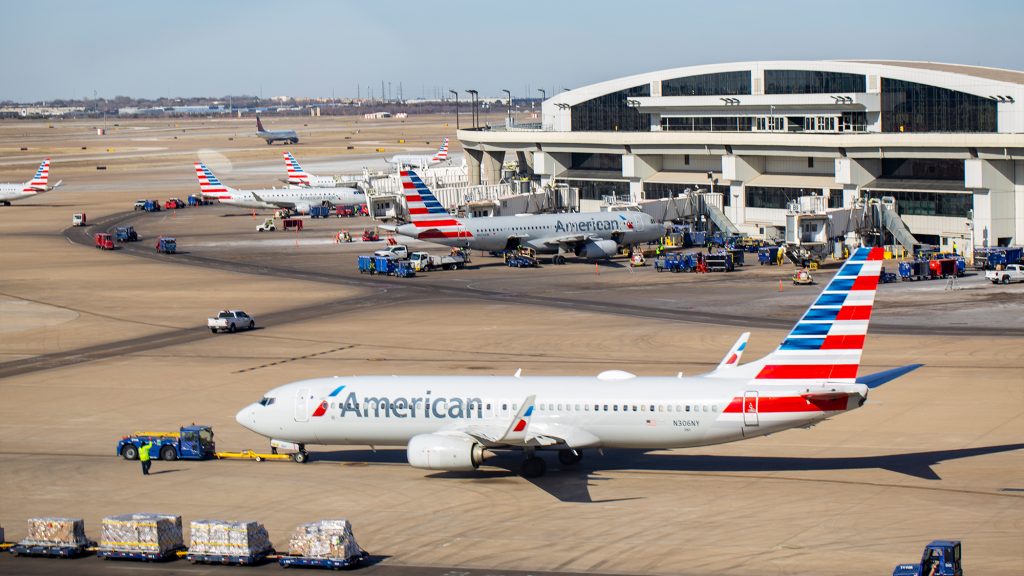
American Airlines is celebrating its 100th anniversary this year, and the Fort Worth–based carrier stands not only as a titan of global aviation, but also as one of the most influential companies to Texas’ economy and a driving factor for Dallas Fort Worth International Airport, which — as the second-biggest airport in the U.S. — is borderline synonymous with American.
A Storied Century
American Airlines dates itself back to April 1926, when Charles Lindbergh (a year before he became a household legend for flying the first solo transatlantic flight) delivered a bag of mail from Chicago to St. Louis for what would be Robertson Aircraft Corporation’s first contract air mail service. Through a series of airline mergers (of which Robertson was at the center) over the next few years, American Airlines proper emerged.
Throughout a busy 20th century, American Airlines consistently led the way in designing what commercial flights, American airports, and the traveler experience look like today. In 1939, they were the first airline to introduce airport lounges specifically for their customers. In 1957, they opened the American Airlines Stewardess College in Fort Worth, the world’s first special training facility for flight attendants. In 1981, AAdvantage® became the world’s first airline loyalty program.
But perhaps the most notable date for Texans was 1974, when American Airlines Flight 341 arrived at Dallas Fort Worth International Airport, officially marking the airport’s grand opening. Five years later, in 1979, the airline cemented its partnership with North Texas by officially relocating its headquarters from New York to Fort Worth, where it still proudly calls home 50 years after that first flight touched down at DFW.
Texas’ Economic (Jet) Engine
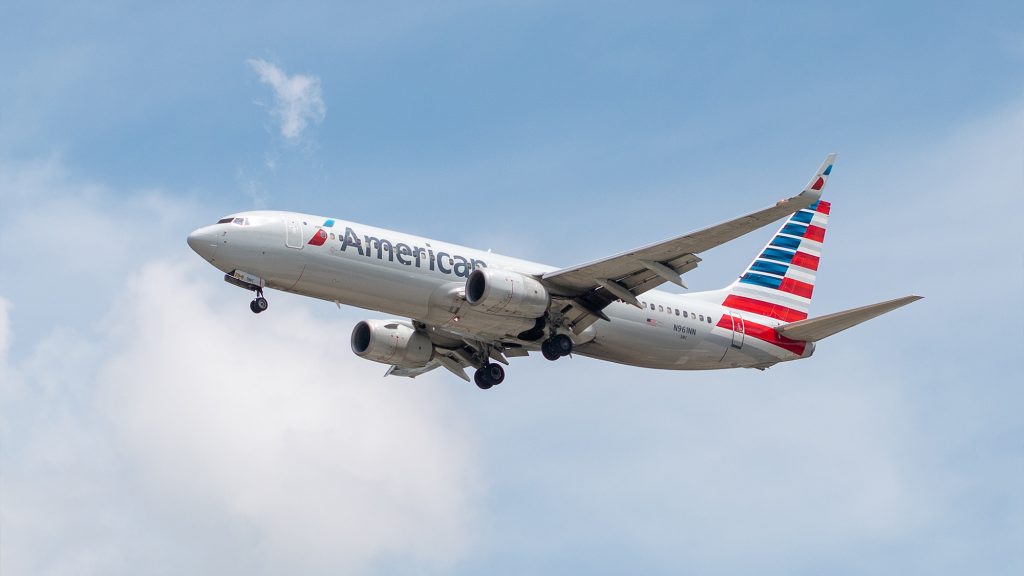
Today, DFW International Airport is the third-busiest airport in the world, and likewise the largest hub for American Airlines. More than 30% of American’s daily connecting customers and checked bags travel through DFW International, far more than any other airport in their network. Some reports indicate that American accounts for 66% of the market share of all passengers at DFW — that’s a lot of customers, considering that nearly 200,000 people travel through DFW every day, and nearly 90 million per year.
As any Texan will tell you, DFW International Airport is physically enormous. Not only does the airport have its own dedicated ZIP code, but it has five terminals. American Airlines is the primary operator on four of those five, depending on the hub, connecting travelers from DFW to more than 240 destinations worldwide. Together, the partnership reinforces North Texas as a global crossroads for commerce, travel, and tourism.
With a symbiotic relationship on this scale, it’s no wonder American Airlines’ impact on Texas extends far beyond DFW’s tarmacs and terminals. American contributes a whopping $43 billion to Texas’ economy every year. In the D-FW metroplex alone, American employs roughly 35,000 team members, making it one of the region’s largest private employers.
Now Arriving: The Future of American at DFW
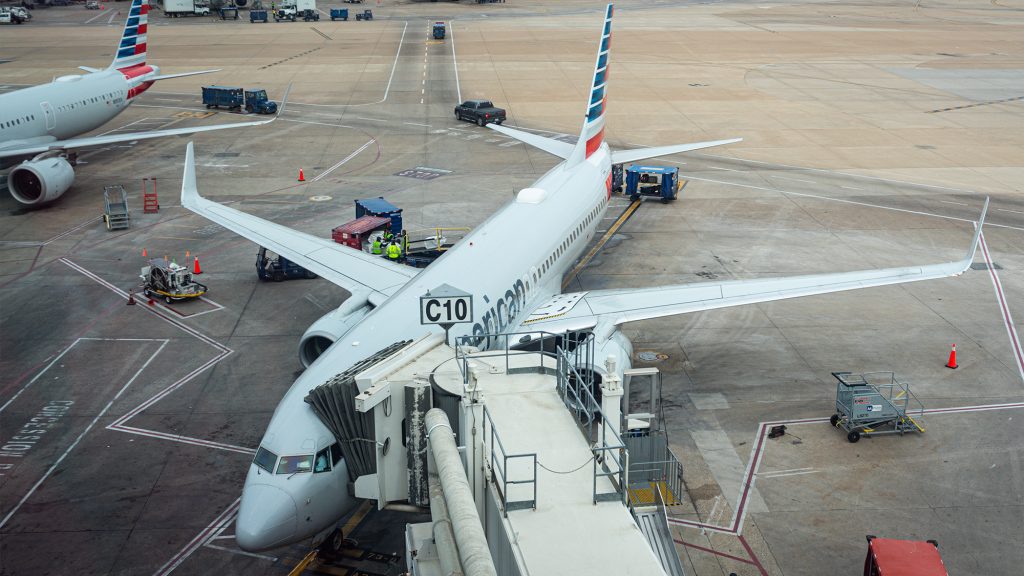
As American Airlines enters its second century of business, its mutually beneficial relationship with Texas — and particularly DFW International — is set to deepen. As if to commemorate its centennial in 2026, American is evolving its flight operations at DFW this year to improve trip certainty, connection times, and airspace efficiency. The move is an investment not only in its loyal passengers, but in the overall experience at American’s flagship hub.
Check out our list of even more iconic brands like American Airlines that call Texas home.