Please sign in as a member or guest below to access it.
Please sign in as a member or guest below to access it.

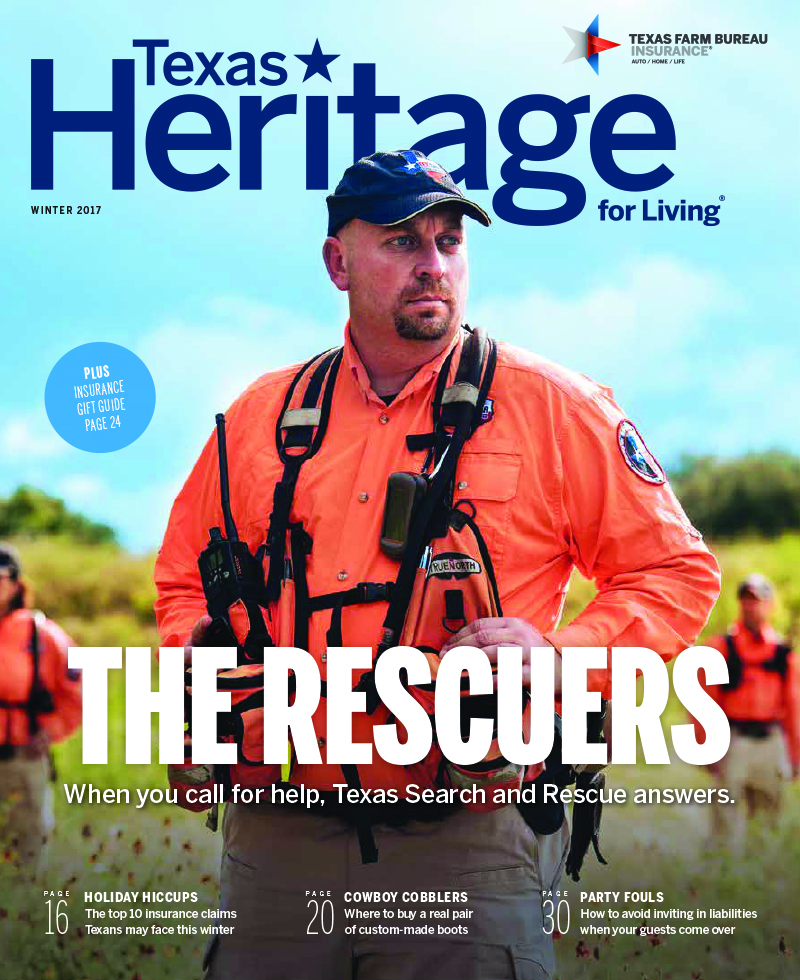
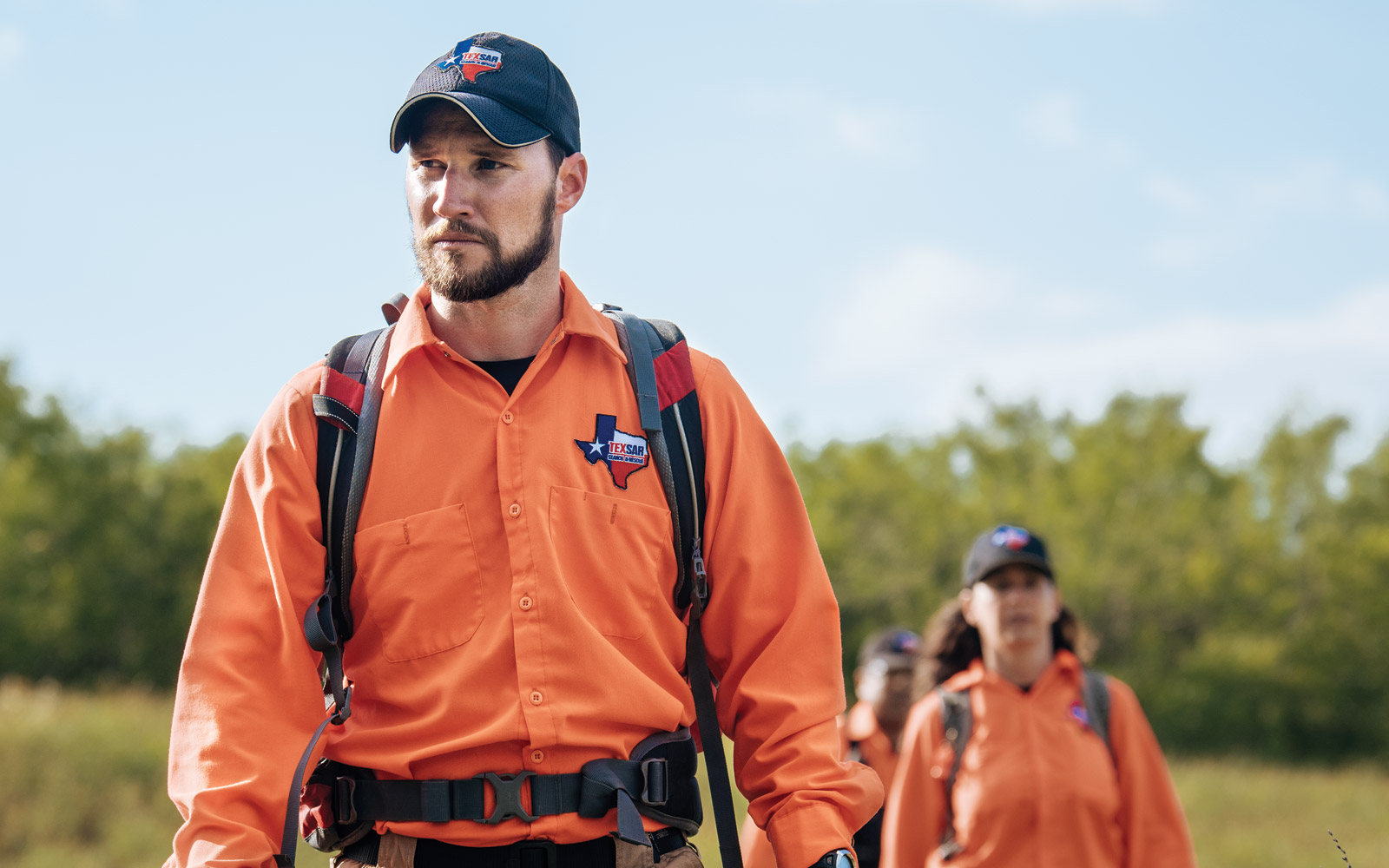
The volunteer members of TEXSAR are ready and willing to answer the call of their fellow Texans.
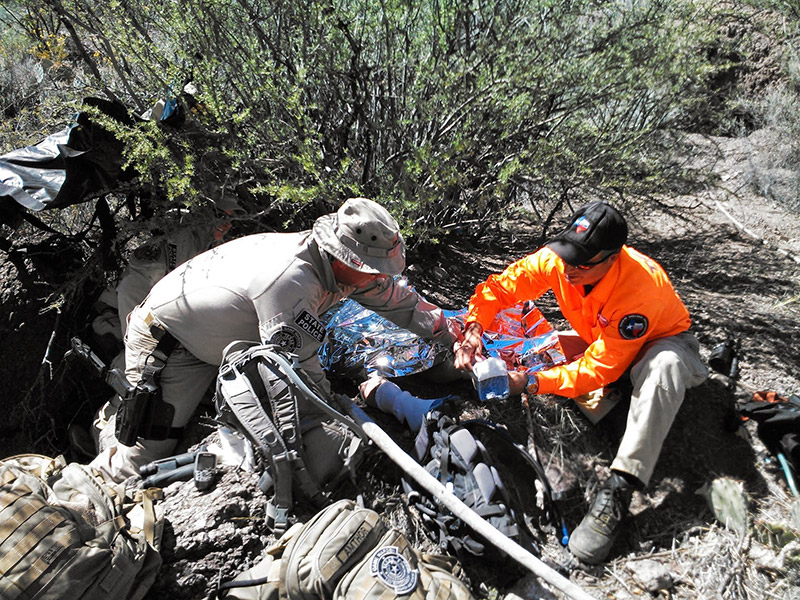
Cathy Frye can’t remember shouting back to the Texas Search and Rescue (TEXSAR) volunteers who were calling her name as they trudged through the West Texas desert of Big Bend Ranch State Park on a hot October morning. But she called loudly enough that two Texas Parks and Wildlife rescuers heard her. They found her huddled under a mesquite tree, close to death.
“I opened my eyes, and I could see two people a little bit above me working their way down to me,” says Frye, who had spent Friday night, all day Saturday, and part of Sunday waiting for rescue. “I yelled, ‘Please help me.’”
Overcome by the elements on a hike that was more difficult than she and her husband David had expected, Frye stayed behind while her husband hiked out to get help that Friday afternoon.
The Arkansas couple had lived in the area for a time and frequently hiked Big Bend National Park, but during the 2013 federal government shutdown, the park closed. They opted to explore the nearby state park, which was less familiar to them.
After setting out on a Thursday morning with a day’s worth of water and snacks, they were surprised by the difficult terrain and soon realized they were in trouble. The couple spent Thursday night in the open air and kept hiking Friday until Frye could go no further.
Her TEXSAR rescuers kept her spirits up while she waited for a helicopter to come fly her out to an El Paso hospital. “I tried to cry, but I couldn’t because I was so dehydrated,” she says. “One guy said, ‘You survived Big Bend.’ That just really stuck with me. It’s hard to describe what it’s like to be truly alone in the wilderness.”
TEXSAR volunteers undergo extensive training to assist local agencies with searches statewide — including in the desert of Big Bend. “It is the most rugged, inhospitable landscape that Texas has to offer,” Frye says. “You can’t imagine that there are people who would volunteer to … risk heat stroke to look for you. … And it’s like they weren’t even phased by it. They were so excited when they found me. That’s what I remember, too.”
TEXSAR’s 270-member nonprofit group has become one of the state’s go-to organizations for rescue and recovery operations. In 2016, they deployed 48 times, volunteered 27,737 hours, and traveled 102,030 miles across Texas.
“We fill a big gap within the state, at the smaller community level and in more rural areas,” says Justen R. Noakes, the chief executive officer of the all-volunteer organization, which answers search-and-rescue requests in all 254 counties of Texas.
TEXSAR’s membership hubs in Dallas/Fort Worth, Houston/Galveston, Central Texas, the Coastal Bend, and the Permian Basin attract volunteers from all across the state. “We have some of the best members in the world,” Noakes says. “My charge is to make sure they’re having a great volunteer experience, getting fulfilled, and accomplishing what they want to accomplish personally.”
TEXSAR began as a grassroots organization in the Austin area, operating as a civil air patrol. Running fully on donations, membership fees, fundraising efforts, and the occasional grant, TEXSAR voluntarily deploys when called on by the Office of the Governor, local law enforcement, and agencies such as the Texas Rangers Division, offices of emergency management, or departments of public safety.
In the recent Caldwell County hot air balloon disaster, when 16 people lost their lives during a tragic morning ride, TEXSAR assisted the National Transportation Safety Board in documenting and collecting evidence. Last February, the group assisted the Texas Rangers with a recovery operation in Brewster County, helping to locate the shallow grave of a 22-year-old missing since October 2016.
Frye says she admires TEXSAR’s recovery operations because, as difficult as such outcomes are, they bring closure. “When I was out there and I realized that I might die, the most important thing to me was that I would be found,” Frye says. “You want your family to have answers, to have something.”
By day, Noakes works in San Antonio as director of emergency preparedness for grocery giant H-E-B. He began volunteering with TEXSAR in 2013. “I wanted some practical, boots-on-the-ground training,” he said.
As CEO, he has shepherded TEXSAR through a period of growth and earned recognition following the group’s work during the Memorial Day-weekend flood of 2015 in Wimberley and Martindale. In that traumatic flood, TEXSAR volunteers performed 37 swift-water rescues in Martindale, saving a man stuck in his car and others stuck on rooftops and car hoods.
“There were some amazing stories, and I’m proud to be a part of that,” Noakes says. Volunteers spent three weeks helping recovery efforts in Wimberley. Jonathan McComb, the sole survivor of his immediate family, was so moved by the efforts of the TEXSAR team to locate his wife and two children that he became a certified member of the team.
TEXSAR’s efforts moved Jimmy Buffett to donate to TEXSAR 100 percent of proceeds from a concert he performed at Stubb’s Barbecue in Austin.
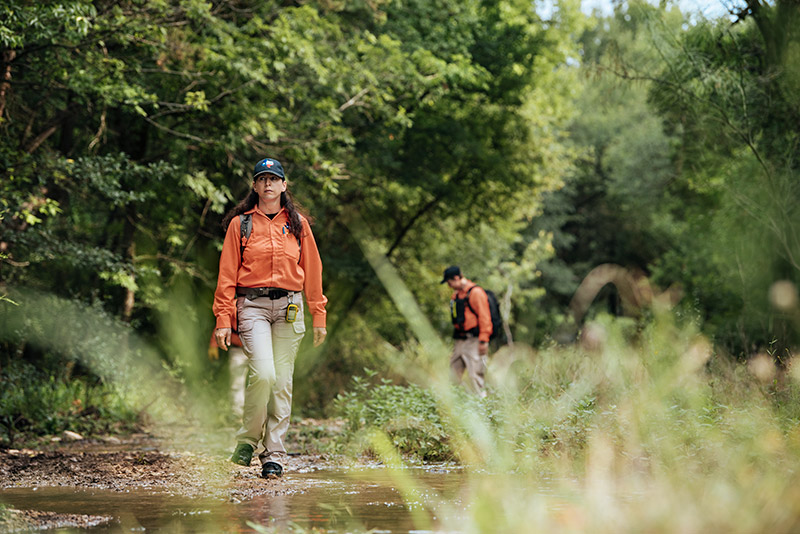
If you want to volunteer for TEXSAR, you can’t just raise your hand. You have to get qualified, tested, and certified. Joining TEXSAR requires intensive training and third-party certification by the group Rescue Training International. “That’s what makes TEXSAR unique,” Noakes says. “All members are all certified.”
Kharley Smith, director of emergency services in Hays County, witnessed the expertise of TEXSAR members in Wimberley and has since called them for other search-and-rescue needs. She says sometimes the volunteers’ level of training exceeds that of the employees she oversees.
“I know they train regularly and work together with our teams seamlessly,” she says. “The individuals that volunteer are passionate, well-trained, and well-organized.”
Members get certified in vertical rescue, swift-water rescue, wilderness first aid, ground search, and canine-search, which Noakes says is the most difficult certification to get. “When we field a canine at the request of law enforcement, we want it to be the best in the business,” Noakes says, adding that the fieldwork requires dogs who are trained to find living persons as well as human remains.
Just last spring, TEXSAR member Joe Huston and the dog he handles, Orion, found the body of a San Angelo woman, missing since 2005, under several feet of dirt. TEXSAR was called in to help, and when the search area was narrowed, Orion was able to zero in on her body.
“Every case is different,” Noakes says. “We help manage our member expectations. Finding life is always our goal, but bringing [the body of] a loved one home to their family is very important to our members.”
TEXSAR is now building a wildland fire team and a drone search program, which will help with search requests in large, remote areas. The members of TEXSAR will be ready when the next call comes.

Stop and smell the roses.
Your Guide to Paddleboarding in Texas
Head to the Gulf — or just one of Texas’ many rivers or lakes.
Let’s go chasing waterfalls.

Texas Tree Lightings and Holiday Displays
Get plugged into the holiday spirit.

How Texans Celebrate Labor Day
Lean into the long weekend.

Charming, cozy, and cute.