
Water Drainage Essentials for Texas Homeowners
In heavy rains, your roof sheds a surprising amount of water. Turns out, where it lands matters. If runoff pours straight down and pools near your foundation, April showers can bring more than green grass. Poor water drainage can erode soil, cause swelling around your foundation, and raise the risk of flooding.
Here are a few ways to move rainwater away from your home.
Clear Out Gutters
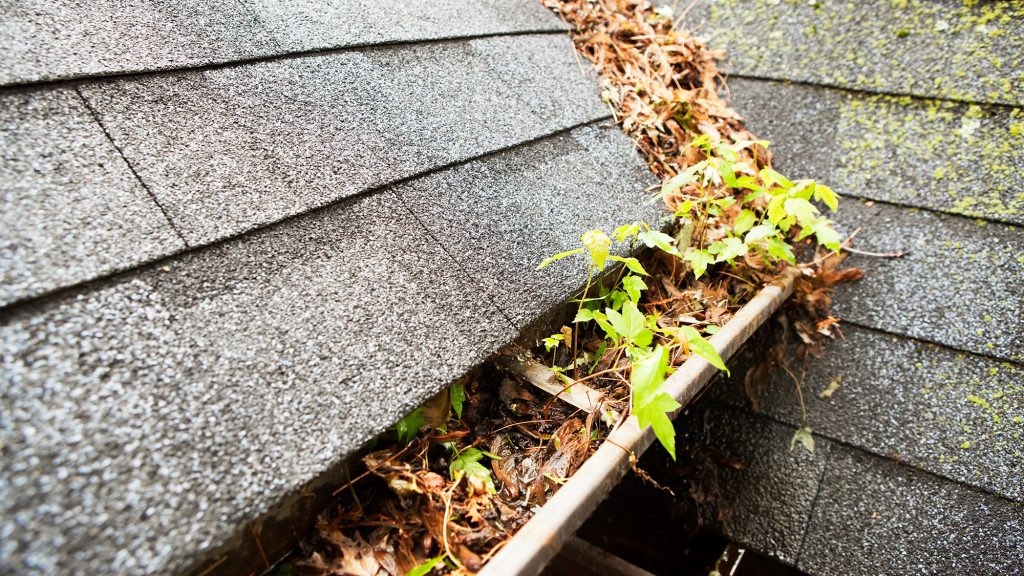
Your first line of defense against a soggy foundation: Clean your gutters at least twice a year in late spring and fall (even more often if you have a lot of trees).
When gutters are clogged, sagging, or spilling over, water lands right along the foundation line — exactly what you’re trying to avoid. Signs you’re due for a cleaning:
- Rain pouring over the gutter edge
- Plants or debris in the gutter
- Staining on siding
- Strange skittering noises (You may have animals living in your gutters!)
Also important: Check your gutters for damage after high winds, hail, or long stretches of heavy rain during storm season.
Grade Your Yard
“Grading,” in plain terms, is shaping the soil around your house so that water flows away from your foundation. Ideally, the soil around your home:
- Starts 8 to 10 inches below the lowest course of siding or shingles
- Gently slopes downward from the house at no less than 5% (.5 inches per foot) for a maximum distance of 10 feet
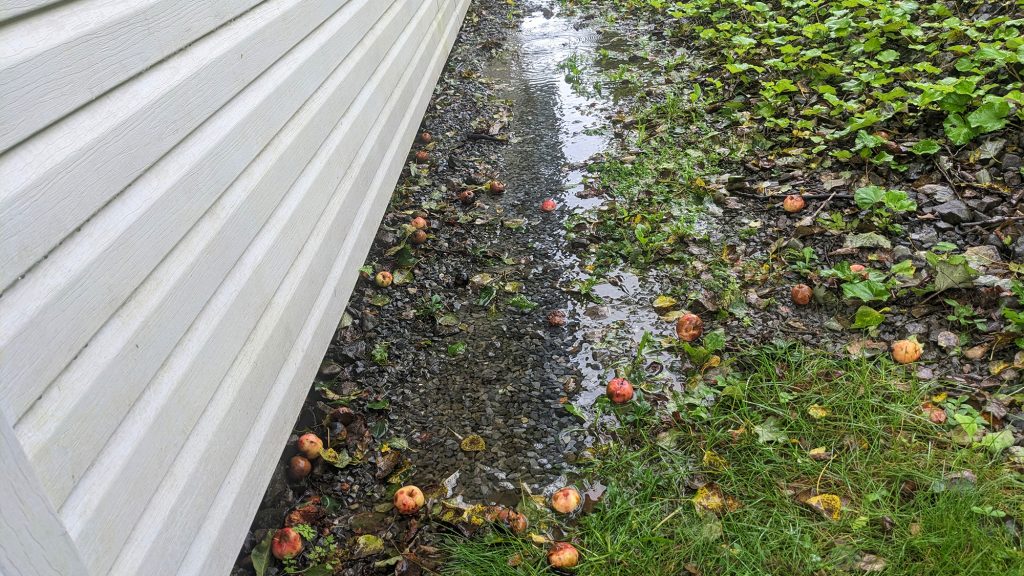
You may need to regrade if you notice water pooling along the edge of the house after storms. Another clue: Downspouts that dump right at the foundation often create a “gutter canyon” where water carves a channel and then sits.
Grading your yard is a DIY task requiring brute strength and tools such as a wheelbarrow, new soil, a shovel, and sometimes gravel. Call in a drainage professional if you’re dealing with runoff coming from a higher neighboring yard, because you may need a retaining wall.
Install French Drains
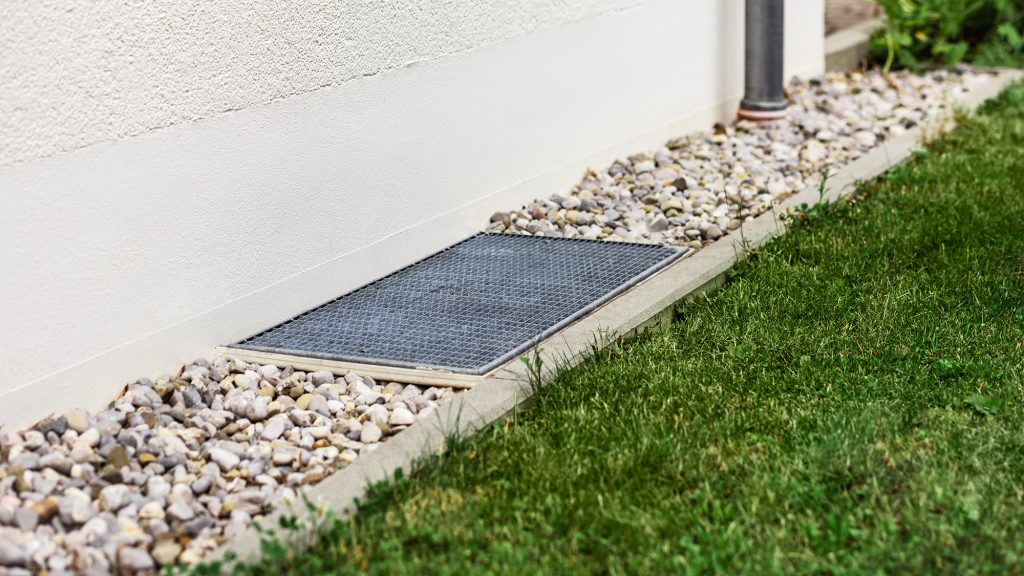
Sometimes grading isn’t enough, especially in low spots where water naturally collects or in yards with clay soil that drains slowly. That’s where a French drain can help. A French drain is essentially a buried collection system made from a perforated pipe surrounded by gravel and wrapped in filter fabric. Water seeps in, then the system carries it to a safe discharge point.
French drains are a good fit when you have persistent standing water, soggy areas that never fully dry out, or a “problem corner” where water always collects during heavy rain. Word of warning: French drains require extensive planning and exhausting trenching. While you can install your own French drain, homeowners often hire drainage-focused landscapers to help.
Reduce Runoff with a Rain Garden
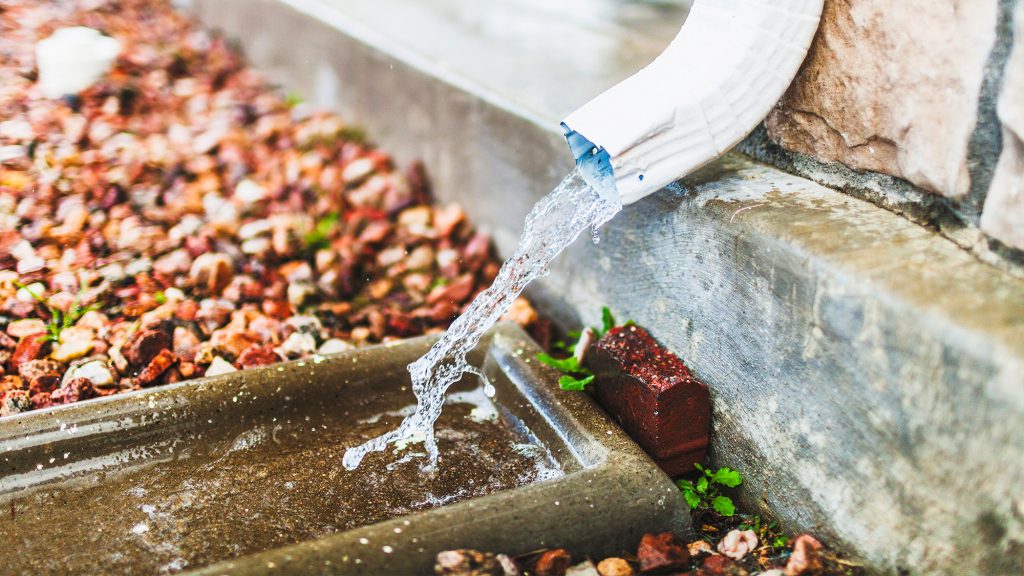
Why let all that water go to waste? Instead, redirect it from a downspout to a rain garden: a shallow planting bed filled with native plants that can handle wet and dry spells. During storms, the garden temporarily holds runoff and lets it soak into the soil, reducing puddling and helping filter pollutants before water moves into storm drains.
Rain gardens can reduce runoff, improve water quality, recharge groundwater, support birds and pollinators, and boost curb appeal. They can also cut down on standing water that attracts mosquitoes because a properly designed rain garden shouldn’t hold water for long.
Once you’ve prepped your yard for spring showers, learn how to waterproof pretty much anything, from your phone to your sneakers.