
Please sign in as a member or guest below to access it.
Please sign in as a member or guest below to access it.

German immigrants helped build Texas. Today, their distinctive dialect is slowly dying out.
In 2001, Hans Boas,
a linguist at the University of Texas at Austin, was having breakfast in
Fredericksburg, when he overheard a group of people speaking German at a nearby
table. Boas, who grew up in Germany and specializes in the German language, was
a little confused by what he heard. He didn’t recognize the dialect. He
approached the table and asked where they were from. The diners — who were all
in their 70s and 80s — looked astonished. What did Boas mean? They were all
from right here in Texas.
Boas had stumbled
upon a linguistic mystery — a unique and peculiar phenomenon known as Texas
Deutsch. The speakers that morning were native Texans whose families had spoken
a unique German dialect for generations, part of a long — though dying —
heritage that runs rich in the central part of the state.
The encounter
inspired Boas to create the Texas German Dialect Project, a scholarly effort to
document and preserve this rare linguistic phenomenon. Here’s how it all began.
There’s a simple
reason why Boas didn’t recognize the form of German he overheard in
Fredericksburg.
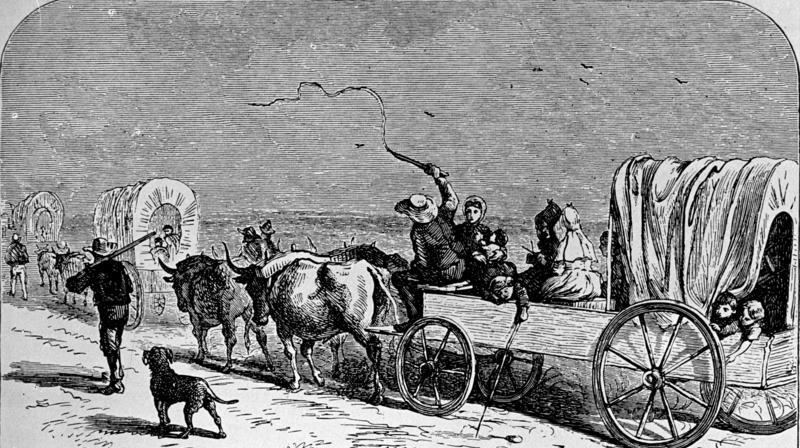
Texas’ German roots stretch back to the mid-19th century, when Germans flocked there among the area’s earliest settlers and became one of the dominant cultural groups, particularly around what is now the Hill Country. These immigrants came from many different regions of Germany, bringing with them their own distinct dialects — each with its own particular words and ways of expressing concepts and ideas.
In the new world,
these varied ways of speaking mashed together into a new localized dialect, now
known as Texas Deutsch.
Texas Deutsch was
both a melting pot of German dialects and an evolving new form of the language.
When settlers encountered things in Texas for which there were no German words,
they invented new ones. Skunk, for instance, became stinkkatze — or “stink cat.”
The dialect also
preserved 19th-century words and idioms that passed out of common usage back in
Germany. As a result, Texas Deutsch is like a kind of time capsule of a form of
German that is more than 150 years old.
The prevalence of Texas Deutsch throughout the Hill Country speaks to the enduring heritage of German Texas.
Well into the 20th century, life in Texas’s German communities was conducted in German, from schools and churches to conversations at stores or livestock auctions. German was often the first or only language spoken at home, and English was learned as a way to communicate with people outside the tight-knit communities.
In other words,
these German communities functioned in much the same way that many Latin
American communities in Texas function today, with Spanish being the
predominate mother tongue.
This all began to
change around the time of the first and second World Wars. These two great
conflicts, which pitted the U.S. against Germany, gave rise to a stigma around
the use of the German language.
In 1918, in the wake
of World War I, Texas passed a law requiring that all schools conduct class in
English. It instilled the perception in many young German Texans that speaking
German or having a German name was somehow un-American or un-Patriotic. As a
result, parents began speaking more English and stopped teaching them German so
as to avoid any potential stigma that might come with being Texas German.
So it was that Texas
Deutsch began to fall out of use.
Today, most native
speakers of the dialect are in their 70s and 80s. This presents a distinctive
problem for the language. As the speakers die out, the language is slowly dying
with them. In a matter of 10 to 25 years, Texas Deutsch as a spoken dialect
will vanish all together.
Hans Boas is doing what he can to preserve the language before it disappears. Since his first encounter with the dialect, he has met with hundreds of Texas German speakers — recording them, documenting their speech, and creating an archive that will preserve the sounds and words of the language. You can access the dialect archive on his site.
In his interviews
with native speakers, Boas asks about their childhood, growing up within
Texas’s German communities, and what life in the state was like at that time.
Often, it is most natural for these native speakers to talk about the past in
their own native tongue — Texas Deutsch.
Boas’ project,
therefore, is more than a linguistic endeavor. It is its own kind of time
capsule, a historical record preserving the memories and language that defined
a time and place that may sound foreign but is nevertheless distinctively
Texan.
Learn more about preserving our German and other Texas heritages in our regional barbecue guide.
© 2020 Texas
Farm Bureau Insurance
The 53ers of the Texas Gold Rush
Many flocked to the state to try their luck at finding riches, unfortunately, few succeeded.

Buc-ee’s: The Rise of a Texas Cultural Icon
“The Disney of convenience stores” embodies Texas culture.
The Most Texas Texas Road Signs
With more than 79,000 miles of roads, Texas has a lot to warn drivers about — from tolls and tractors to pelicans and bears.
A Newcomer’s Texas Slang Dictionary
Can you say Bexar, Boerne, Bowie, and Buda?
When Was the First Thanksgiving? It Might Have Been in Texas
Decades before the Mayflower set sail for Plymouth Rock, colonists gave thanks in Texas.

You might not get the obsession with adding the soda to everything from chili to barbecue sauce. But then you’re probably not a Texan.