
Please sign in as a member or guest below to access it.
Please sign in as a member or guest below to access it.

Hear ye, hear ye! The Texas Renaissance Festival will take place through October and November. Here’s a little of the history and what to expect.
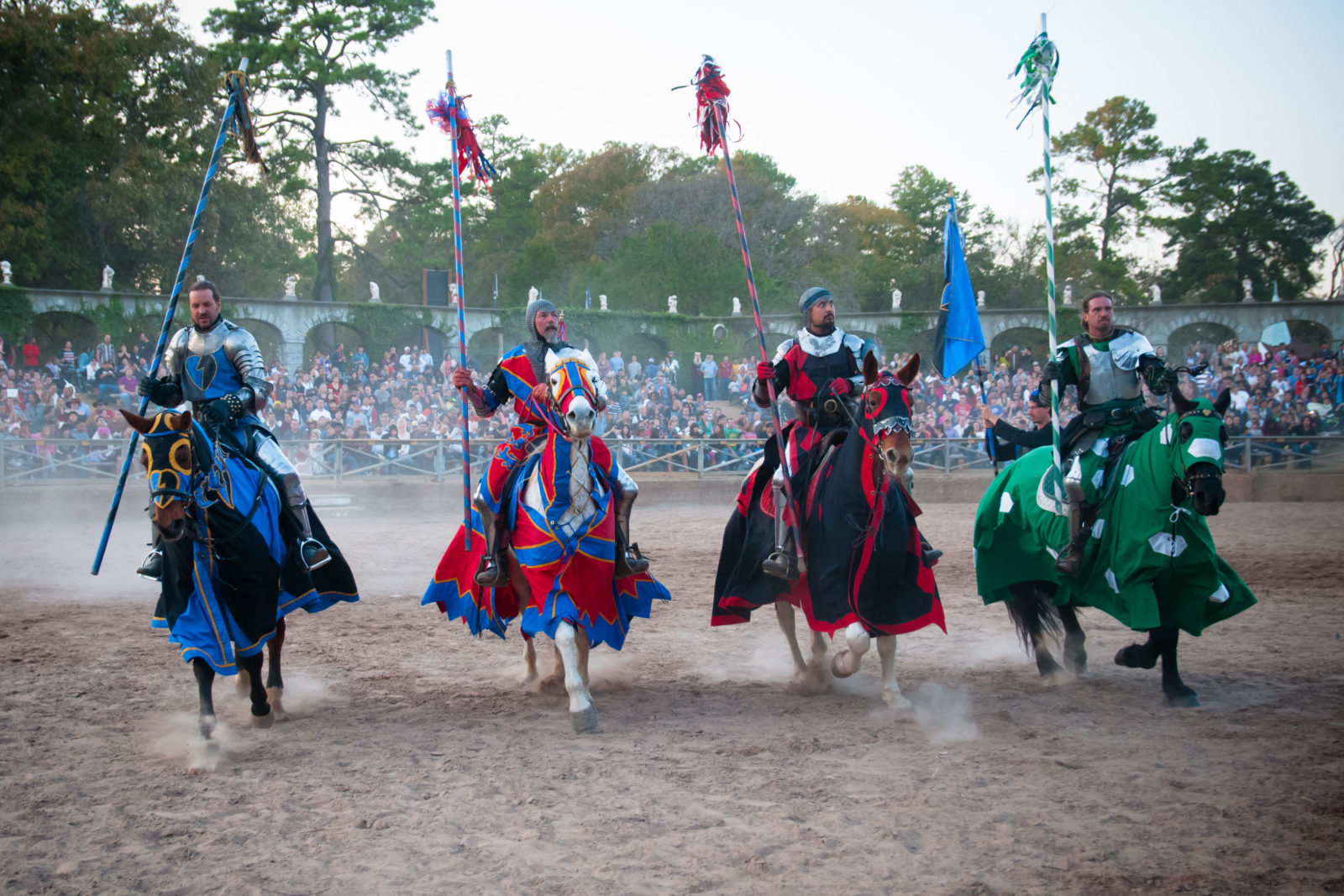
About
50 miles northwest of Houston, Texas Farm to Market Road 1774 curves through
the piney woodlands on its way to the little town of Todd Mission.
The
road runs past a low, black metal fence and a gate guarded by two curious,
castle-like columns. If you’re driving too fast, you’ll miss it.
But
if you are heading out to these parts on a weekend in October or November, you
won’t be able to miss the large crowds filing through the gate. To pass through
the gate, as more than half-a-million people do each year, is to be transported
back in time into an imaginary world that recreates life as it may have looked 500
years ago.
This,
of course, is the Texas Renaissance Festival.
Now in its 45th year, the festival is the largest of its kind in the U.S. Spread over 55 acres of land, the storybook setting features hundreds of shops, 25 stages, and acres and acres of camping, all with a backdrop fit for knights and ladies, fairytale kings and queens. Visitors seek out the make-believe — a place where shop-keeps chatter in a version of the King’s English and the fictional renaissance town celebrates festivals ranging from Oktoberfest to Halloween. It all makes for an experience unlike any other.
Nearly
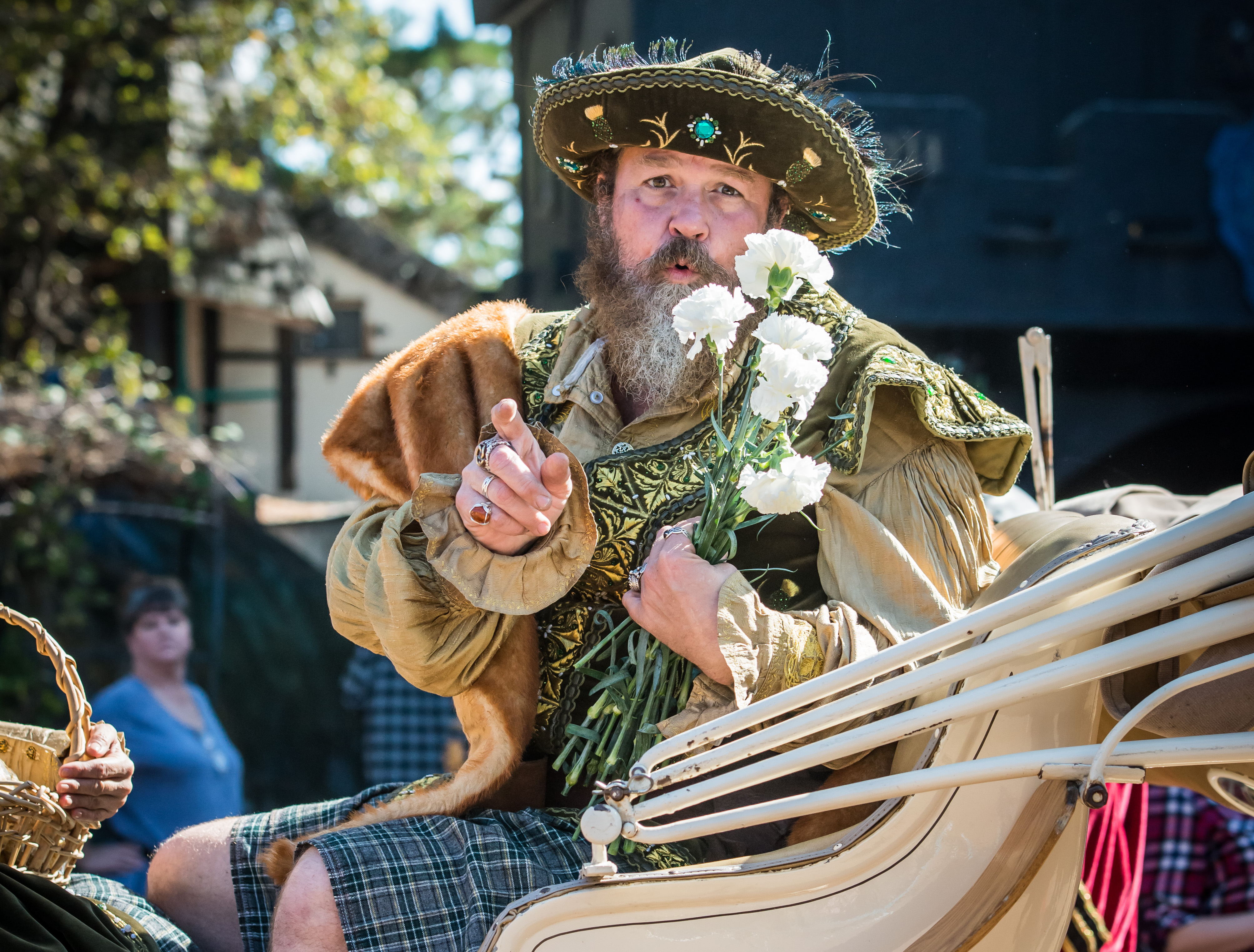
every state has its own version of a Renaissance Festival. But Texas festival’s
size and style are owed to the imagination and gumption of its visionary founder,
George Coulam. Coulam was born and raised in Salt Lake City, and he encountered
his first renaissance festival while at college in Southern California. Attempts
to launch renaissance festivals in Utah and Minnesota didn’t pan out, but when Coulam
found a large swath of land in Texas, he saw opportunity in the open landscape.
Coulam
didn’t just start a festival. He also founded the town of Todd Mission and
eventually established a massive estate. In 1999, Texas Monthly reported
that Coulam’s estate “include[d] a sprawling sculpture garden and a 40-acre
lake complete with a waterfall and a jogging track,” as well as a manor house
“in the bizarre, dripping style of the Spanish Modernist Antonio Gaudí” boasting
“stained-glass windows that he made himself.”
Coulam
brought the same flair and ambition to his festival. The festival began with a
few shops — or “shoppes,” as they are known in the renaissance circuit — constructed
around an old gravel pit. Around 30,000 people showed up. Vendors offered
handcrafted wares, and improv troupes staged performances. Over time, the event
expanded to include an extensive village constructed of Tudor-inspired
architecture, gardens, orchards, and stages. Over the decades, Coulam continued
to buy up more land around the original festival grounds to allow for its
expansion.

It
wasn’t long until the growing renaissance festival began attracting top talent.
In the late 1970s, magician duo Penn and Teller performed at the festival.
Today, dozens of stages feature a variety of performers during each festival
weekend. You can see musical performances, dancing, theater sketches, jugglers,
comedians, falconers, fire breathers, sword swallowers, simulated medieval
combat, and even staged executions.
This
year’s festival will also include nine themed weekends. This tradition began in
2005 as a way to add variety to the traditional Tudor style that dominates the
festival’s aesthetic and offer visitors a chance to play with new costumes.
Popular
themes include the annual Oktoberfest celebration (Oct. 5–6), Pirate Adventure
(Oct. 19–20), and the Halloween-themed “All Hallows Eve” (Oct. 26–27). This
year’s festival will also include a new theme entitled “Return to the
Renaissance” (Nov. 2–3), which will allow festival visitors to experience a
fantasy recreation of life in Renaissance England, the original focus of the
fair.
The
Texas Renaissance Festival is such a large and unique event that it may be
intimidating for anyone who has never attended. Luckily, you won’t need a
decree from the queen to get in. Costumes aren’t even required! The festival
opens every Saturday and Sunday (and the Friday after Thanksgiving), rain or
shine, at 9 a.m.
The
little farm road that leads to the festival grounds can get very crowded. To
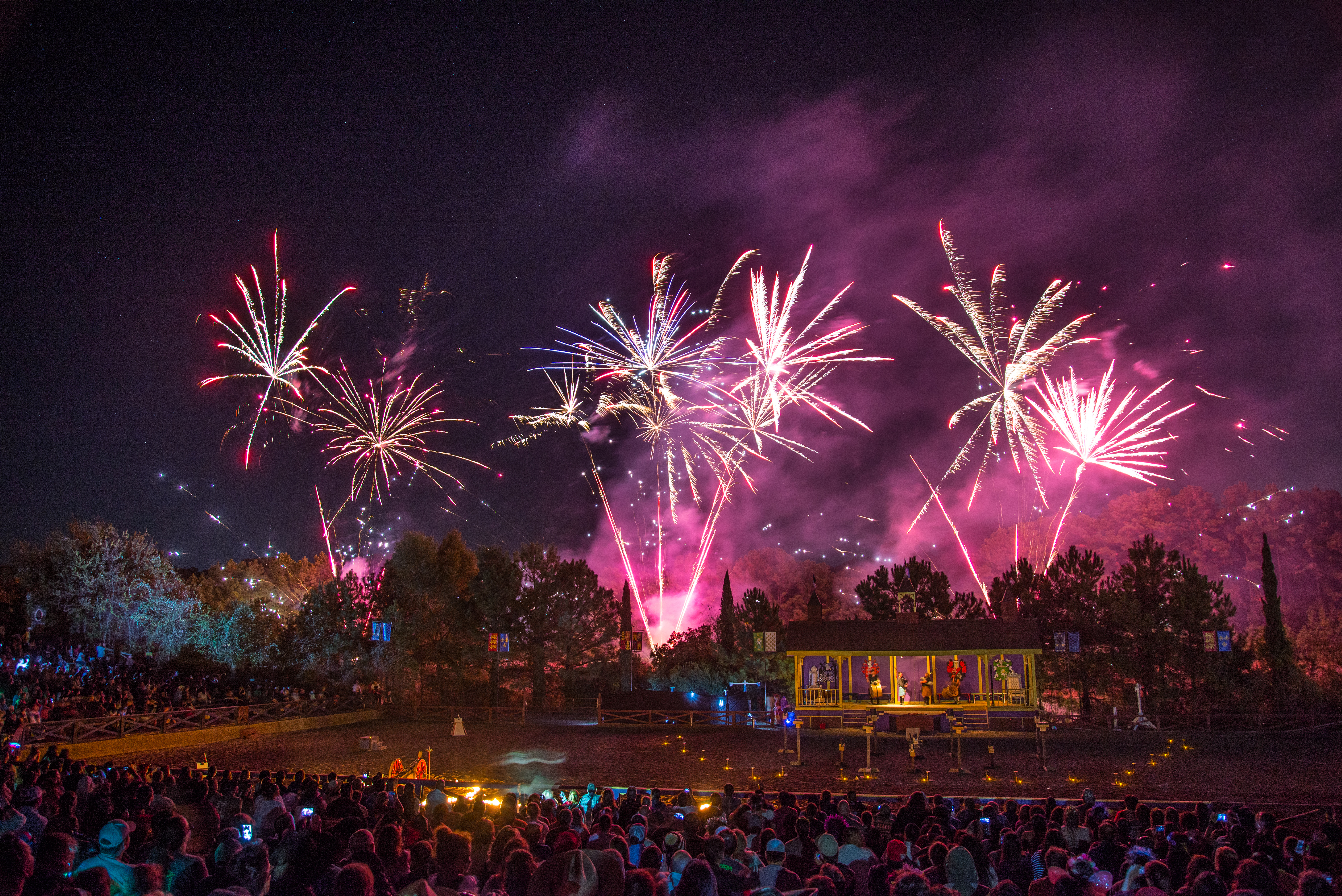
avoid traffic, head out early or come after 2 p.m. and plan to stay late. Late
arrivals will be rewarded with the daily Royal Fireworks Show. Better yet,
camping at the festival grounds ensures that you and your family won’t miss a
single show or shop at the fest.
Once
you are on the grounds, you can rent strollers, wagons, wheelchairs, or
electric scooters to help you get around; a locker to store your belongings; or
even a costume to help you get into the right spirit. Programs and maps are
available at the information booth, though it might be a good idea to plan your
route through the fest before diving in, since not every event is child friendly.
There are so many shops, artisans, merchants, and demonstrations, and you won’t
want to miss the ones that pique your interest.
If
traversing in Renaissance garb through 55 acres of attractions still seems like
an unattainable quest, you can also hire a festival guide. Just be warned:
Texas Renaissance Festival employees are instructed to stick to strict ye olde
King’s English, so be prepared to be addressed with plenty of “thous,”
“m’ladies,” and “m’lords.”
The 6 Food Challenges in Texas We Don’t Think You Could Finish
The most daunting – and potentially stomach-churning – food feats.
Where Did All the Electric Scooters in Texas Go?
And why are they suddenly back?
12 Spots to Hunt for Texas Antiques
These treasure-hunting grounds are well worth a detour from the road.

One Texas Sewing Group Has Made 9,000 Cloth Face Masks for Frontline Workers
Deann Rives has organized a nationwide operation out of her house — while still working full time as a Texas Farm Bureau Insurance Agent.

13 Texas Art Galleries Putting Us on the Map
Here’s a sneak peek at some of the creative minds at work in Texas.
Stop by These Roadside Fruit Stands and Orchards in Texas
Hit the road to pick up some of the best summer fruits.