Please sign in as a member or guest below to access it.
Please sign in as a member or guest below to access it.

Hundreds of millions of years ago, much of Texas was covered in an ancient sea, and the earth that remained was ruled by dinosaurs.
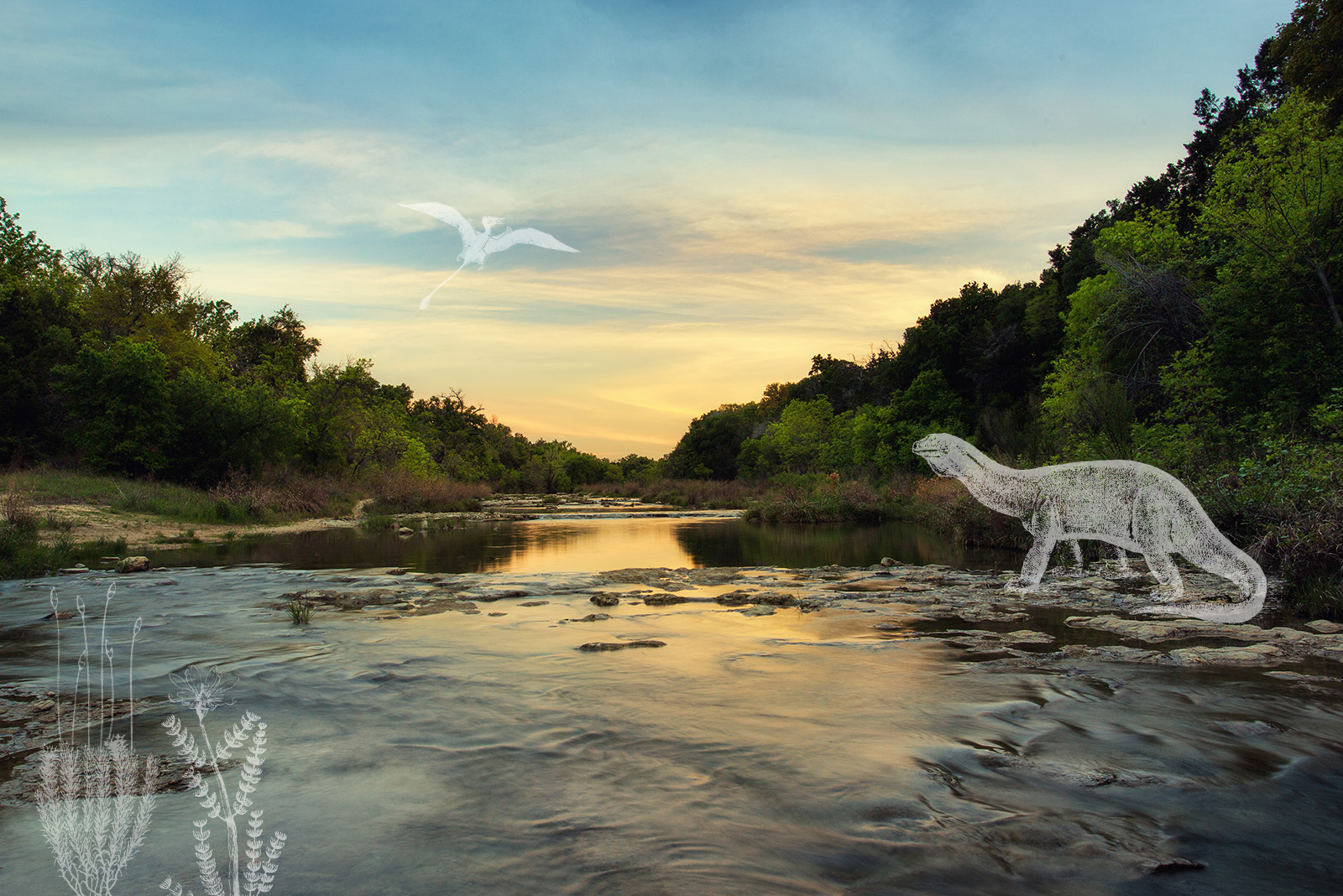
In the beginning, there were ancient seas swarming with sharks, volcanic eruptions spewing lava, and coral reef systems where the Guadalupe Mountains now stand. The story of prehistoric Texas reads like a fairy tale, with fantastical creatures roaming a landscape that would have looked very foreign to our contemporary eyes. The Texas landscape changed many times over the course of the hundreds of millions of years that passed before humans emerged on the scene. Today, the remnants of these lost epochs are found encapsulated in limestone rock or under the gentle flow of streams and rivers.
Texas is one of the best places for fossil hunting in the world. Hundreds of dinosaur specimens have been found across the state, along with many other types of prehistoric animals. These creatures lived from what geologists refer to as the Cambrian Period through the Pleistocene Epoch, a stretch of time spanning more than 500 million years. It’s here, half a billion years ago, where fossil hunters begin their search.
The earth was rotating, and life was flourishing for hundreds of millions of years before humans arrived. In fact,
there is evidence that the earth first took shape some 4.5 billion years ago. It wasn’t until 2.5 billion years later when photosynthesizing single-celled organisms produced the Earth’s oxygen-rich atmosphere and a further 1.5 billion years before these simple organisms evolved into creatures that began to appear in the fossil record.
Geologists have organized Earth’s history into units of time called eons, periods, epochs, and ages. The story of prehistoric Texas really begins some 500 million years ago at the dawn of what scientists refer to as the Phanerozoic Eon, which is split into three main eras: Paleozoic, Mesozoic, and Cenozoic.
PALEOZOIC ERA c. 541-251 MILLION YEARS AGO
During this long stretch of time, Texas was covered by an ancient sea, and it was home to sea creatures like brachiopods, cephalopods, graptolites, and trilobites. It is possible to find fossilized remnants of these ancient sea-dwellers in places like Mineral Wells Fossil Park, where you can collect specimens that are, incredibly, some 300 million years old.
The final 47 million years of this era are known as the Permian Period, the time when the seas began to recede, and Texas became home to land plants and early reptiles. At this time, coral reefs formed along the new shores, around where the Guadalupe Mountains stand today. The resulting coastal plain gave birth to protomammals like the Dimetrodon and Edaphosaurus.
MESOZOIC ERA c. 252-66 MILLION YEARS AGO
The Mesozoic Era is known as the Age of Reptiles because it is here that dinosaurs first appeared on the scene. This era is split into three periods:
Triassic period c. 251-201 million years ago
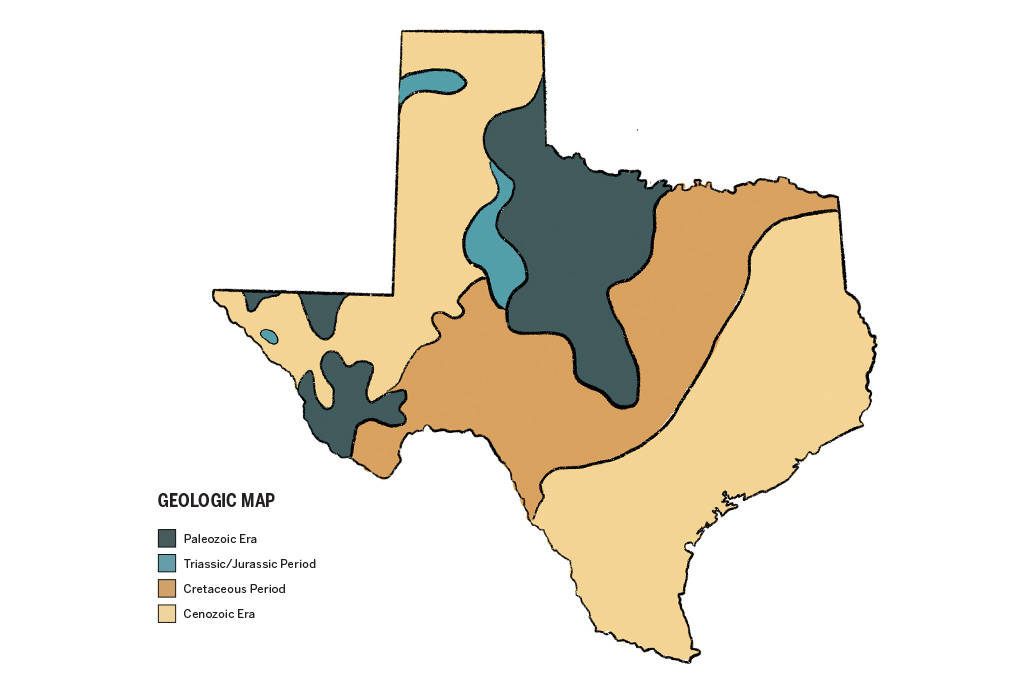
As the ancient sea receded, it created a tropical basin surrounded by mountains. Forests of tall, pinelike evergreen trees grew and river systems emerged, creating swampy lowlands and fern- covered marshes. These wetlands were populated by large crocodile like creatures called phytosaurs and a 10-foot-long amphibian called Metoposaurus. The exposed Triassic rock deposits in Texas date to the latter years of the period and are mostly located east of Lubbock and in the Panhandle.
Jurassic period c. 201-145 million years ago
Although this is the period that lends the most famous dinosaur movie its name, it is the biggest mystery in Texas prehistory. Because there are hardly any exposed Jurassic rock formations in Texas, there have been very few fossil discoveries from this period. One rare deposit is found in the Malone Mountains, just east of El Paso, where fossilized ammonites, gastropods, and pelecypods have been discovered.
Cretaceous period c. 145-66 million years ago
Texas has an abundant supply of Cretaceous rock deposits, so most of the major discoveries of fossils in Texas date back to this period. Over the course of millions of years, the primordial sea rolled back and forth across what is now the eastern part of the state, creating estuaries and marshlands that were prime for preserving dinosaur fossils and tracks. During this period, the Western Interior Seaway, another ancient sea that covered much of the Rocky Mountain region, extended into the western part of the state; paleontologists have discovered hundreds of Cretaceous Period dinosaur fossils here.
CENOZOIC ERA c. 66 MILLION YEARS AGO-TODAY
Cenozoic means “new life,” and it begins with the mysterious and massive extinction event that brought the age of the dinosaurs to an end. At the beginning of the era, parts of Texas were still covered with water, but new land creatures also began to emerge. Around 33 million years ago, camels grazed across wide plains and sharks swam in the shrinking seas. Their fossilized teeth can still be found across the state.
Commonly referred to as the Ice Age, the Pleistocene Epoch (the time prior to our current epoch, called the Holocene) began around 2.6 million years ago. It was during this time that Texas became home to creatures like glyptodonts, mammoths, mastodons, saber- toothed cats, giant ground sloths, titanotheres, and dire wolves.
It was around the end of the Pleistocene Epoch that humans began spreading out of Africa and around the world, with some tribes finding their way to North America. At the Gault site in Central Texas, archeologists have found evidence of human habitation dating back some 20,000 years. Those findings have led researchers to believe that hunter-gatherer tribes first made their way to Texas some 16,000- 20,000 years ago.
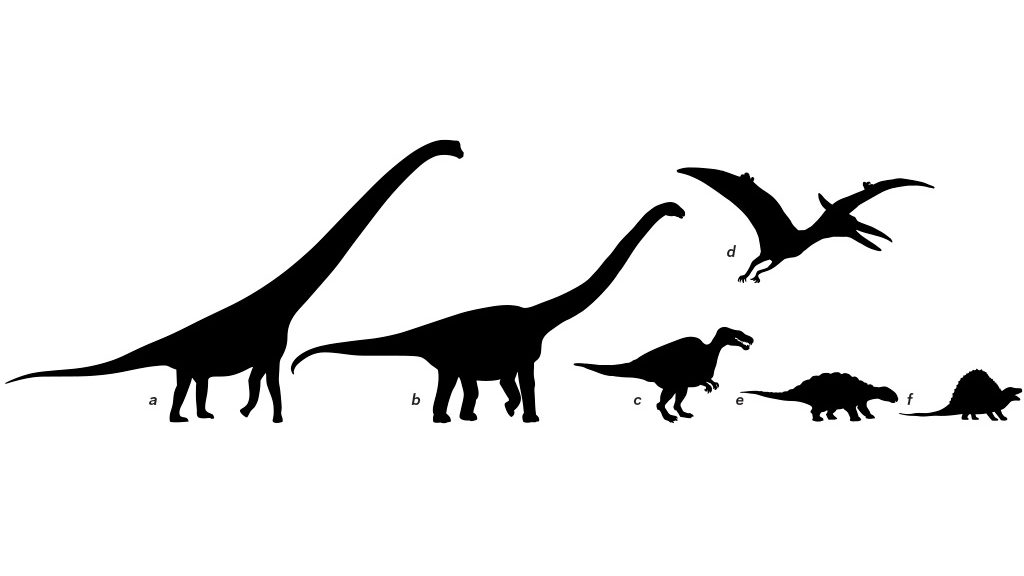
While much of what we know about dinosaurs is conceptual, scientists know that dinosaurs were reptiles, lived on land, and died out around 65 million years ago — though some believe they are ancestors of modern-day birds. More than 700 species of dinosaurs are known to have existed, 21 of which have been discovered in Texas. Here are some of the most fascinating.
a. Sauroposeidon: One of the largest dinosaurs ever discovered, the Sauroposeidon lived in the early Cretaceous Period. Also known as a Paluxysaurus jonesi, it was one of the sauropods, a common group of dinosaurs known for their long necks and tails, small heads, and four thick legs. Its remains are found in Oklahoma, Wyoming, and Texas, where it was named the state dinosaur in 1997.
b. Alamosaurus: These massive, 30-ton herbivores thrived on the ancient plains of Texas during the late Cretaceous Period, when their population grew to an estimated 350,000. Fossils were first discovered in the Ojo Alamo Formation in New Mexico, though many species have been found throughout Texas and
the Southwest.
c. Acrocanthosaurus: The scourge of its ecosystem, the Acrocanthosaurus was a massive carnivore akin to the Tyrannosaurus rex, weighing nearly 6.2 metric tons and measuring some 38 feet
in length. A well-preserved specimen found at the Twin Mountain Formation, a rich fossil site near Glen Rose, can be viewed at the Fort Worth Museum of Science and History.
d. Quetzalcoatlus: One of the largest known flying animals, Quetzalcoatlus was first discovered in Big Bend National Park in the 1970s. The massive birdlike creature appeared to have wings with an incredible 33-foot wingspan. It’s dated to have stalked what is now the
far southwestern corner of the state some 68 million years ago. A restored skeleton can be viewed at the Houston Museum of Natural Science.
e. Pawpawsaurus: One of the most recent species discovered, the Pawpawsaurus is also one of the most enigmatic. An intact skull was unearthed in Tarrant County in 1992, but no additional remains have been found. That leaves the dino shrouded in mystery, though it is believed to belong to the nodosauridae family, a group of dinosaurs known for their armored bodies.
f. Dimetrodon: Rubber figurines of the fan- backed Dimetrodon populate many toy bins, but the creature technically precedes the dinosaur period, dating to the Permian Period of around 272- 295 million years ago. Its name means “two measures of teeth” and refers to its sharp frontal canines and back shearing teeth used for grinding. Fossils of the supersized lizard have been found in the Red Beds of North- Central Texas.
See whole dinosaur skeletons and astounding dinosaur collections at:
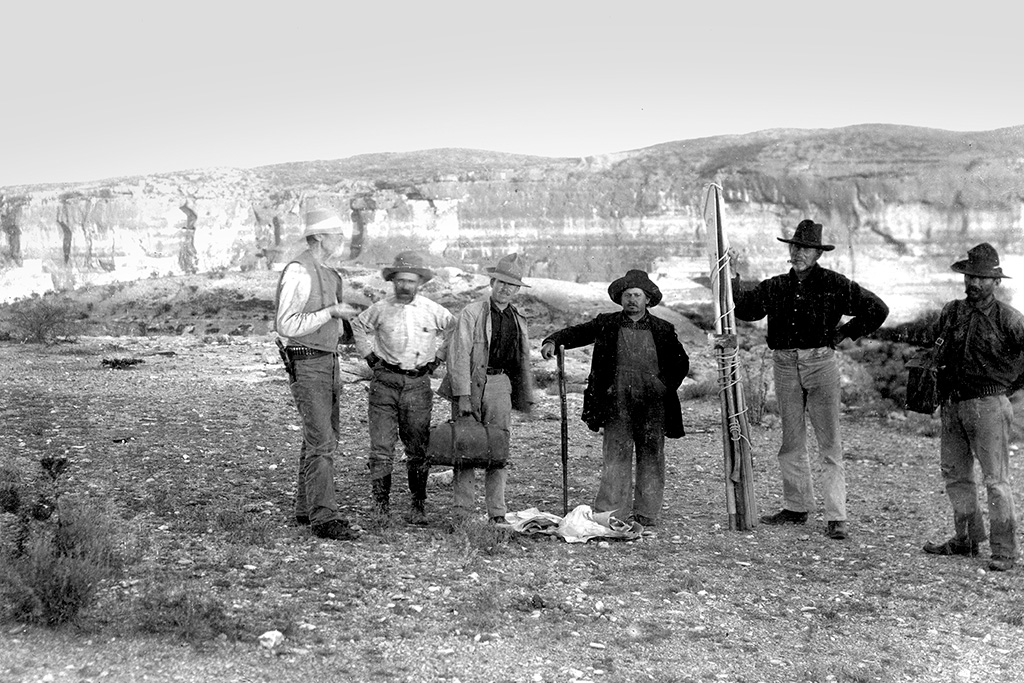
It is believed that fossil hunting began with the first arrival of humans. Paleo-Americans may have collected the fossilized remnants of prehistoric creatures that lay exposed in limestone rock exposures. The modern era of fossil hunting began in the 19th century, as European naturalists and explorers followed in the wake of the Anglo settlement of Texas.
In the 1870s, Swiss naturalist Jacob Boll embarked on a Texan expedition to collect plant and animal species for Harvard University’s new Museum of Comparative Zoology. He unearthed fossilized animals while exploring near the Wichita River, a literally groundbreaking discovery; dinosaurs had only been discovered relatively recently. Boll went on to find 32 new species of Permian vertebrates, including stegocephalian amphibians and theromorph reptiles.
After Boll’s premature death in 1880, scientists and collectors began to recognize the rich wealth of fossils in the state. They traveled to Texas from universities around the world, from Boston to Munich. Expeditions to the Panhandle, High Plains, and Trans-Pecos regions unearthed Mesozoic and Cretaceous fossils. In the 20th century, fossilized footprints were found in the bed of the Paluxy River, near Glen Rose. When the American Museum of Natural History investigated in 1938, they found fossilized tracks of elephantlike sauropods and three-toed theropods — likely the Acrocanthosaurus.
Scientists have continued to discover remnants of Texas’ prehistory throughout the state. They have found rich deposits of Cretaceous fossils in Big Bend National Park, carbonate rocks that made up what was the Guadalupe Reef Complex, Triassic fossils in the eastern High Plains, and Paleozoic fossils through the center of the state.
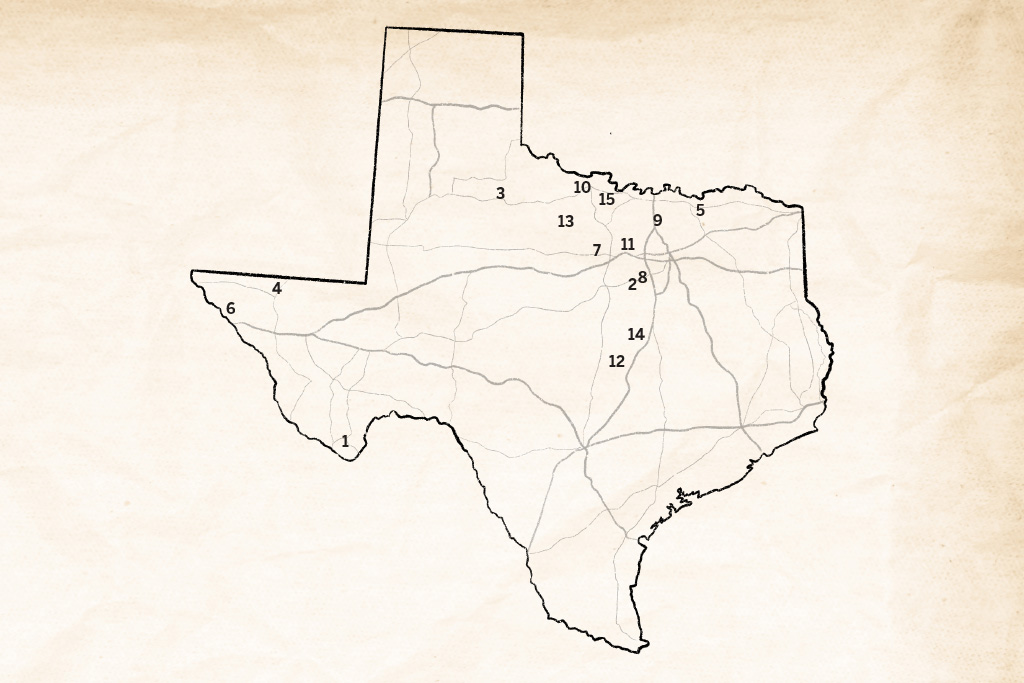
Many carefully preserved remnants are on public display in museums across Texas. The Fort Worth Museum of Science and History, Perot Museum of Nature and Science, Bosque Museum, Mayborn Museum Complex, and Bell County Museum all have great dinosaur collections.
There are also fossils to be discovered in Texas right out in the open. Although careful hunters can find fossils in Texas, there are a handful of fossil parks and well-known deposit sites that are great destinations for any curious amateur paleontologists looking for a big score.
Ladonia Fossil Park: Located about 75 miles northeast of Dallas, Ladonia Fossil Park allows the public to search the riverbeds and banks of the Sulphur River for ancient treasures. The most common finds include ancient sea creatures such as belemnites, ammonites, and rudists, but some lucky hunters have turned up the remains of mastodons, camels, bison, mosasaurs, woolly mammoths, and sea turtles. Experts suggest heading out after heavy rains, when erosion helps churn up specimens. But be careful: Sharp drop-offs and shifting soil can make navigating the banks of the Sulphur River dangerous.
Mineral Wells Fossil Park: About an hour’s drive west of Fort Worth will bring you to the city of Mineral Wells, where an old landfill burrow pit has been inadvertently transformed into one of the best fossil-hunting sites in the state. The 20 years of erosion following the pit’s abandonment have led to the unearthing of a rich trove of Pennsylvanian Period fossils that date back some 300 million years. Hunters can find remnants of prehistoric sea lilies, urchins, clams, oysters, corals, plants, and even some primitive sharks.
Post Oak Creek: This family-friendly fossil site near Sherman is a great place to sift for sharks’ teeth, bivalves, and even a few fossilized animal bones. The challenge of Post Oak Creek’s fossil site, however, isn’t finding fossils — it’s finding the site itself, which isn’t marked. To get there, take South Travis Street south from Sherman until it crosses Post Oak Creek. A path just north of the bridge leads down to the creek. Fossil hunters have had the most success sifting in the banks underneath the Travis Street Bridge.
Dinosaur Valley State Park: Dinosaur Valley is one of the most famous fossil destinations in Texas. But the thrill exceeds just searching for and collecting fossils. Visitors can put their own feet in the footprints of prehistoric creatures that once dominated this part of the state. There are five track locations up and down the Paluxy River, though they’re not always visible. Check the river levels ahead of time before making this unforgettable, bucket-list Texas journey.
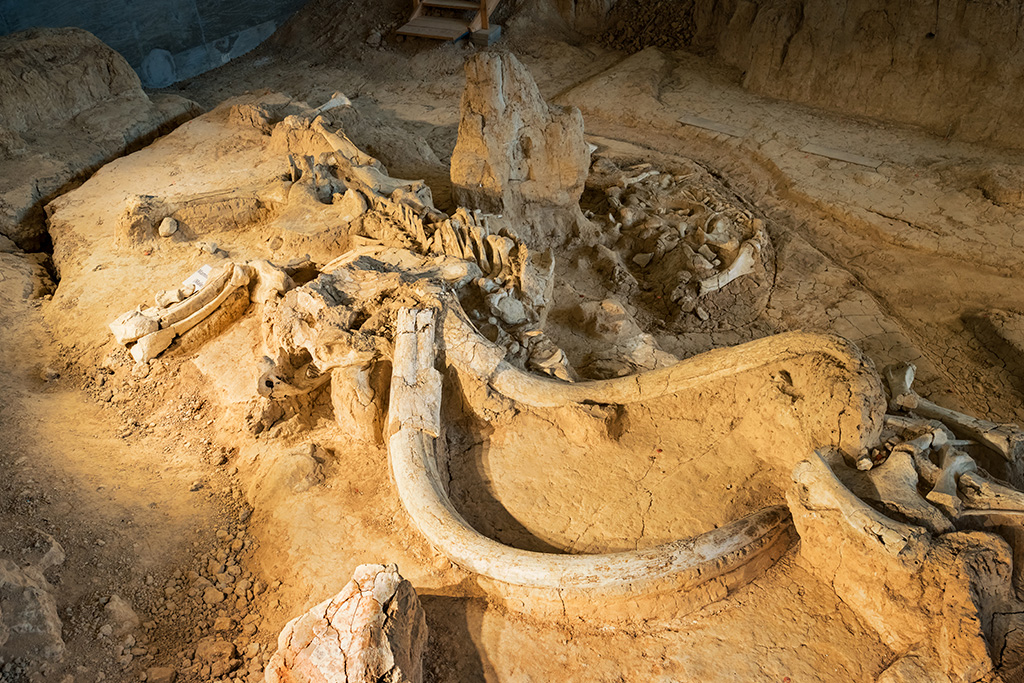
Waco Mammoth National Monument: In 1978, two amateur fossil hunters were looking for arrowheads near the Bosque River when they found a large bone protruding from the ground. They brought the bone to researchers at Baylor University, who recognized it as the Columbian mammoth, a 20,000-pound behemoth that roamed throughout Texas during the Ice Age. Further excavations revealed an incredible discovery: the first and only preserved remnants of a nursery herd of 16 mammoths. Today, guided tours take visitors to the dig site, where most of the excavated mammoth fossils remain half-buried exactly where they were found.
Find more prehistoric treasures with this guide to hunting for rare lightning whelk shells.
Tracing Texas’ Place in Cinematic History
Follow this path through a century of Texas films.
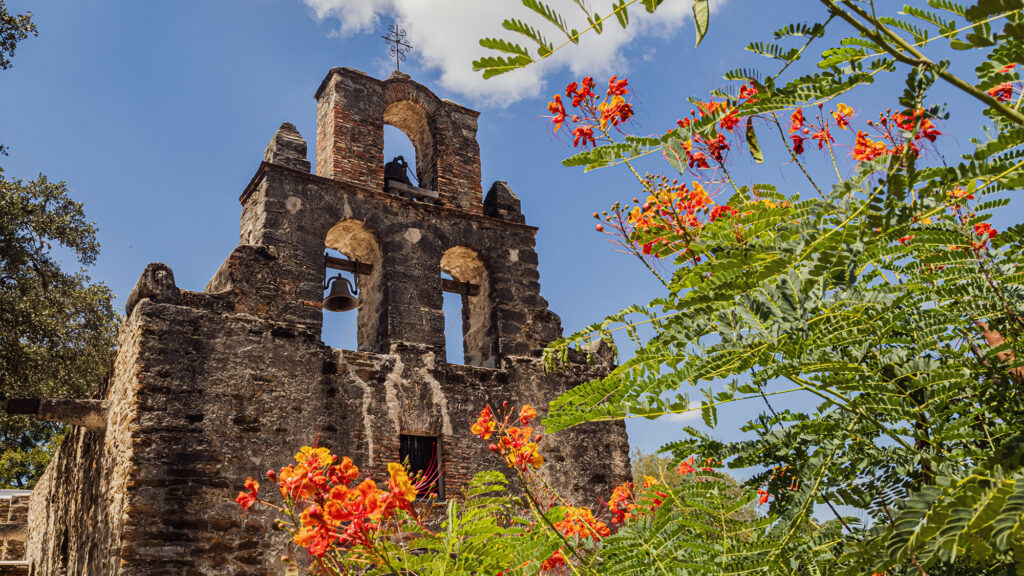
Historic Sites to Visit This Fourth of July
Skip the parade and firework show crowds and visit the places where Texas history happened.
Mythbusters: The Truth About Texas’ Best Tall Tales
From the chupacabra to Pecos Bill — In the battle of fact or fiction, where does your favorite Texas tall tale net out?

Where Did Texas Homecoming Mums Come From?
Mum’s the word, but where did that word come from?

Don’t Feed Ducks Bread (And 5 Other Debunked Wildlife Myths)
(Don’t) let them eat cake.

The Race to Preserve Texas German
German immigrants helped build Texas. Today, their distinctive dialect is slowly dying out.