Please sign in as a member or guest below to access it.
Please sign in as a member or guest below to access it.

Georgia O’Keeffe’s obscure years in the Panhandle were radically formative for the young artist.
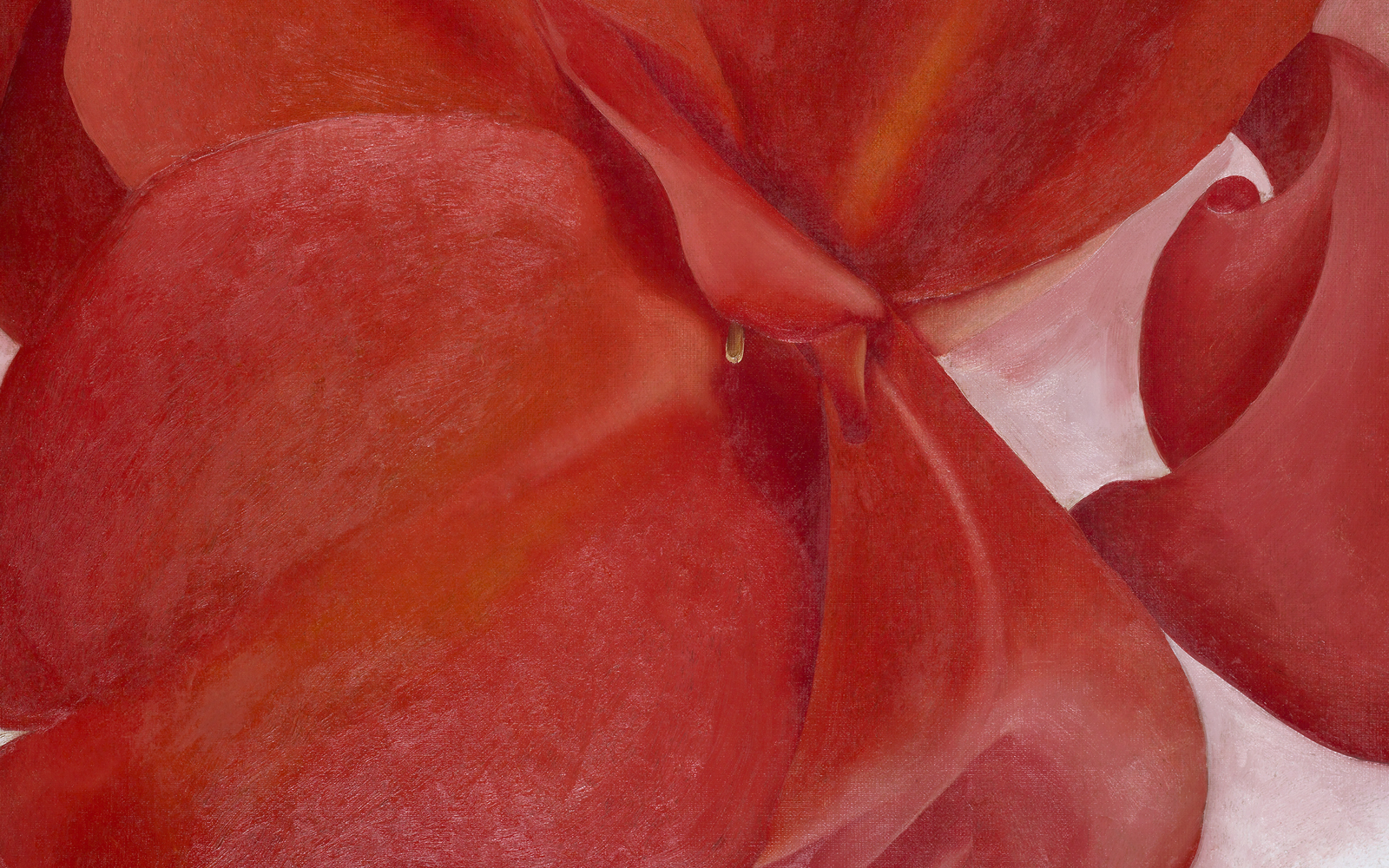
Georgia O’Keeffe is better known for her irises and cow skulls than for the stark and haunting watercolor Train at Night in the Desert held at the Amarillo Museum of Art. Similarly, the years that the American artist spent in the Panhandle, living in Amarillo and then the tiny town of Canyon, are far less known than her subsequent New York or New Mexico years. It was the iconic flowers and desert bones, not the red alien landscapes of Palo Duro Canyon, for which she would become known throughout the world.
But her time in the Panhandle — post-art school, but pre-New York career and her monumental success as the mother of American modernism — marks the first independent phase of her career and the emergence of something remarkable. In this nascent period, she was shaped by the landscape that she painted and became the artist we know today.
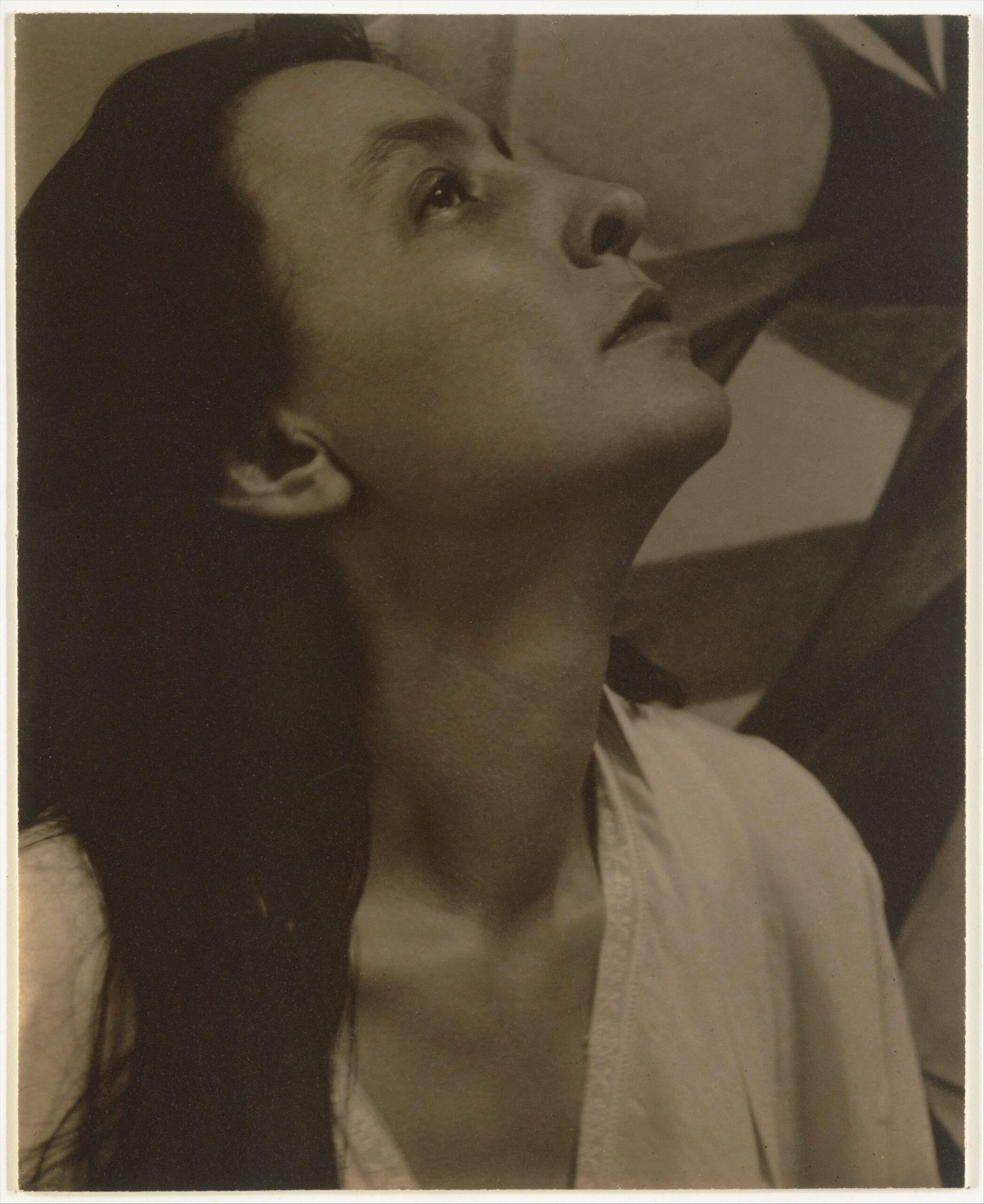
O’Keeffe was 24 years old when she alighted in the West Texas town of Amarillo, where she would spend two years teaching art in its K–8 public schools. During her childhood in Wisconsin, her head had been filled with her mother’s stories about the Wild West, and she no doubt found some of its vigor in the town that at the time boasted both an opera house and an important regional cattle-shipping center, a crossroads of railroads with herds of cattle driven in across the broad plains.
O’Keeffe ended up in a tiny rented room in the nearby town of Canyon for two more years, where there was need of someone to teach art and art theory at West Texas State Normal College (now West Texas A&M University). She was an eccentric figure in the modest town, and became known for her pacifist political views and for teaching her students to draw from their surroundings, from the landscape that would in that time become her muse as well.
During this period, between 1912 and 1918, O’Keeffe worked in oil on board and watercolor on paper, an ephemeral medium suited to someone not yet settled in her life or in her art. The work she produced in her semi-isolated outpost — like the three-print Light Coming on the Plains series depicting West Texas’ night sky — was her breakthrough into radical abstract expressionism, a bold use of color, and a deep connection to the earth.
“It is absurd the way I love this country,” O’Keeffe wrote of the Texas Panhandle. Her subjects were the cattle dotting the bottom of the canyon that opened up like a slice in the earth (like “slits in nothingness,” she wrote to her friend and former classmate Anita Pollitzer); the striking colors of the sky; and, in the long walks she took at night, the vastness and the dark itself.
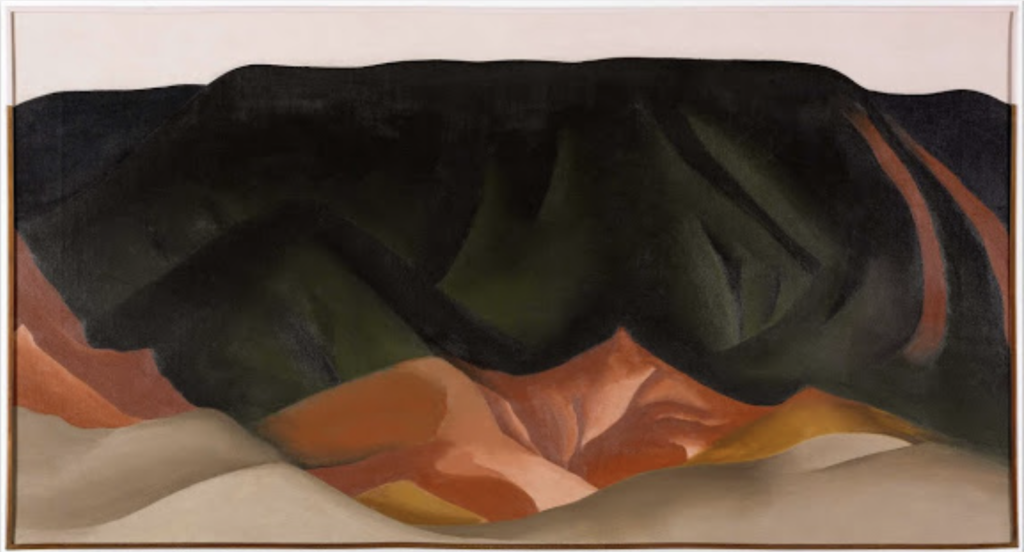
Her foundation in art school was strongly based in realism. But here, in the Panhandle, she was working out the principles that she would bring to her later work, like the synesthetic Music abstractions in pink or green or blue; the storms over Lake George, with waves at night; the dark mesas of New Mexico.
The landscape required O’Keeffe to extend herself, to find herself in the land. When she returned from her walks, “I would be the color of the road,” she wrote in her letters, referencing the dust that blew across the stark prairie that was dotted only by locust trees.
Her paintings from that period are full of the violets, crimsons, and ochers of the canyon that mesmerized her. Palo Duro’s juniper, cottonwood, and wild plum, its red sandstone and cow paths, are reflected in the primal expressiveness and the intensity of color in her work. Confronting the landscape caused her to invent new ways of seeing.
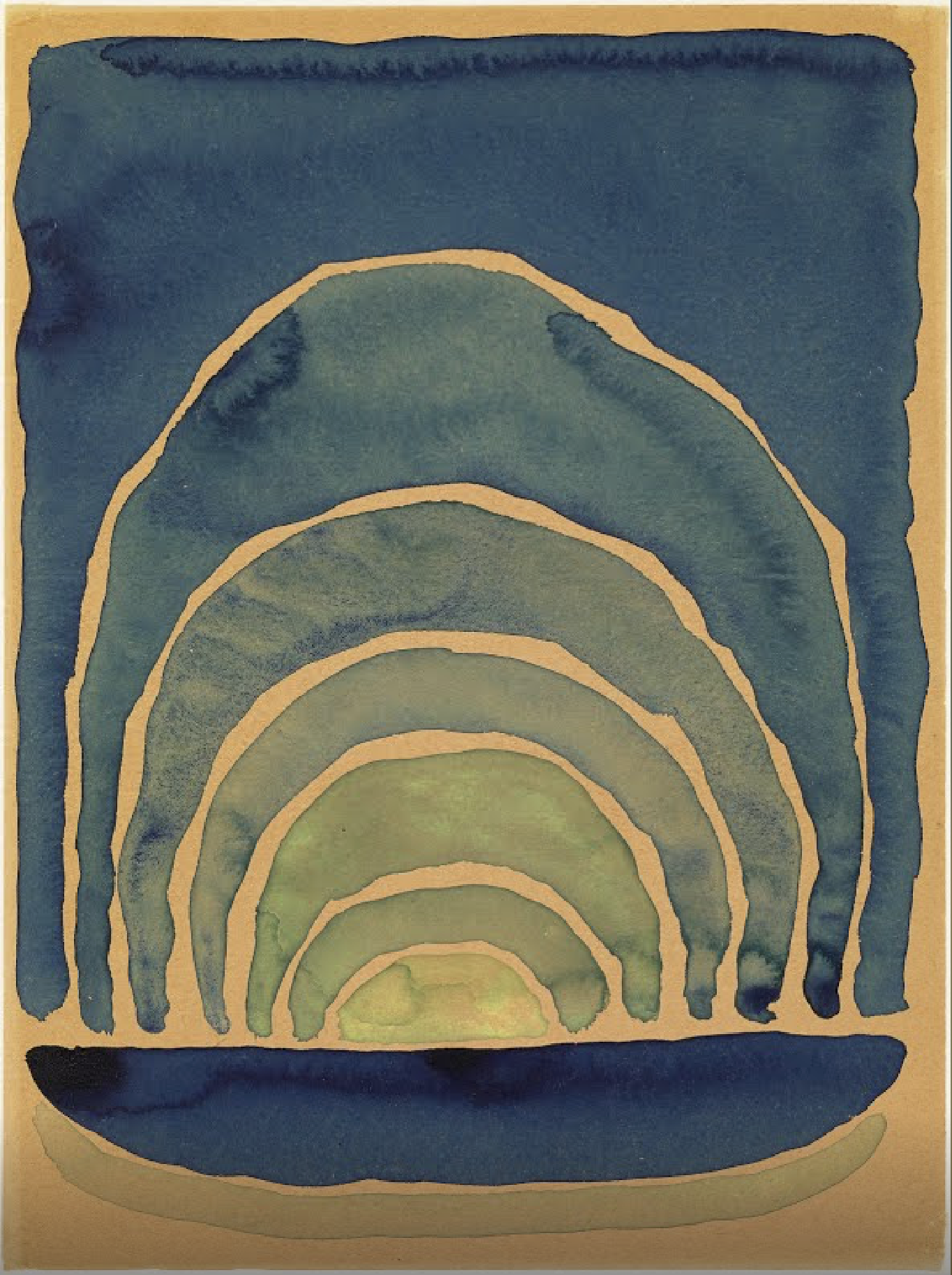
Amon Carter Museum of American Art, Fort Worth
Amarillo Museum of Art, Amarillo
Meanwhile, letters with Pollitzer and the influential New York gallerist Alfred Stieglitz, whom O’Keeffe would marry in 1924, were her tethers to the New York art world. She existed between the two poles, the East and the West: the urban, intellectual life and the great outdoors of Texas. In these letters, O’Keeffe becomes not just a painter, but a poet of the Texas landscape. She grapples with the land and carves out her ideas like a fissure in the ground.
“Tonight I walked into the sunset — to mail some letters — the whole sky — and there is so much of it out here — was just blazing — and grey blue clouds were riding all through the holiness of it …” O’Keeffe wrote to Pollitzer. “The wind blows like mad … and there is something wonderful about the bigness and the loneliness and the windiness of it all … sometimes I’ve seen the most wonderful sunsets over what seemed to be the ocean,” she wrote in another letter.
O’Keeffe’s personal and artistic awakening in the Panhandle is of inestimable importance to American modernism, although the period was brief. O’Keeffe would go to San Antonio in 1918 and then back to New York. She would not return to the Panhandle or to this little town, with its cleft canyon and its immense sky, which had changed her — which she had so profoundly and poetically seen.
For those who own, not an O’Keeffe, but perhaps a valuable collector’s item — there are advantages to taking out an insurance policy that covers special collections separately from a standard homeowners policy.
The latter entails a deductible; the former, written under the category of a personal articles policy, does not, ensuring that the value of the article is reimbursed in full in the case of windstorm, hurricane, hail, fire, lightning, or theft.
According to Bryan Sparks, a Texas Farm Bureau Insurance agency manager in Canyon and Amarillo, once an appraisal or purchase ticket has proven the item’s value (“We don’t want a print insured for $4,000 or $5,000 if it’s not an original,” he says.), the policy itself is inexpensive. The cost of a policy written to insure a $15,000 work of art, for example, comes out to around $50 per year. Each policy could be a little different based on the item, value, and client.
Sparks says items covered under personal articles policies often include coin or stamp collections, furs, jewelry, silverware, musical instruments, cameras, firearms, and golf equipment. Call your Texas Farm Bureau Insurance Agent to find out more.
For more Texas art, check out our guide to Marfa.
Coverage and discounts are subject to qualifications and policy terms and may vary by situation.
The Boot-Scootin’ History of Honky-Tonks in Texas
And where to wrangle up a waltz tonight.
A Newcomer’s Texas Slang Dictionary
Can you say Bexar, Boerne, Bowie, and Buda?
Why H-E-B Is the Best Grocery Store in Texas
Texas-shaped, Texas-sized, Texas-loved.
Giant Sloth Fossil Uncovered in Lubbock
The ice age in West Texas sure was wild.
Admiral Nimitz: Texas Hero on the High Seas
Learn how this Texan’s naval career brought him to a leading role in World War II’s Pacific theater.

Why the World’s Largest Airline Loves to Call Texas Home
Every American Airlines plane that lands at DFW International is arriving home.