Please sign in as a member or guest below to access it.
Please sign in as a member or guest below to access it.

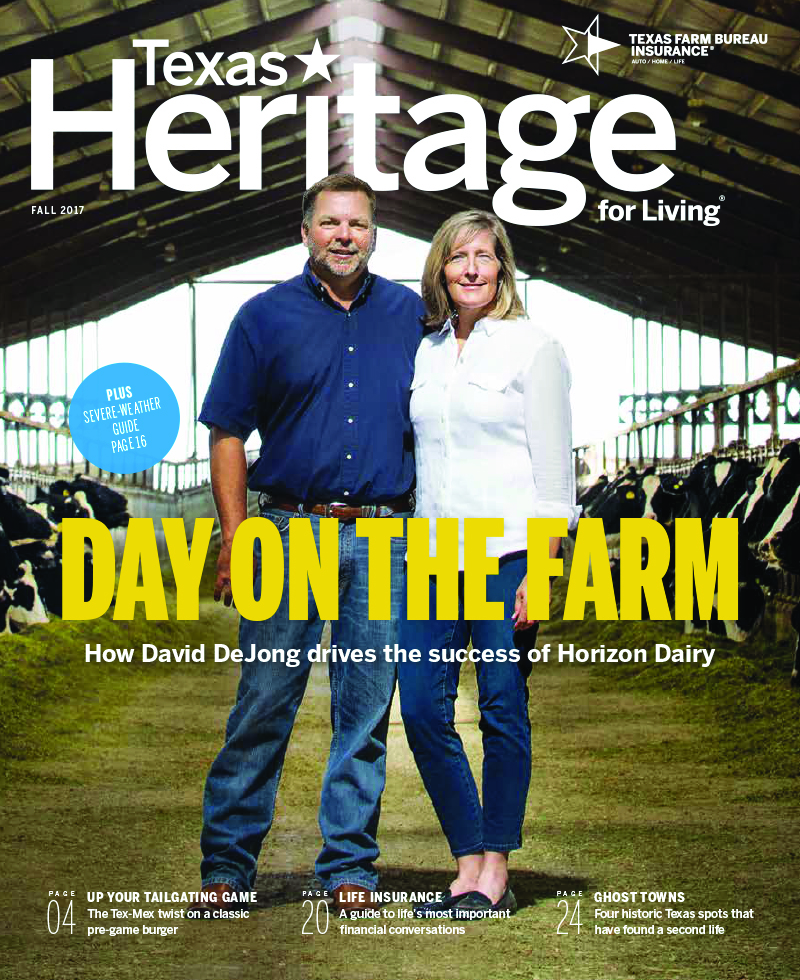
For a dairy farmer, no day is ever the same. Meet the lifelong farming family in Central Texas who runs Horizon Dairy.
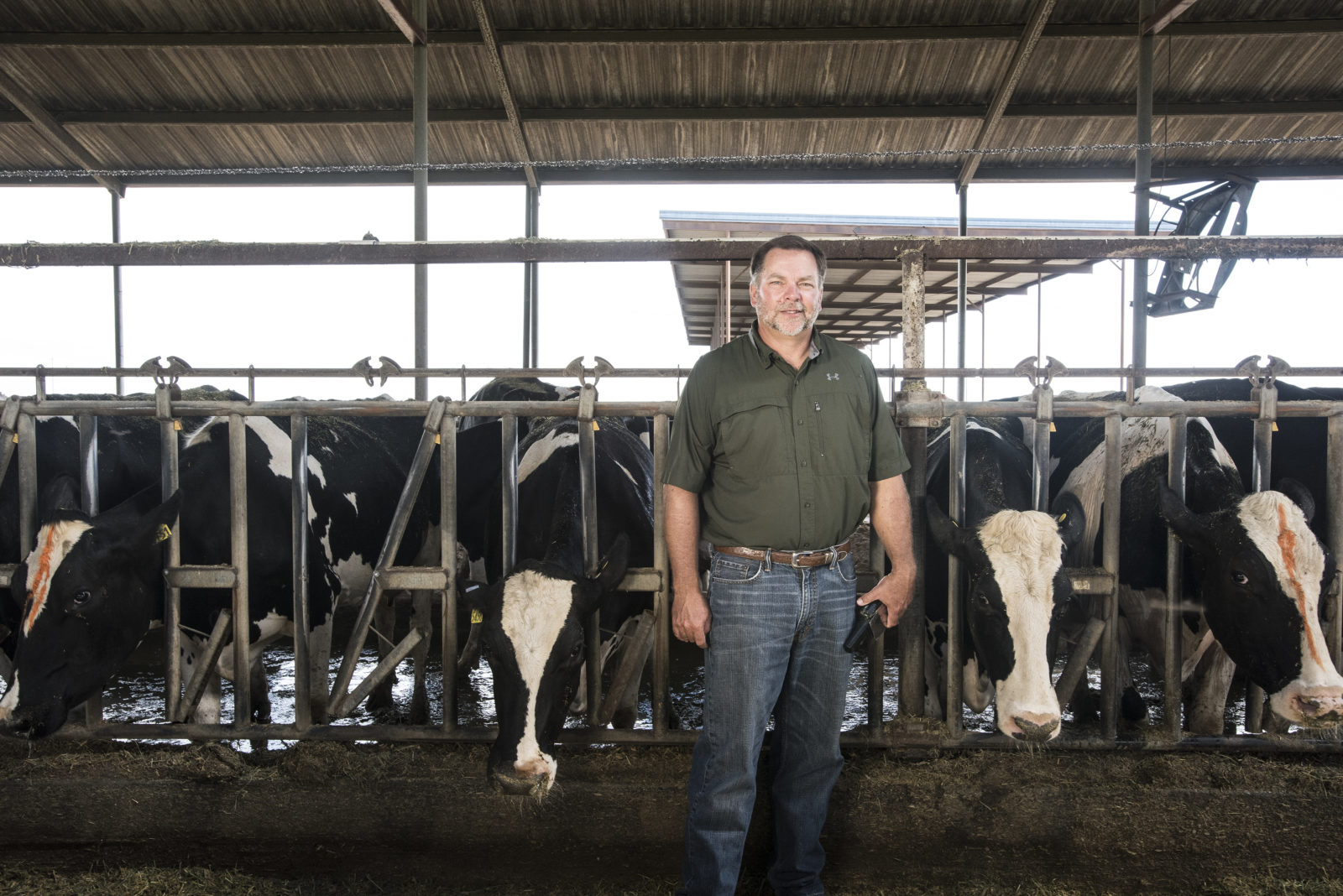
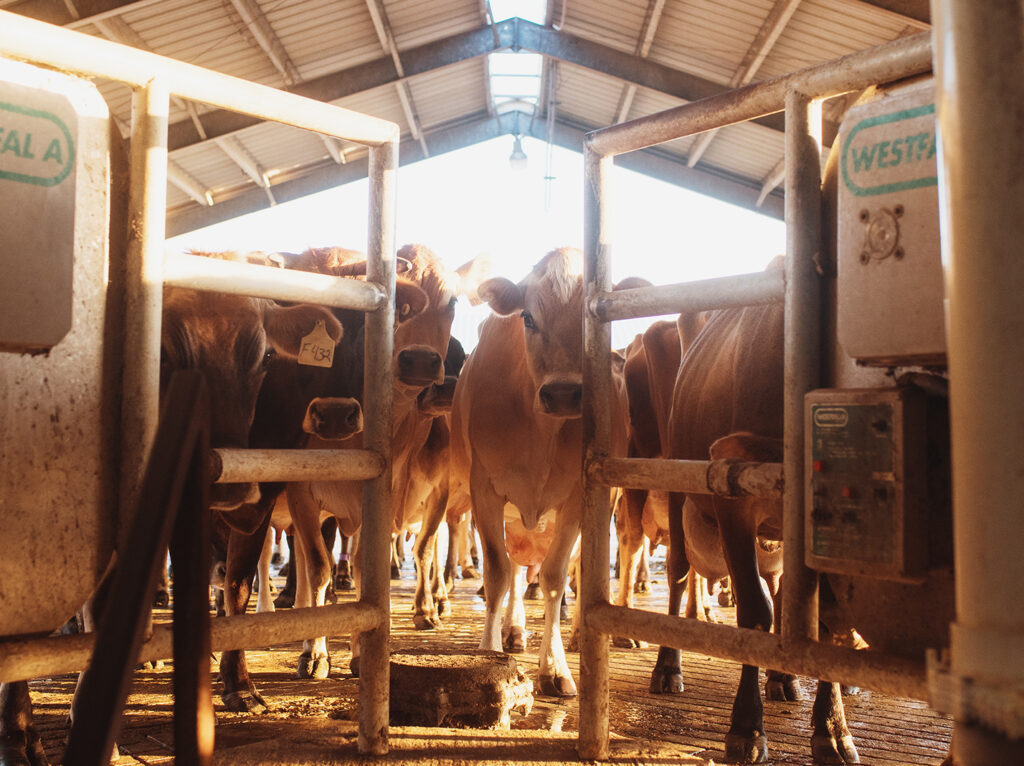
Horizon Dairy sweeps across Central Texas in broad strokes of native grasses and black-and-white cows. Tifton grass, a forage crop for some of the dairy’s 3,500 cows, grows in one corner. In another, the Holsteins amble along with their calves. Dark patches indicate where irrigation projects will bring the land to life. The 2,500-acre plot revolves around a family farmhouse and a dairy barn with a milking parlor.
David and Leslie DeJong know every corner of it. They raised their family on the farm in Hico, Texas, in the house they built themselves, and run the dairy with their 30 employees and the help of trusted veterinarians and nutritionists.
“A dairy farmer tries to talk to their cows every day,” David says. With a practiced eye, he can watch his cows’ digestive health simply by examining manure piles, or assess their appetite and energy level based on how shiny their coats appear.
When it comes to understanding his herd, new technology can be as important as the timeworn practices that have been handed down from farmer to farmer. Each of Horizon’s cows has a radio-frequency identification (RFID) chip. Through a wireless network and handheld computers, herd personnel can access individual history and monitor changes to any treatments or feed rations. That means even if David isn’t personally talking to the cows every day, he still gets to listen in.
“It’s about constant evaluation and reaction,” David says. “I change the [food] ration, and I’ll see it in the milk tank the next day,” he says. “This allows individual care even though we have a large herd.”
David’s dedication to the herd, and his commitment to a family-centric approach, makes Horizon Dairy more than just a business to the DeJongs. “We are proud of what we make,” David says.
Though no day on the farm is the same, the husband-and-wife team works seamlessly. The couple doesn’t hesitate to get their hands dirty, but as often as not, they spend part of their days with their heads in the books, in the farm office, where Leslie works as comptroller and David tends to other farm business. For years, as the couple’s four children have grown, Leslie has walked from their farmhouse to the dairy-barn office to do the books, then tended to family needs most afternoons. Meanwhile, David may be walking the farm, consulting with nutritionists about the cows’ feed, meeting with veterinarians to discuss the herd’s health, or mentoring his employees.
“I’m key cheerleader and head firefighter,” he says. Empowering his close group of employees and involving them in the decision-making process has proved a successful formula. In summers, he even employs local high school kids, whom he enjoys mentoring. The couple also reaches children in the community through teaching Sunday school.
Leslie, the “face of the farm,” contributes to many philanthropic projects in the community. She recently helped raise funds for a new, state-of-the-art mammogram machine, allowing locals to get exams without having to drive the two hours to Dallas.
The couple’s strong work ethic and their dedication to the community are two things they have tried to pass on as they raise “the four Ps” — Patrick, Peter, Preston, and Paige. “I wouldn’t trade it for anything,” Leslie says. “Farm kids are not afraid to try things. [Being a farm kid] affects their daily lives and their futures.”
Growing up, the children would work the farm in summers and between school hours, moving rocks to clear fields. “I called the kids ‘soil relocation engineers,’” David says. “You build character one rock at a time. It’s not busywork. It’s important work.”
The work is important: That was something David learned from his own father, Bill, at a young age. “My dad gave us responsibility early,” he says.
His father, a California dairy farmer who immigrated to the United States in 1957, used to milk cows in the fields as a child in Holland during World War II. As British and German pilots flew overhead dogfighting, he would crouch down and put a milk bucket over his head for protection.
When he started his life in California, dairy farming became his livelihood. He raised David and his six other children to believe in responsibility; David was put in charge of the calves at a 550-cow dairy when he was only in high school.
Several of David’s brothers also followed in their father’s dairy-farming footsteps; but instead of remaining in California, David and two of his brothers made their way to Texas. “We got here as soon as we could,” David says. His brother Willie runs a dairy in Dublin, Texas, and his brother Donald runs one in Dalhart, Texas. Although their operations are separate, they run a joint farm in the Panhandle, where three of David’s nephews have now taken on management roles.
The brothers build on their strong family bonds by working toward common goals. David says his father’s legacy inspires them. “We try [to pass it on].”
Before he passed away in 2010, David’s father followed his three boys to Texas and began raising beef cattle. His mother still manages the herd of Santa Gertrudis, a breed developed at King Ranch. “If my dad was going to raise cattle here, it had to be a Texas breed,” David says.
“[My dad] had a personality that fit Texas. Within six months, more people knew my dad than me and my brothers,” he says.
Although neither David nor Leslie — who met at Cal Poly in San Luis Obispo, California — is from Texas, they can’t imagine living anywhere else. “I love Texas,” Leslie says. “It’s home.”
David and Leslie started Horizon Dairy at the same time they started their family — almost exactly the same time. Their farm’s milk production began two days before their eldest son, Patrick, was born in 1994. “The kids have all been raised here in a house we built,” David says.
That means their family farming is more than just a business to them — it’s their children’s future. “I want to make a business structure that the family can continue and have a viable product and profitable future,” David says.
David has branched out of his family ventures to reach a wider group of dairy farmers through nonprofits and cooperatives including Select Milk Producers Inc. and Dairy Management Inc., which was founded by farmers to create more demand for dairy products and reposition milk in the public eye as an integral element of the health-and-wellness industry.
David and his fellow dairy farmers are urging farms to become more vocal, to share their stories with the press, and to get involved with industry groups that promote the value of farming in America. “We are proud of what we make: the most nutritious whole food,” David says. “We do the best by the land, by the air, by our animals, every day.”
David and Leslie DeJong have passed the philanthropic gene on to their children, in addition to the farming gene. Preston, a freshman at Texas A&M University studying soil science, just led his chapter of the national farming fraternity Alpha Gamma Rho in raising $7,000 for the Epilepsy Foundation in honor of his brother Peter, who struggles with cerebral palsy and seizures.
Peter lives at the dairy farm and has helped with operations as he is able. Paige focuses on high school but helps her mother in the accounting office. Patrick, the eldest child, just graduated from the University of Notre Dame as a mechanical engineering major, learning more about the skills he picked up building structures on the farm as a kid.
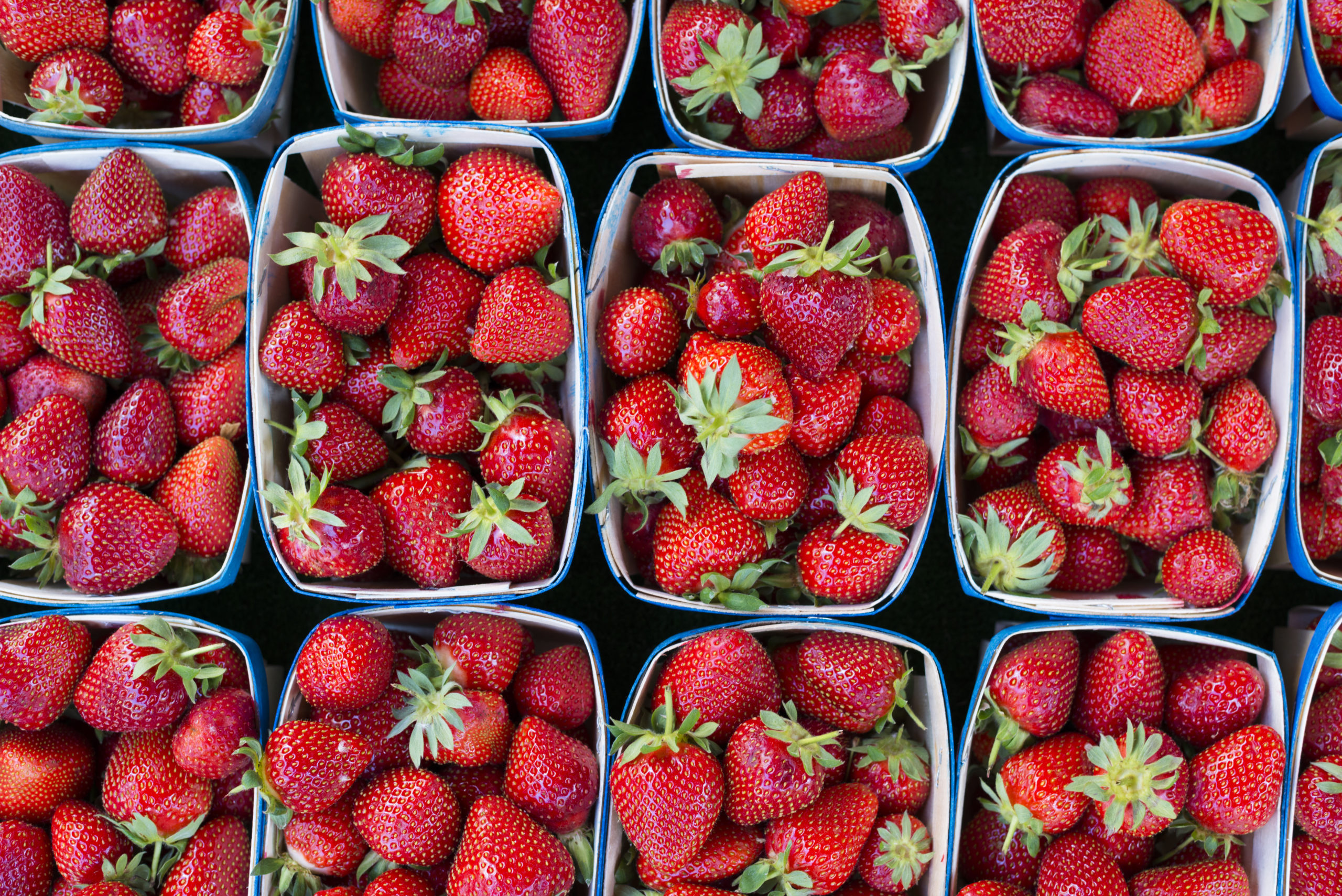
Stop by These Roadside Fruit Stands and Orchards in Texas
Hit the road to pick up some of the best summer fruits.

How to View an Eclipse in Texas
Dallas hasn’t seen a total solar eclipse since 1878, when it was a fledgling prairie town.
Get a close-up view of giraffes, antelope, snakes, and lemurs.
It’s all about the perfect hiding spot.

Where to Find the Best Boba Tea in Texas
Tapioca pearls in milk tea? It’s a hit.
Texas Travel Guide: East Texas City Spotlights
The ultimate roundup of the best cities in East Texas.