
Please sign in as a member or guest below to access it.
Please sign in as a member or guest below to access it.

Don’t get in over your head this summer.

Summer in Texas feels like one long invitation to get in the water. Pool parties, beach weekends, and boat excursions offer sweet relief on triple-digit days. Are water outings fun? Absolutely. A little chaotic? Sure. And while forgotten flip-flops are no big deal, water safety can’t be one of the things that slips through the cracks.
Before your next aquatic outing, brush up on the basics with these guides for a safer day at the pool, beach, or lake.

Aside from the danger of ordering far too many novelty pool floaties, pool party season comes with risks. Chief among them is that, often, the more guests gather around your pool, the less active supervision there is. Why? Everyone assumes someone else is watching the children.
That’s why our pool party safety guide emphasizes assigning a designated “water watcher” whose only job is to keep an eye on swimmers — no scrolling, no chatting, and no stepping away while on duty. Just as important is a secure pool fence, your first line of defense against kids and pets going in for an impromptu, unsupervised dip.
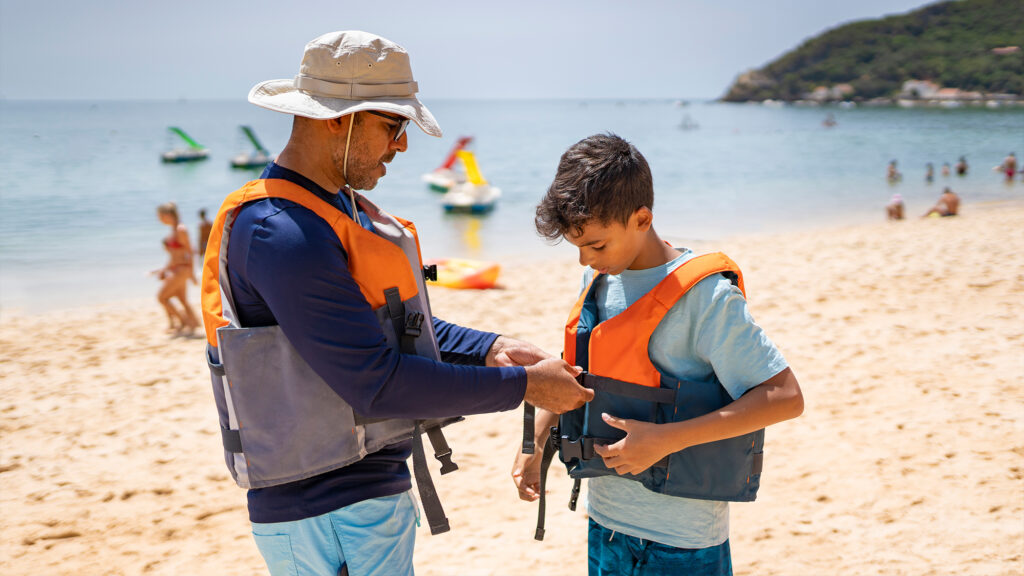
A day at the beach sounds simple enough. Towels, chairs, cooler, sunscreen, done. But the Gulf comes with its own set of surprises, from rip currents and a deceptively high UV index on a cloudy day to flag warnings and the occasional sea creature you’d rather admire from a distance.
Before you set up camp, check our beach safety guide for helpful (and sometimes counterintuitive) pointers. For example, if you’re caught in a rip current, don’t fight it. Swim parallel to the shore, then angle back toward the sand once you’re out of the current.
Perhaps most importantly, don’t count on a pool float or inflatable toy to keep you upright in open water. That’s what a life jacket is for, and they’re especially important for children and weaker swimmers. Our life jacket guide explains how to choose the right size and fit according to the U.S. Coast Guard.
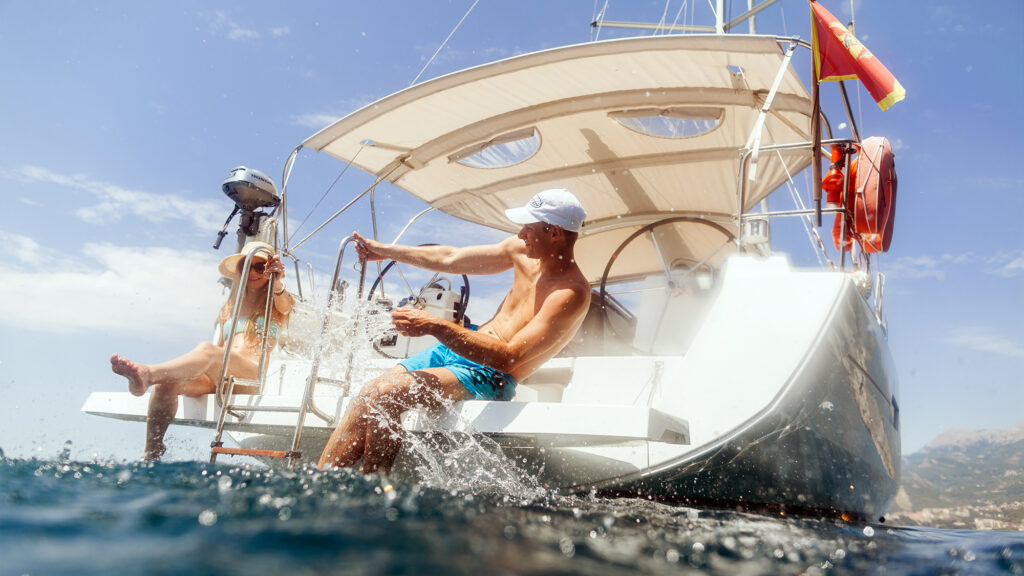
Few summer memories stick quite like a family reunion at the lake or a fishing trip with Grandpa. But before you leave the dock, there’s a little homework to do.
Start with our guide to Texas water laws, which answers common legal questions, including whether you need to register your water vessel and how old young adults must be to operate a boat.
Our boating safety guide covers the basics of what to carry and do on deck, including how to choose the right life jacket, what emergency gear you should carry, and the importance of creating a “float plan” to let others know where you’re going.
Weather should be part of the plan too. Storms can move in quickly, and wind, lightning, heavy rain, and rough water can turn a fun afternoon into a potential emergency. Before heading out, check the forecast and review our boating weather warnings guide so you know what to watch for and what to do if conditions change.
Keep an eye out for unexpected things in the water too. If you can’t tell what something is, don’t move closer to investigate. Toxic algal blooms and brain-eating amoebas may sound like campfire-story boogeymen, but unfortunately, they’re rare but real threats in Texas waters.
With water safety down, you can dive into the fun part — planning your trip. Lucky you, there are lots of cool water destinations in Texas.
Four tips to prolong their longevity and how to replace them yourself.
Which Navigation App Should You Use?
Comparing Google Maps, Waze, and Apple Maps.

Types of Tires for Every Driving Condition
Texas has a diverse range of driving conditions. Can your tires handle them all?

For boating, swimming, and splashing around.

Get the Dirt on Texas Off-Roading Laws
Forge your own path across Texas.

Stay cozy and cautious.